Let’s All Stop Pretending We Can Do Anything About Chen Shui-bian: Breaking It Down in Taiwanese「免安呢假心」 bián án-ní ké-sim

hqdefault

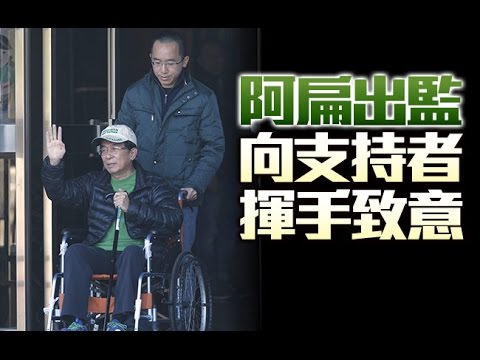
A picture of Chen Shui-bian on his release from prison with the caption “Chen Shui-bian gets out of prison and waves to his supporters to show his gratitude to them”; Source

In a discussion between panelists from the Democratic Progressive Party (DPP), Kuomintang (KMT) and media commentators on whether former Taiwanese president Chen Shui-bian is too healthy to remain on medical parole from jail on TVBS’s ‘Situation Room’, the former DPP legislator Shen Fu-hsiung (沈富雄) broke into Taiwanese to try and cut through some of the political bullshit being spouted by both sides. The gist of his point was that nobody in the studio really believes that Chen Shui-bian will go back to prison during the four years the DPP are in power, so there’s no point in arguing over this or that medical report. He also says that given Chen Shui-bian is on medical parole for political reasons, then he should be less provocative about it and not argue with people. This is in reference to his argument with a street pedlar selling bread in a Kaohsiung park who filmed Chen Shui-bian walking in the park. Chen and his friend approached and threatened him with a lawsuit and an “anonymous” tip-off later caused the bread seller to get in trouble with the government. You can get a sense of the effect of Shen using Taiwanese in the middle of a conversation being conducted in Mandarin from the wry smiles of the other panelists. Use of Taiwanese in Taiwan is generally more direct and emotive than Mandarin, so it’s often used when politicians want to convey sincerity (or forthrightness).  I’ve indicated the code-switching between Mandarin and Taiwanese below:

Taiwanese: 免安呢假心  bián án-ní ké-sim   ( 不用那麼假惺惺  / Let’s not pretend )

Mandarin: 也不用定期有醫療報告  (And we don’t need regular medical reports)

Mandarin: 我們大家也不要在這裡吵來吵去 (And we don’t need all of us sitting here arguing back and forth)

Mandarin: 因為這個都是一種表態而已 (Because it only serves to show where we personally stand on the issue)

Taiwanese: 我ê感覺是按呢   góa  ê  kám-kak   án-ní (Mandarin: 我的感覺是這樣子 / English: My feeling is)

Taiwanese: 阿扁啊,即然會當行到這個地步 到厝裡 更加出來散步 a píⁿ a  kì-jiân  ē-tàng  kiâⁿ-kàu chit-ê  tē-pō͘  tńg  kàu  chhù  nih   kèng-ka chhut-lâi  sàm-pō͘ (Mandarin: 阿扁啊,即然可以走到這個地步 回到家裡 還能出來散步 / English: Since Chen Shui-bian has already come this far – he’s returned home and he can even go out for walks)

Mandarin: 我覺得要守份一點,要低調一點 (He should wind his neck in a little and do things a little more low key)

Mandarin: 不要給人口舌啦 (Don’t give people anything to talk about)

Taiwanese: 對無對   tio̍h    tio̍h (Yes or no?)

Taiwanese: 別囂掰啦   m̄-ài hiau-pai la (Mandarin: 別囂張啦 / English: He shouldn’t be arrogant)

Mandarin: 不要給人家看到這個樣子 (He shouldn’t let other people see him act that way)

Taiwanese: 你若想講我按呢做時 人看著礙目      sióng kóng  góa án-ní  chò  ,  lāng  khòaⁿ-tio̍h  gāi-ba̍k  (Mandarin: 你若想講我這樣做的時候,人家看到會覺得礙眼 / If I do this kind of thing, people  will get irked by seeing it.

看到 khòaⁿ-tio̍h (Seeing that)

真的很刺眼 (Is really irritating)

I wonder will Chen Shui-bian take his advice.

If I’ve made any mistakes, please don’t hesitate to get in touch.

Mixing Taiwanese Proverbs?: 「相罵無好話,打架恨無力」 sio-mē bô hó-ōe, sio-phah hīn bô-la̍t

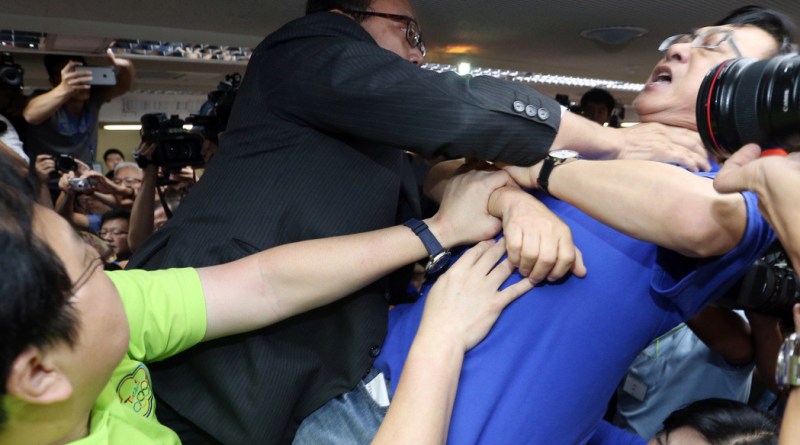
So by now everyone’s quite likely seen the photo below of Taiwan’s Democratic Progressive Party (DPP) Su Chen-ching (蘇震清) choking Kuomintang (KMT) legislator Chen Yi-min (陳宜民) over the latter’s attempt to disrupt the DPP’s passing of a holiday bill. The bill is an altered version of a KMT bill that the DPP had opposed while in opposition. The KMT reportedly has little opposition to the bill itself, but were objecting to what they see as DPP partisan hypocrisy in trying to pass a bill they had previously opposed and in passing the bill without allowing any time for debate. The KMT are not necessarily opposed to the practice of passing a bill without debate, but are rather a little miffed that the DPP is doing this despite praising and visiting students taking part in the Student Sunflower Movement, who were protesting the very same method of passing bills when the KMT was trying to pass a cross-strait trade-in-services act in 2014. Despite more publicity being given to the photo below, the KMT reportedly stuck the proverbial boot into a few DPP legislators too, but less conspicuously.

fight

Photo source: Wild East Magazine

Anyway, this post is not primarily concerned with politics, but rather with a Taiwanese phrase used by former New Party legislator Li Sheng-feng (李勝峰) when commentating on the scuffle on TVBS’s political chat show ‘The Situation Room’:


「相罵無好話,打架恨無力」 sio-mē    hó-ōe,  sio-phah  hīn bô-la̍t

Nothing good or auspicious is said when people are cursing at each other; people hate themselves for not being able to hit each other harder in a fight.

I originally thought that this was a mixture of two phrases in Taiwanese:

1. 「相罵無好話  相打無揀位」sio-mē     hó-ōesio-phah  kéng ūi which means “It’s easy to say awful things when arguing and to underestimate your strength in a fight”.

2. 「相罵恨無聲,相拍恨無力」sio-mē  hīn  bô-siaⁿ , sio-phah  hīn bô-la̍t which means “When in an argument, you hate yourself for not being able to shout them down louder, and in a fight you’ll hate yourself for not being able to hit them harder”, or, you’ll always try and find a way to bring the other person down.

But my (very gracious) Taiwanese friend called his mother in the south and she said that the phrase that the guy says on the TV program does actually exist and that it is the same as the meaning of No. 2 listed above. But she also pointed out that people in southern Taiwan say “hūn” instead of “hīn”.

Feel free to share your opinion or any similar phrases you have in the comments section.


Aggressive Notes: Taipei Parking Battles 台北停車:瘋了嗎?

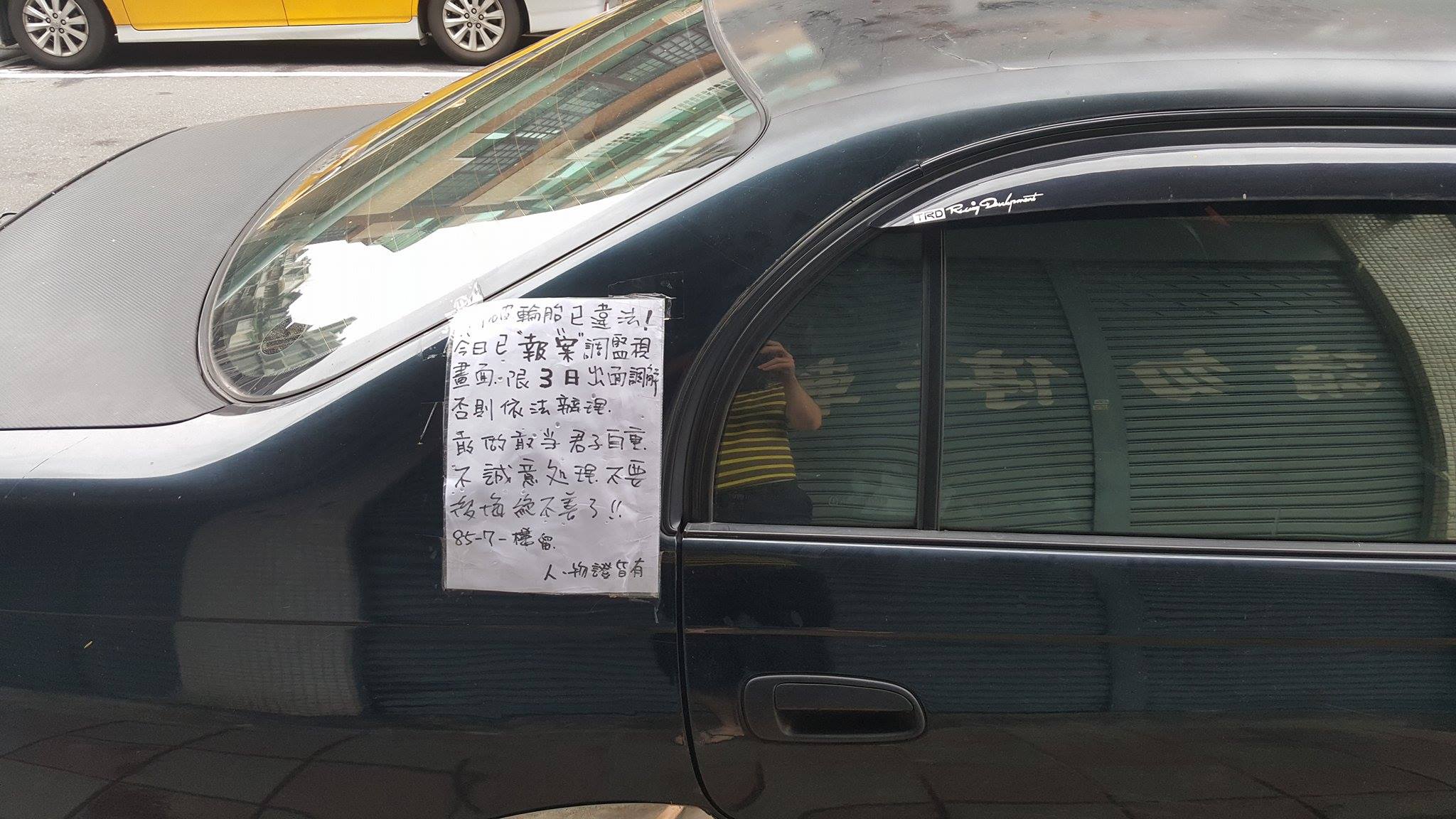
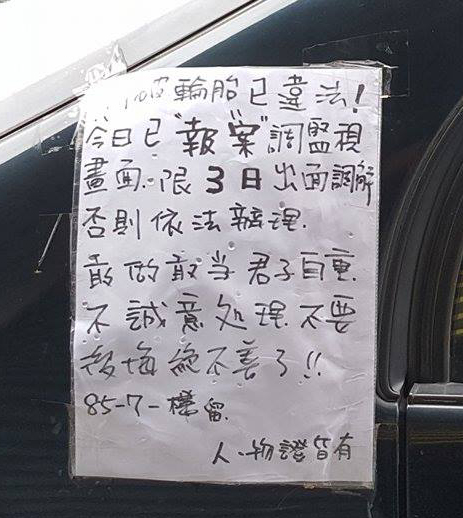
I previously posted about passive aggressive notes in Taipei related to parking.  But this post couldn’t really be described as “passive aggressive” as it is pure aggression from start to finish:

14971119_10102906933370999_1446554131_o

You can see the shutter of a shop in the reflection of the car window, which reads 「請勿停車」, which means “Please do not park”. And here’s a close-up of the note:

14971119_10102906933370999_1446554131_89o

The note reads:

「刺破輪胎已違法! 

今日已”報案”調盤視 

畫面.限3日出面調解

否則依法辦理.

敢做敢君自重.

不誠意理.不要

後悔絶不善!

85-7-留

人·物證皆有」

Or in English:

By puncturing my tires you’ve already broken the law! Today I already went to report it as a crime and we’ve gone through the CCTV footage. I’ll give you three days to own up and come to an agreement, otherwise I’ll proceed through legal means. If you had the guts to do it, have the guts to behave like a gentleman about it. If you don’t deal with this honestly don’t regret the unpleasantness that comes!

85-7-Liu

We’ve got witnesses and evidence

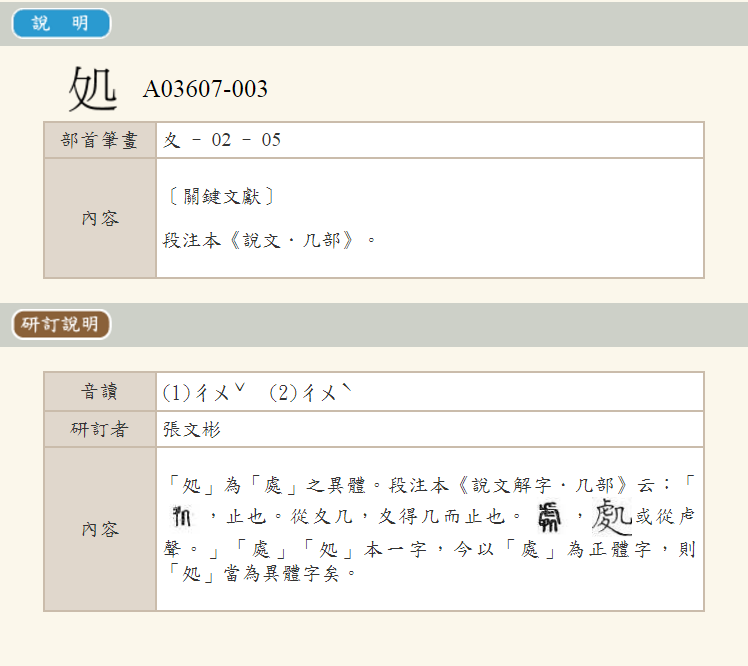
It’s interesting that the author used the shorthand 「当」 for the character 「當」, which is the same as the simplified version of the character used in China. They also use the shorthand 「処」chu3, which is a variant which differs from both the standard version of the simplified (处)and traditional character (處):

chu3
Taken from the Ministry of Education Variant Dictionary, a useful resource when you come across characters that don’t seem to exist in normal dictionaries.

This explains that 「処」 is a variant of 「處」(as is the simplified character).

I don’t know what the situation is exactly and if the car belongs to the person who put the “no parking” sign on their shutter or someone else. I’m also not sure what the 「85-7-留」 means, thought it might be a license plate or a reference to a law, but it doesn’t seem to be the latter. Let me know if you know!

Earthquake Man and Pokemon Go 地震奇人

I went to Xinbeitou today to check out all the Pokemon Go fun. Loads of people and really nice atmosphere, although drivers weren’t seeing the fun side.

[wpvideo VsvA7iOQ]

Every time there was a rare pokemon found in the park, there were whispers and a rising bubble of excitement followed by a stampede.

While I was waiting for my friend to finish up (as my battery had died), I got approached by a man with a National Taiwan Ocean University cap on his head, with the words 「地震奇人」(earthquake whisperer) along the side. He did the standard awkward stranger approach and after asking where we were from we continued to talk in a mixture of Chinese and English. He said that he didn’t understand why everyone had gone mad for the game, and said that he’d been coming to Xinbeitou for the hot springs for quite some time but it had never been so crowded before. After this things got a bit weird. He pointed to the「地震奇人」on his cap, which he said is someone who can hear earthquakes before they happen. He said he was working for free at the university as a postdoctoral researcher and that he was approaching 70 years of age. He said he was able to predict typhoons at least 8 days before they hit too. Then he took out this advertisement:

angelina-jolie

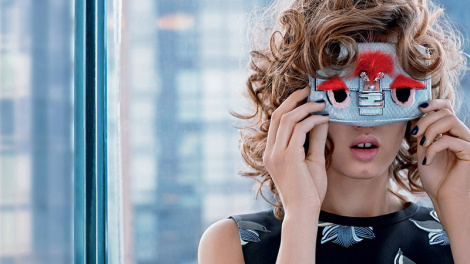
He asked me what I thought of the picture. Then started to describe how the different shapes represented different things. Like the mountain in the background is important because it represents a goal, and something about how it has its inverse in the neckline of Angelina Jolie’s top. The arm making an “L” shape and her leg an inverted “V” also featured. Then he started talking about the mangroves and what they represented. He then took out several other pictures. One was of a Fendi Karl Lagerfeld campaign as below:

fendi-ss15-campaign-08

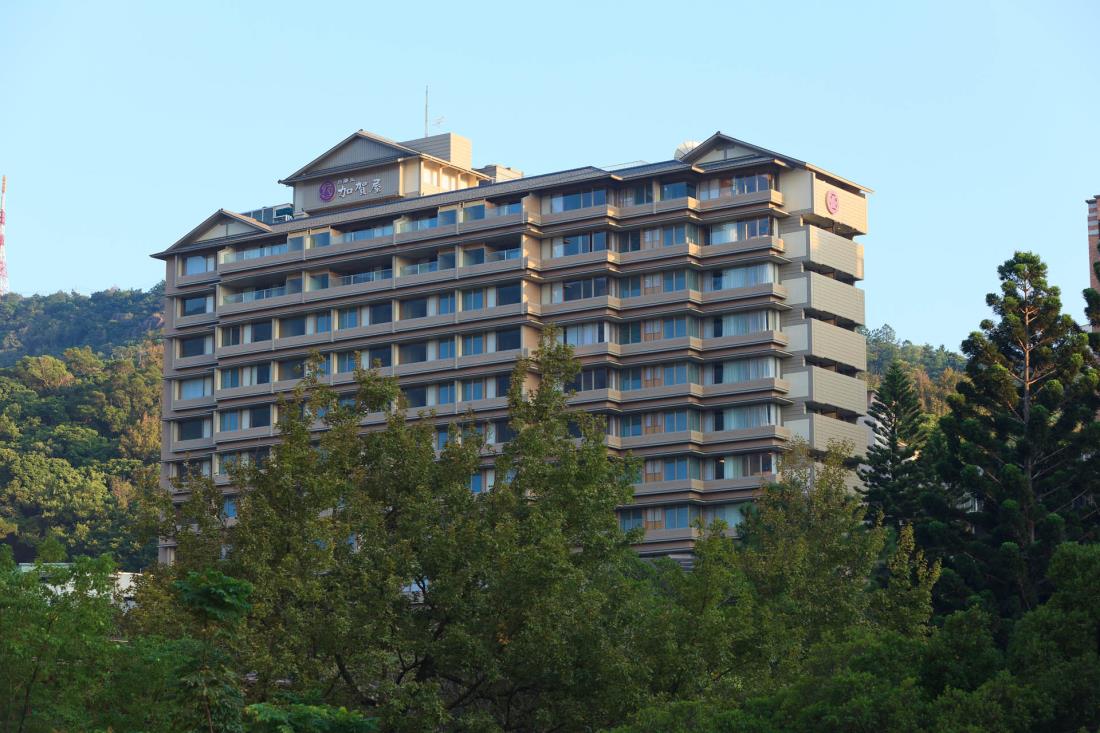
He said he was a structural engineer and had also studied economics, so he had created his own field which he calls “economic/financial architecture” or something similar. He took out a graph showing the stock price fluctuations of 東鋼 (Tungho Steel), when I asked him why Tungho Steel, he said it wasn’t important, that it was just about the shape of the fluctuations on the graph. He took out picture of two nearby buildings, which were visible from where we were standing. The first was the Radium Kagaya, pictured below:

radium_kagaya

He kept stressing the importance of threes, in particular, how the building moves out in three blocks from the right. He also had a picture of the building below, which neighbours it:

394975433

It’s slightly harder to see, but he had another theory about the shape of the medium bit of this building, as the three parts towards the top have a different shape than the ones below.

He said his method of analysis was based on the discoveries of Robert F. Engle III and Clive W.J. Granger, who won the Sveriges Riksbank Prize in Economic Sciences in Memory of Alfred Nobel 2003, the former for “methods of analyzing economic time series with time-varying volatility” and the latter for “for methods of analyzing economic time series with common trends (cointegration)”. It was slightly odd, because he kept mentioning the concept of qi (氣) too. I’m not sure how his interest in economic trends in the real estate market related to the shapes of the buildings. But I thought it was an interesting encounter I’d never have had if not for Pokemon Go.

Protests in Taipei: Uber vs Taxis; Land Rights and Illegal Buildings

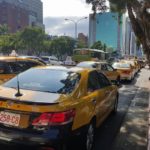
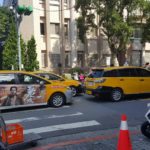
Last week I saw taxis besieging the Executive Yuan (between Shandao Temple and Taipei Main MRT) over the government’s failure to crackdown on Uber quickly enough.  Taxi drivers were protesting because of Uber’s refusal to be subject to taxi regulations in Taiwan‬ and it’s refusal to clarify its tax status. My colleagues at work had a related discussion last week over whether existing (over?) regulation is strangling disruptors in the interest of maintaining the status quo. While there were a wide range of opinions as to whether Uber‬ is, in fact, bringing anything new to the Taiwanese industry as a disruptor or whether it’s just trying to dodge consumer protection regulations and tax, the conversation can be extended beyond Uber to the financial sector and further afield. Some of my colleagues thought the government was being too cautious when it comes to providing legislative flexibility to innovative industry disruptors while others thought existing legislation was just common-sense protection for industry players and consumers? The government announced that they are going to launch “diversified” taxis, but it’ll be interesting how the story develops beyond just the Uber issue.

14113855_10102698126945749_1402786384_o

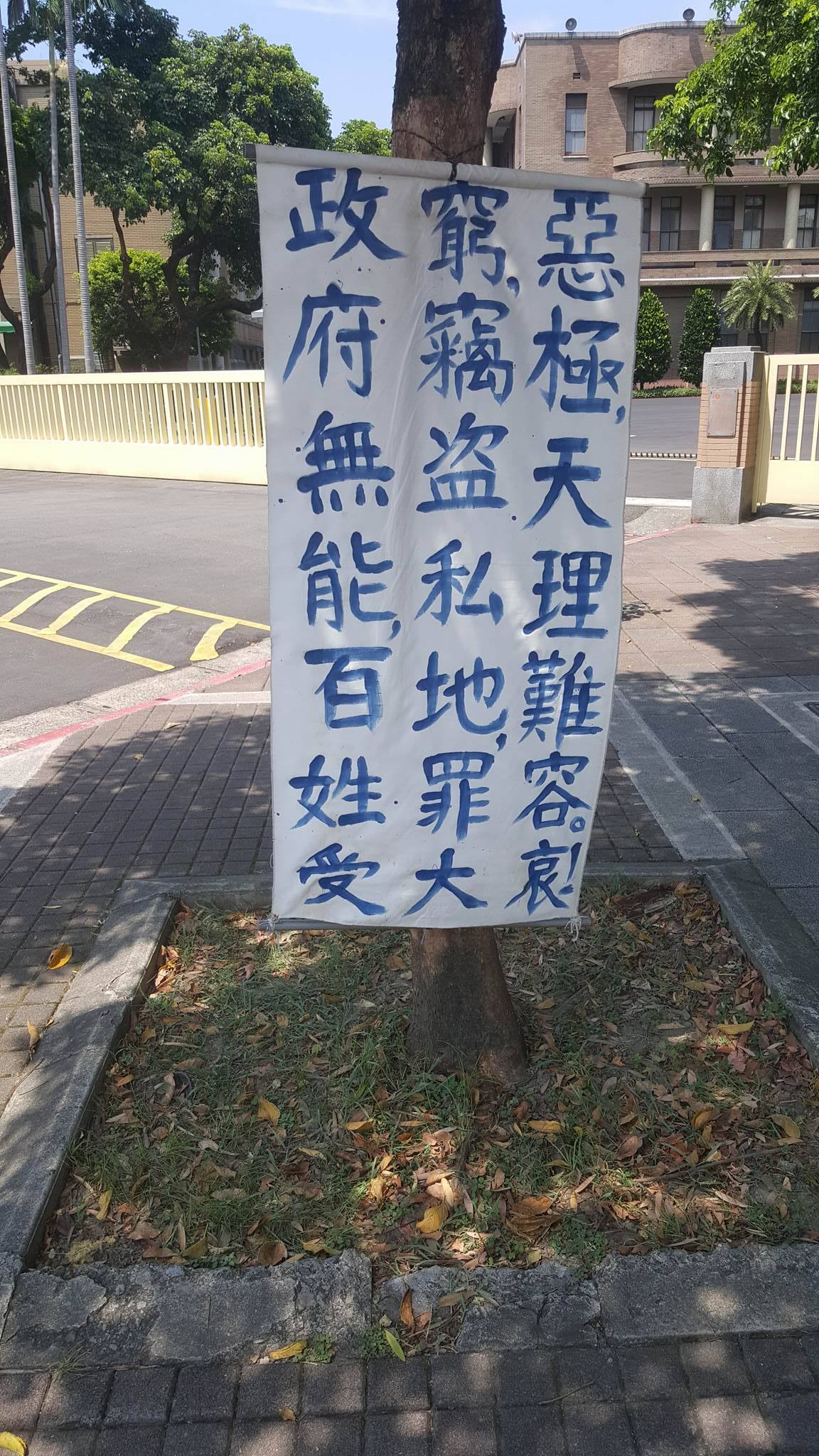
About a week prior to the taxi protest, I was passing by the front of the Executive Yuan when I saw this protest placard, along with a single protester. It reads:

政府無能,     [When] the government is inept,

百姓受窮,     the ordinary people are forced to live in poverty;

竊盜私地,     Stealing private land

罪大惡極,    is an extremely pernicious crime.

天理難容。     [which] the heavens cannot tolerate.

哀!     Woe!

I’m not sure if it was a specific grievance as I didn’t stop to chat, but maybe someone can help me out in the comments section.

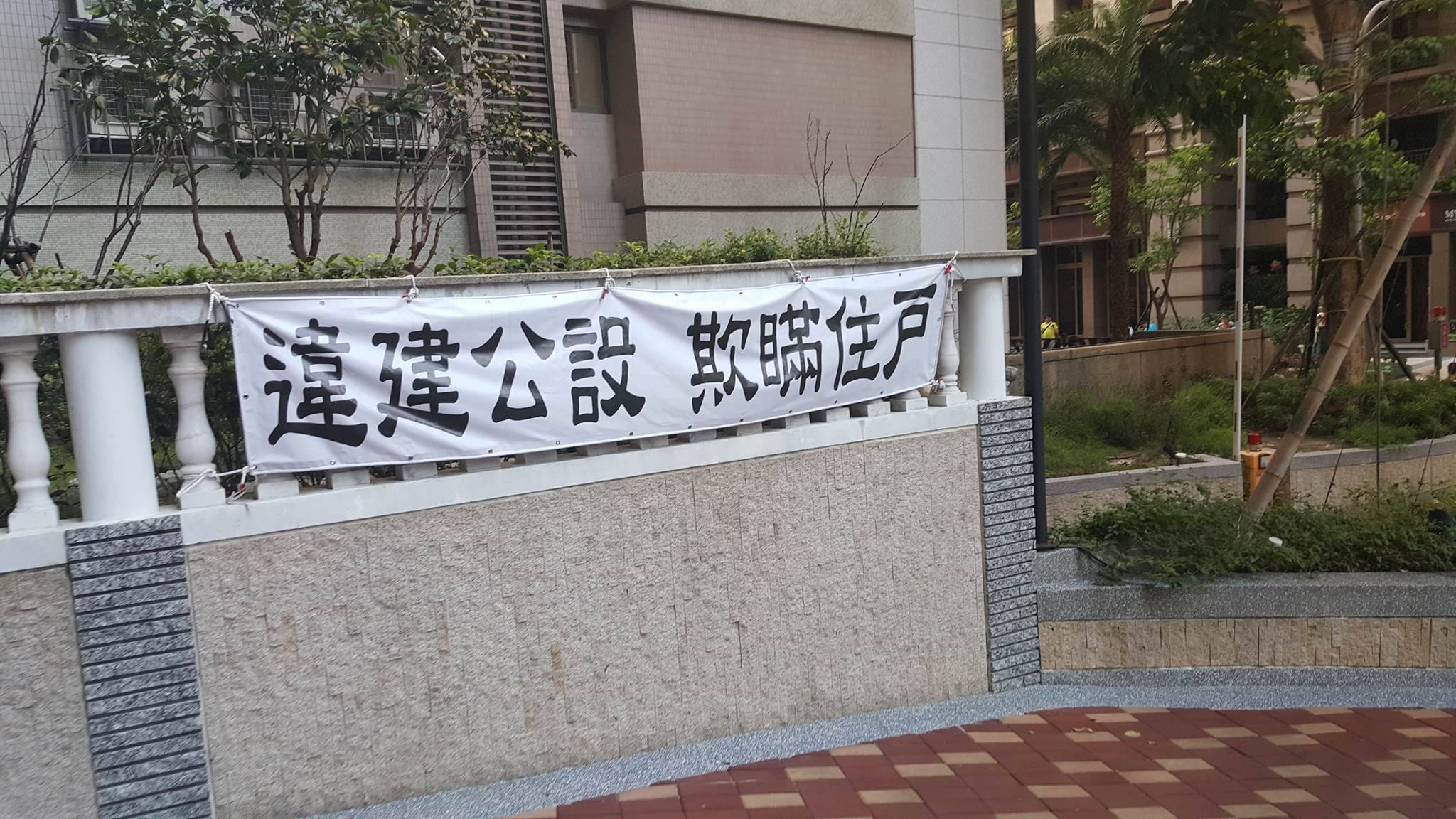
I saw the banner below outside my friend’s housing development when she invited me for a barbecue/pool party there (near Qizhang MRT – opposite Carrefour):

14087629_10102698119340989_1109875244_o

Common facilities (of a residential complex) are illegal buildings, the residents have been lied to

From what I’ve gleaned from the internet, this is a controversy over certain common areas of a residential complex which were built without planning permission by the developers. The city government then demolished or plans to demolish these areas and the residents are protesting because they were sold their apartments under false terms.

If you’ve seen any disgruntled looking peeps holding signs let me know in the comments section!

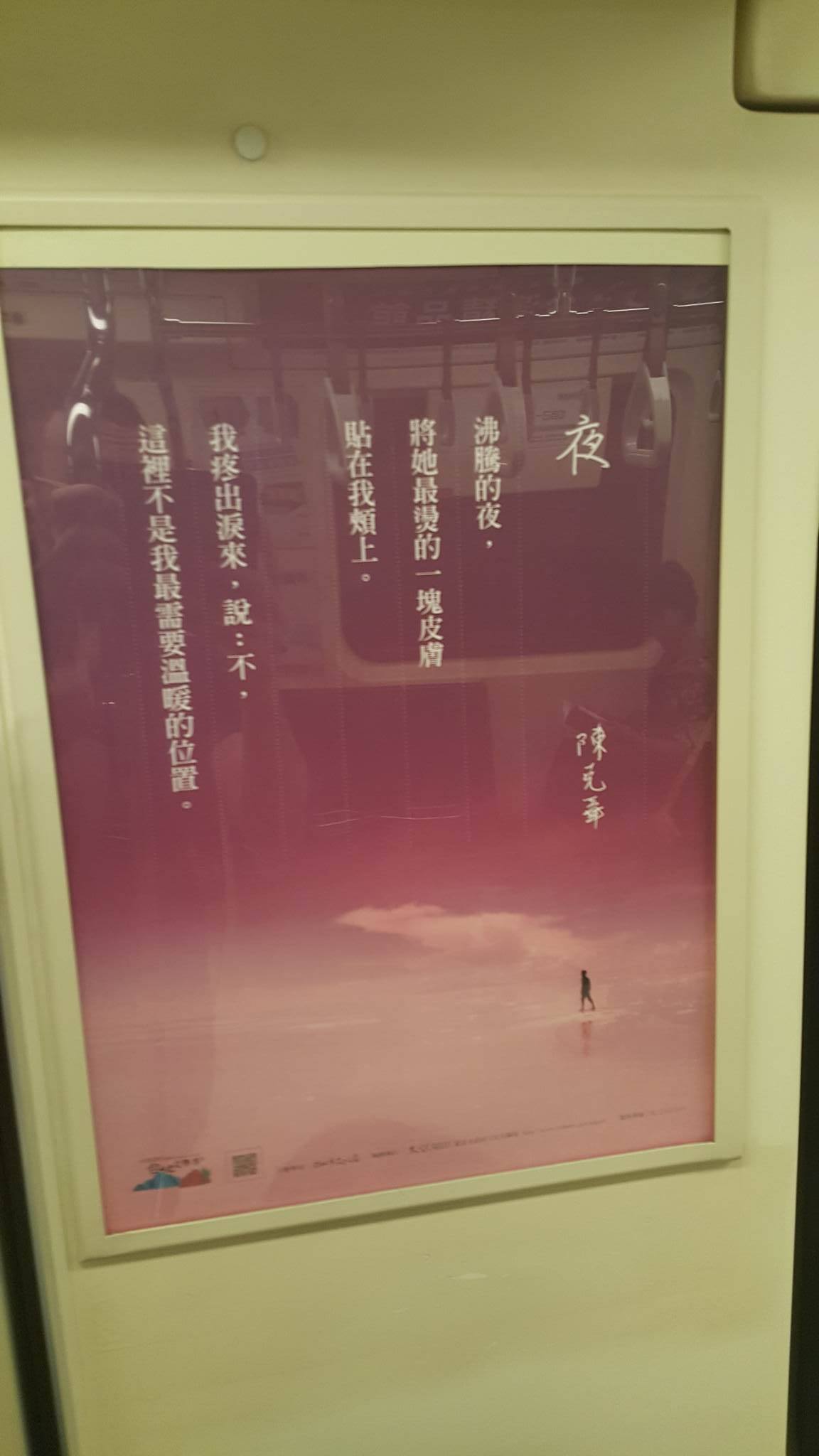
MRT Poetry: Chen Ke-hua’s ‘Night’ 捷運詩句:陳克華的「夜」

14114710_10102698113856979_1574419286_o

Another day, another opportunity to lean over someone to take a photo of the poem on the MRT behind them. This one’s by Chen Ke-hua and I thought it was pretty appropriate for this humid summer night.

夜     Night

沸騰之夜,     The Simmering Night,

將她最燙的一塊皮膚     Lays the most scalding piece of its skin

貼在我頰上。     Against my cheek.

我疼出淚來,說:不,     I cry tears of pain and say, “No”,

這不是我最需要溫暖的位置。     This isn’t where I’m most in need of warmth.

Chen was born in 1961 and was born in Hualien in Taiwan, although his family were originally from Wenshang in Shandong. After graduating from Taipei Medical University he started his career in medicine. In 1997 he studied at the Harvard Medical School, returning to Taiwan in 2000. He now works at the Department of Ophthalmology of Taipei Veterans General Hospital and as an assistant professor at the medical school of National Yang Ming University. As well as his medical career, he’s also a poet, an author, a painter and a photographer.

Update: Tea Trademarks in Taiwan

13833016_10102631328146079_23349234_o

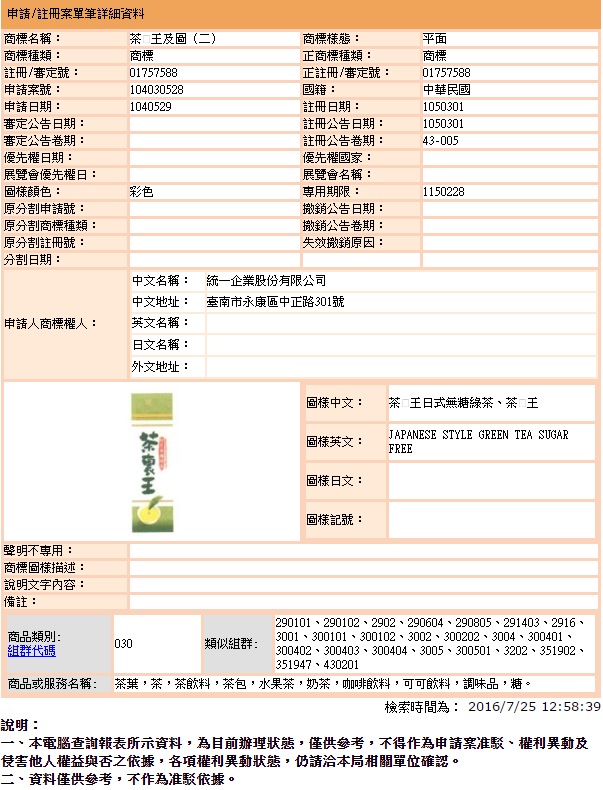
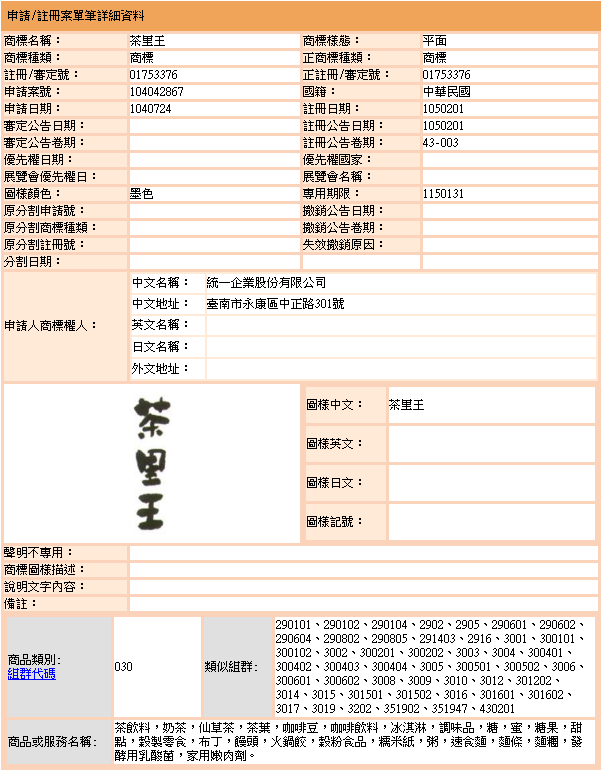
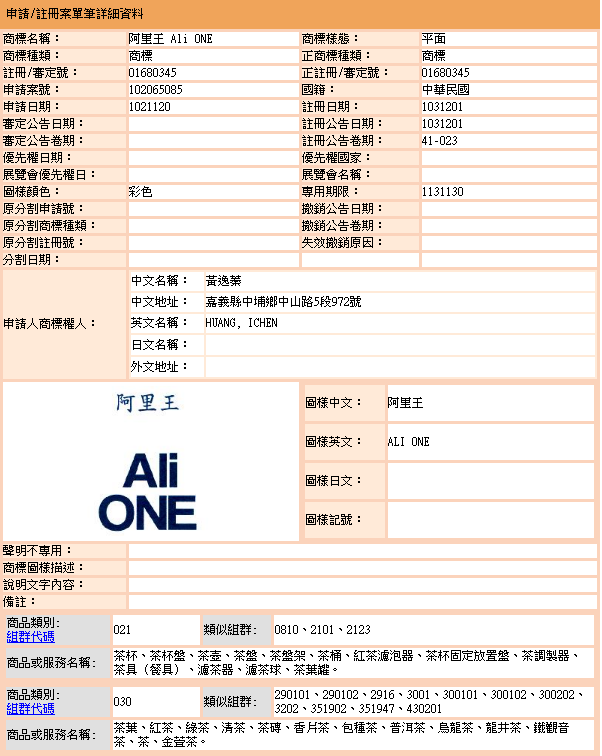
I recently posted about a trademark lawsuit in Taiwan, involving Uni-President Enterprises Corporation’s tea brand 「茶裏王」 and 「阿里王 Ali One」. I pointed out in the post the difference in the second characters of each brand name. However, I recently checked the trademark database in Taiwan and found that Uni-President has registered both 「茶裏王」 and 「茶里王」 as can be seen below:

chaliwang.png

You’ll notice, amusingly enough, that the character 「裏」 doesn’t even show up on the Taiwan Intellectual Property Office trademark search website – and is displayed as just a blank box. The missing character is pictured in the image, however.

chaliwang2

This makes the judgement I previously mentioned a little more understandable, given that two out of the three characters are the same (even if they have different meanings). You’ll also notice that the product ranges to which the second trademark is applied is broader than the first.

Here’s the registration for 「阿里王」:

AliOne

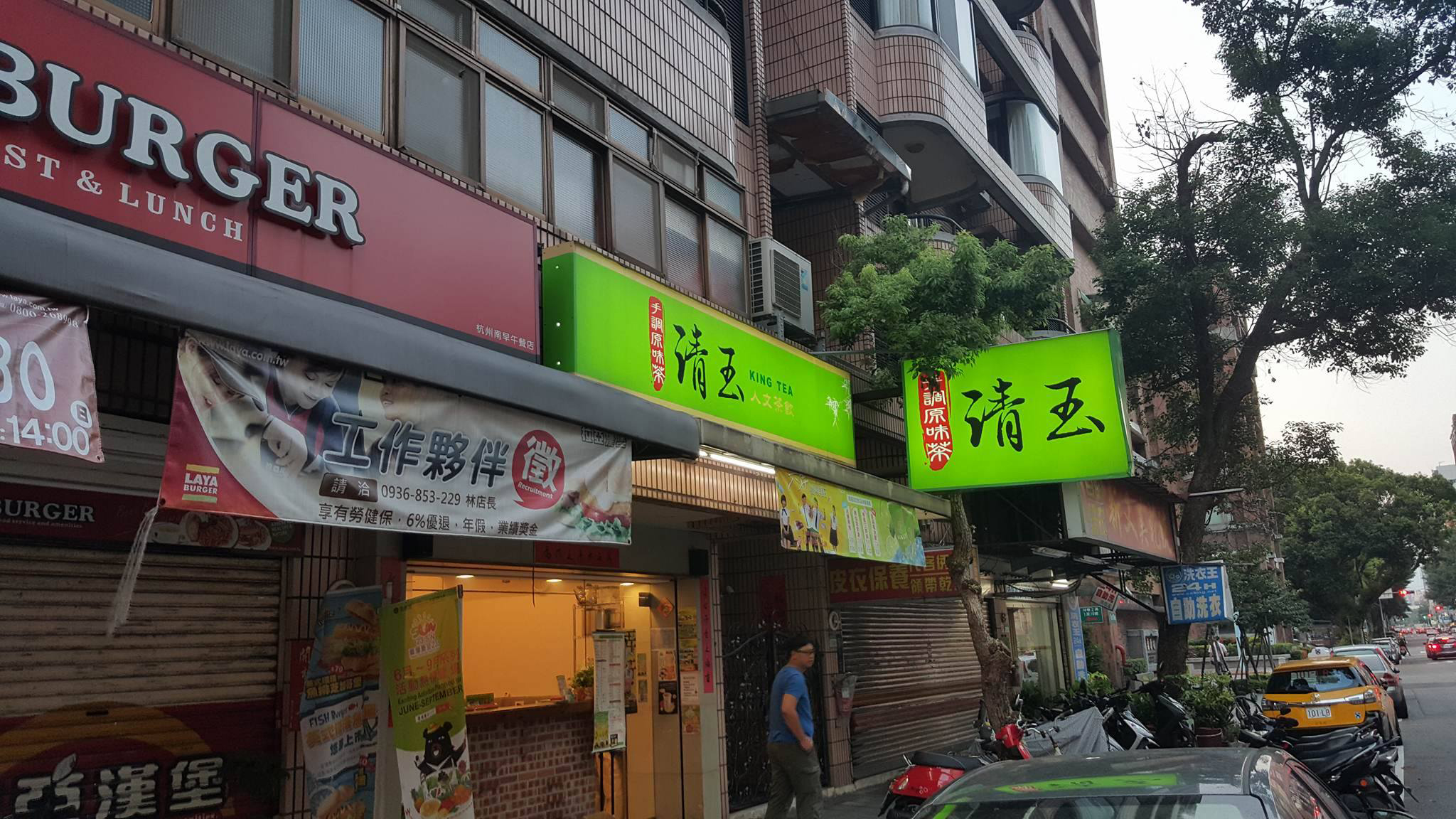
Interestingly, the English translation for 「茶裏王」, “King of Teas”, doesn’t seem to be a registered trademark. So many companies and brands adopting similar English names is allowed, like the one at the head of this article (King Tea).

Tea Trademarks and Chinese Variants: King of Teas/Ali One Tea Dispute 茶裏王/阿里王商標大戰

13730546_10102616344538349_1668283995_oI thought that the recent trademark dispute between Taiwanese tea brands 「茶裏王」 (King of Tea) and 「阿里王 Ali One」 that resolved in favour of the former was interesting because two characters 「里」 and 「裏」 have been seen by the Taiwan Intellectual Property Court as the same character.

「茶裏王」 was launched in the early 2000s by Tainan-based international food conglomerate Uni-President Enterprises Corporation, while 「阿里王 Ali One」 was launched in 2014 by a woman called Huang Yi-zhen (黃逸蓁).

The name 「茶裏王」 translates to “King of Teas” because the 「裏」, a common variant of the character 「裡」, means “among” or “in”  – so it’s literal meaning is “among teas a king”. 「阿里王」 however, just uses 「里」 as a phonetic particle as part of 「阿里」which alludes to 「阿里山」 (Alishan National Scenic Area) – which itself is a transliteration of the Tsou (鄒) aboriginal name for the area “Jarissang”. In fact, although 「里」 means “in” in simplified Chinese, in which it is used in place of 「裡」 and 「裏」, in traditional Chinese, it is only used as a unit of measurement (approx 500m) and for an administrative unit under township (neighborhood/village). Each district in Taipei has an individual li, as shown in the street sign below:

13709674_10102616934336389_2086533172_o

While the 「王」 in 「茶裏王」 means “King”, the 「王」 in 「阿里王 Ali One」 appears primarily to be a transliteration of the English word “one”, hence the product’s English name. A similar example is the 「旺」 in 「旺旺集團」, which is anglicized using the English word “want”, to give you the Want Want Holdings Group – the company at the center of the media monopoly protests in Taiwan and my former employer. However, there’s also a sense that the 「阿里王 Ali One」 trademark is also playing off the use of the word 「王」 as both a transliteration and for its literal meaning as “king”, i.e. King of Ali (referencing Alishan, an important tea-growing area in Taiwan). So the case for the third character is not as strong as that for the second, in my unqualified view.

Thus, the Intellectual Property Court finding as quoted by this report on the trademark case would seem to be incorrect:

智財法院認為,「茶裏王」、「阿里王Ali ONE」商標都是用於茶葉商品,第二個字皆有「里」字,第三個字皆為「王」字,對消費者而言近似程度高,加上「茶裏王」商標使用久、知名度高,因此應給「茶裏王」較大的保護,今判統一勝訴,智財局須撤銷「阿里王Ali ONE」商標註冊,全案仍可上訴。

The Intellectual Property Court found that the trademarks “茶裏王” (King of Tea) and “阿里王 Ali One” are both used to market tea products, and that the second character in each is “里” while the  third characters in each are both “王” (King), so they are very similar for consumers. In addition because the “茶裏王” trademark has been in use for a long time and is very well-known. because of this, “茶裏王” should have greater protection, so Uni-President Enterprises Corporation won the case today, and the Taiwan Intellectual Property Bureau rescinds the trademark granted for “阿里王Ali One”, although the case is still subject to appeal.

The 「茶裏王」 bottles have recently been featuring thought-for-the-day style “profundities” (note the use of speech marks) such as the one below, which I thought was particularly apt to go with this post:

13702265_10102616344643139_102669126_o

Photocopy machines are used to remind you

That if you only copy

You’ll stay in the corner forever

Have you done something innovative today?


Taiwanese phrase: Pretence of diffidence when you really can’t help yourself -「愛甲給細二」/「愛食假細膩」 ài chia̍h ké sè-jī

Greed,_1924,_06_banchetto
I was talking to my friend when he started talking about the vibe in Taipei bars, in the sense that people always complain about them every week, but still end up there anyway, due to fear of missing out. He said the following:
每周都出現在同樣夜店的人 嘴中總是掛著"I hate this place" “so boring here”但還是每周都出現,「愛甲給細二」。
(The people who turn up at the nightclubs every week are always saying “I hate this place” and “It’s so boring here”, but every week they turn up, they pretend diffidence, but they love it really despite themselves.)
The Taiwanese phrase he uses 「愛甲給細二」 is likely 「愛食假細膩」 ài chia̍h  sè-jī. This is equivalent 「貪吃假裝客氣」 in Mandarin, so “people who love to eat, pretending to be polite about it”.
There is also an alternate phrase with the same meaning in Taiwanese, which is pointed out at the Taiwan Language blog:
「iau(夭)鬼假細膩」  iau-kúi  sè-lī  which translates as “a glutton pretending to be polite”.
 Photo from Greed (1924) – Public Domain

MRT Poetry: ‘Mental Image’ by Yan Ai-lin 捷運詩句:顏艾琳的「意想圖」

There’s still plenty of nice poetry to be found on the MRT when you’re out and about in the city.

13709612_10102606285766209_1770654764_o

意想圖

Mental Image

木訥之僧在街口肅立

An unaffected taciturn monk stands solemnly on the corner

他伸出雙手

With both hands outstretched

十指化為一隻缽

His ten fingers forming an alms bowl

化著路行者的隨緣心

Shaping the casual kindness of passersby

Yan Ailin was born in 1968 in Tainan. She graduated in history from Fu Jen Catholic University. She is a poet, a lecturer and an author.

N.B.  Variants of 「缽」 featured in a previous post.