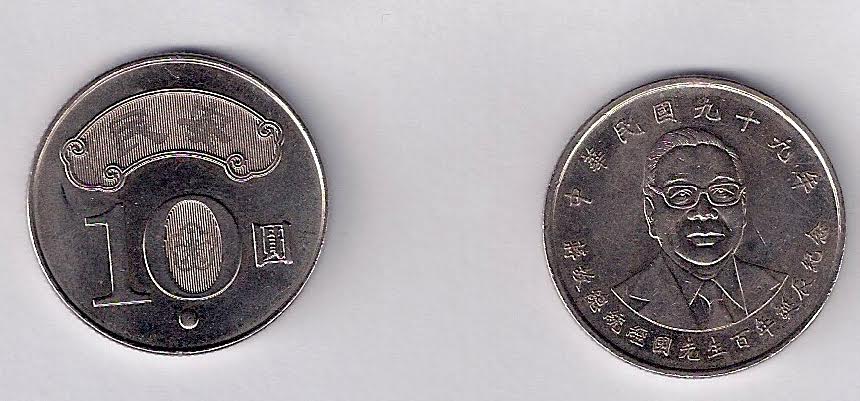
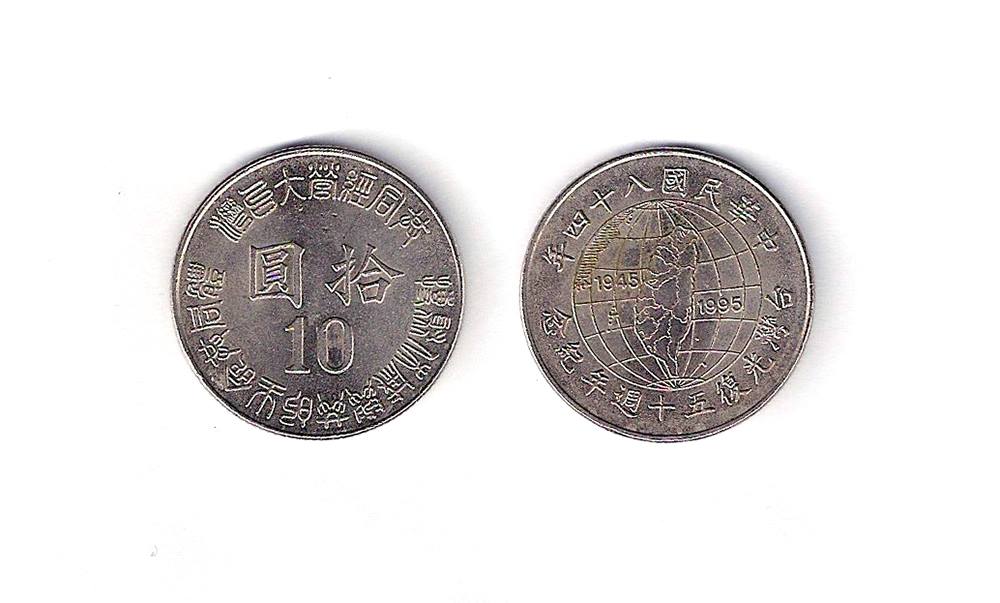
Commemorative $NT10 pieces – the 50th anniversary of Taiwan being ceded to the ROC

12294936_10153803669373593_1162419572_o

Geeking out again after discovering another commemorative coin. The front reads 「共同經營大台灣」 (Running Greater Taiwan together) and below that “搏聚休戚與共的生命共同體” (United together through thick and thin as a community of fate). It’s written in seal script, which explains why it’s quite hard to read. I thought 「共」 looked particularly unlike it’s seal script version:
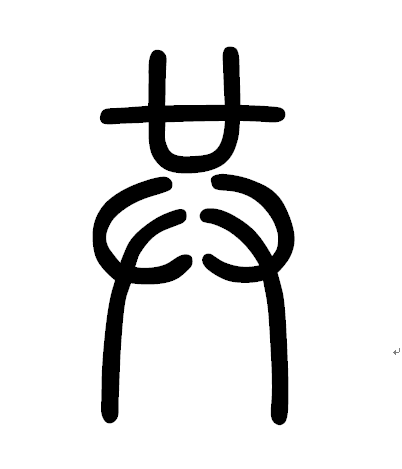
gong

However, you can see the pattern when you compare it with 與, as the bottom of both characters is the same. You can download the seal script font for programs on your computer, including Word, here, although unfortunately you have to type in simplified for it to work (after unzipping drag the TTF file into your Control Panel\All Control Panel Items\Fonts folder).

This coin was issued in 1995 to commemorate the 50th anniversary of Taiwan being ceded to the Republic of China by Japan after World War II. This is commonly referred to as 「光復」(guang1fu4) in Chinese, which literally means “to restore the light”.

This term has sparked a certain amount of controversy given its implication that those living in Taiwan under Japanese rule were living in “darkness” until Chiang Kai-shek came to bring them to the light. The government of Taiwan launched a series of campaigns to attempt to “re-sinicize” and the populace of Taiwan, which the Republic of China government felt had been brain-washed or “enslaved” (奴化) by the Japanese in during the 50 years of colonial rule. The local population had been introduced to modernity under Japanese rule, but many artists and writers faced persecution or marginalization under the new Kuomintang government, as they were seen as collaborators by the new regime or never properly got to grips with writing in Chinese. Those who had been formally educated in the Japanese language had to learn Mandarin and this led to much of their work being overlooked until more recently, when it was translated from Japanese.

There is an excellent book on this period by historian Huang Ying-che (黃英哲) called Uprooting Japan; Implanting China: Cultural Reconstruction in Post-War Taiwan 1945-1947 (《「去日本化」「再中國化」戰後台灣文化重建(1945-1947)》): Continue reading
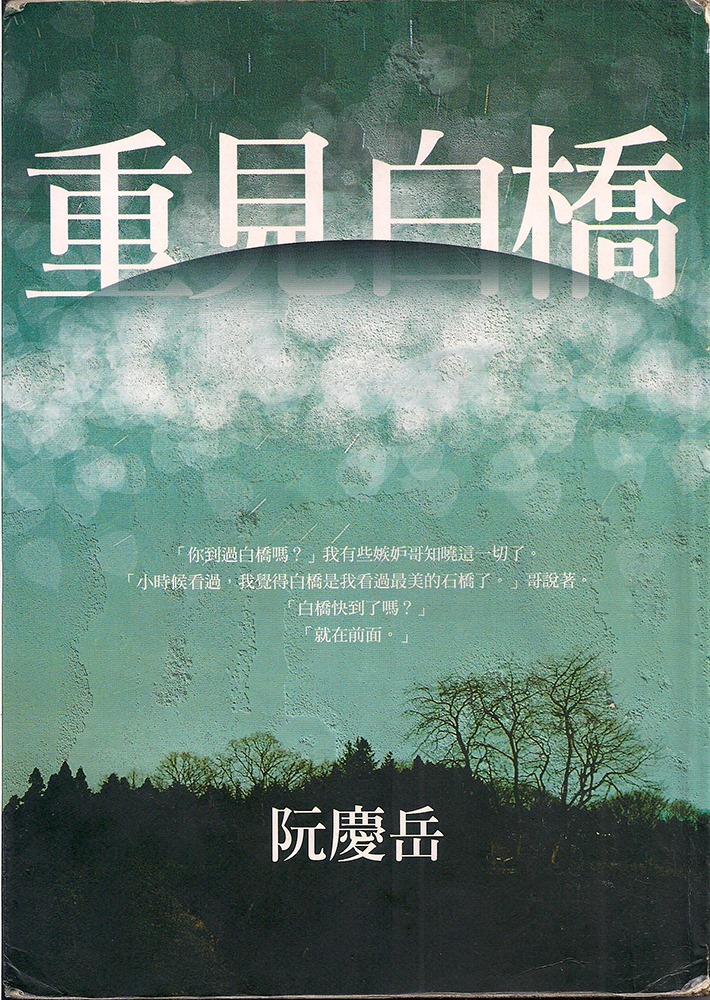
Review of ‘Revisiting the White Bridge’ by Roan Ching-yue 書評:阮慶岳的《重見白橋》

12299839_10153803669468593_601541106_o

*Contains spoilers*

Roan Ching-yue is an architecture professor in Taiwan and has written several stories featuring gay themes, including ‘The Pretty Boy from Hanoi‘ and ‘The Con Man‘ (click through for my translation), both featured in the short story collection City of Tears (《哭泣哭泣城》), this was his first long-form novel and it was published in 2002.

We meet the protagonist of this novel at a time of crisis. An only child, he meets a man resembling his dad who claims to be his brother by the same mother and father. Despite the questions that surround the man’s sudden appearance in his life, he accepts him as a brother pending further inquiry. It’s at this time that he finds out that his company is moving the majority of its employees to China, so he quits and fails to find another job, so has a larger amount of free time. Over this period he discovers that his “brother” is gay and then we are introduced to the brother’s perspective, with a chronicle of his childhood growing up in Australia and his wild sex life.

The glimpses we get of the brother’s life, show him to be a lot more carefree than the protagonist, however, one of the main stories he recounts involved an attempt to shame him:

[My translation] I was once at a motel in Los Angeles and, bored, so I decided to pleasure myself. I stuffed the cap of a bottle of shaving cream into my ass. As I was unable to get it out again, I had to go three days without moving my bowels. I gradually lost my appetite and my face turned a shade of reddish purple. The doctor at the emergency room knew, of course, what I’d done, but he insisted on forcing me to recount all the gory details of what I’d gotten up to that night in the motel room in front of a group of strangers comprised of interns and nurses. He made me lie squatting on the bed like a dog, while he and his female assistant tried in vain to take it out, threatening that if I didn’t cooperate as best I could, he would have to cut my anus open with a knife. I calmly asked him: How long would the wound take to heal if you cut it open? He said: Maybe a lifetime, maybe you’d never be able to use it again for anything but shitting.

I accepted him shaming me through the entire process and at the moment when he finally retrieved the plastic cap, I sprayed the shit I had accumulated over several days out of my elevated ass all over him and his assistant just as the cap slid out.

This was shame’s parasitic twin, revenge.  [pg. 138]

Continue reading

Overheard Moments – Taiwanese on the streets 街巷台語

268498_10100230988520929_7221703_n

I love hearing snippets of people’s conversations on the street and it’s always a good opportunity to learn more of a language. I overheard the below exchange about a wedding invite grudge:

Woman: mài (不要) 等(tán) 七(chhit) 年(), mài(不要) 講(kóng抵好(tú-hó只好)  好() 一(chi̍t) 工(kang, 天) 伊(i他) 可能(khó-lêng) 硬(ngē) 掙(chiⁿ), 伊(i他) 都(to) 掙(chiⁿ) 去({k}hì).

Woman: Don’t wait seven years, then one day… Maybe even if she has to force her way in she will still go. She will still go.

á 阮(góan我) a 姊 (chí) 伊(i他)   (也) 無() 可能(khó-lêng) 去({k}hì), 因為(in-ūi) 伊(i他) koh(又) 食素(chia̍h-sò͘). 人(lâng人家) 都(to) 無() 位(ūi) 褪 (thǹg (讓))  hō͘ (給) 伊(i) 坐(chē), 伊(ibeh(要) 去({k}hì) 創啥 (chhòng-siáⁿ做什麼)?

My sister can’t possibly go, because she is a vegetarian. They aren’t able to give her a place to sit, so why would she go?

Man: 無() 位(ūi) 妳(koh(還/又) beh(要) 去({k}hì)?

Man: If there is nowhere to sit she still wants to go?

Woman: 人(lâng人家) 曾XX (姓名) 干單(kan-nā(只有)) 僎(chhôan(準備)) 一(chi̍t) 桌toh  ??? (anninia). m̄是(m̄-sī不是) 阿強 著是(tio̍h-sī就是) 愛(ài(要)) 坐(chē)  主(chú) 桌toh.

Woman: Zeng XX should at least prepare one table for her. Shouldn’t A Qiang in the most important spot.

Feel free to contact me if I’ve misunderstood the above conversation or if you’ve got any Taiwanese words or phrases you hear and want featured on the blog.


What the hell are you playing at? 變啥魍? pìⁿ siáⁿ báng (搞什麼鬼)

12212441_10102240168592959_494634370_n

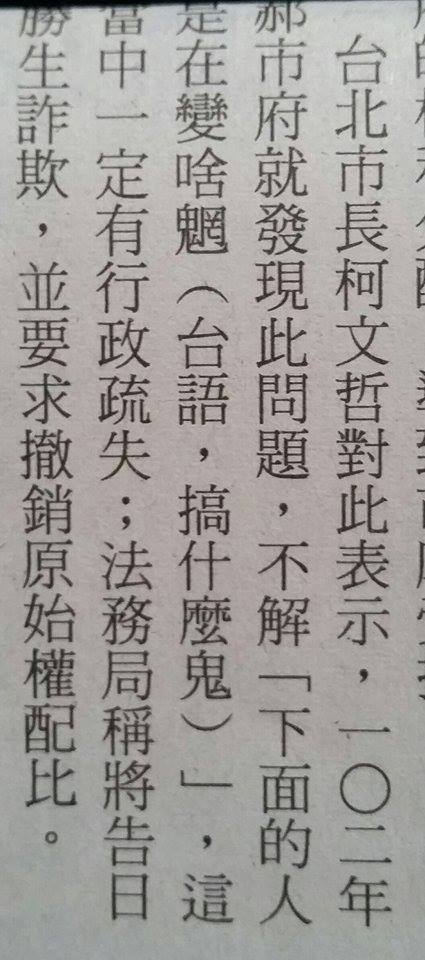
Found this in yesterday’s Liberty Times (《自由時報》), a paper that leans towards the major opposition Democratic Progressive Party (DPP) and Taiwanese independence. It was a front page story on a housing developer that is accused of misrepresenting the square footage of  a development that they were working on in cooperation with the Taipei city government. In the course of the article it emerges that the city government had previously been informed of the expected difference in square footage, at which point incumbent mayor Ko Wen-je (an independent with DPP leanings who secured a win in the mayoral election with a non-partisan platform), states that he doesn’t understand what the hell the people in the lower ranks of the Taipei City government are playing at:

不解「下面的人是在變啥魍」

This is a useful phrase if you want to substitute the phrase 搞什麼鬼 in Mandarin for the Taiwanese phrase 變啥魍 pìⁿ siáⁿ báng (Unfortunately the normal dictionary I use is out of action so you’ll have to click through to get access to the button to play the sound. There is no audio file for 「魍」, however 「蠓」also  “báng” is pronounced identically so I’ve provided the link to that sound file instead.)

As I’ve stated in previous posts, you’ll commonly hear Taiwanese phrases inserted into Mandarin sentences – and this is the best way to start learning Taiwanese if you don’t yet know how to have a whole conversation in Taiwanese.

Feel free to contact me with any cool Taiwanese words or phrases you hear and want featured on the blog.

‘The Con Man’ by Roan Ching-yue 〈騙子〉阮慶岳

12179644_10153746244263593_3432586_n

He was a con man.

He felt like a cotton-bound paper lantern, panicking that he would be seen through at any moment, giving off, as he was, a glow of affability and affection from every pore, both tantalizing and haughty. After he’d finished a con, he gave his arrogance even freer reign, but he wasn’t normally able to trust his feelings to others. They were his private hoard, a secret love affair, delectable, but not to be shared out loud. Sometimes he felt so stifled that it was as if his insides would rip open in a roar, but then he would use a soothing motherly tone to subdue his organs, bursting as they were with pride-fed excitement, saying, Be good now, I know… but you can’t tell anyone! You can’t tell anyone! You should all be quite aware of that now, shouldn’t you!

The jubilation was like an infant wailing for its mother’s breast, making him feel like a helpless new mother cradling it closer to his chest, rocking it and saying, Don’t cry, don’t cry, come on! Let’s go for a walk to the riverside and see the rainbow. On the street he would be even more cautious, not allowing his arms to fall from his body for even an instant, for fear that the infant inside him would start to wail. Try though he might to contain himself, he wasn’t able to disguise an appearance of self-satisfied mirth and haughtiness, in the drab blur of the crowds, especially with his lantern-like translucent splendor.

His organs would be soothed by the sight of the rainbow and enter into the heavy slumber of sated beasts. However, sometimes the joy he felt was so strong, it would wake him up at night and he would break his taboo by spilling all to his beloved stuffed goose. Like tonight… he couldn’t get images of A out of his head, flowing like restless spirits struggling to emerge from within him, scattered over the countless past months, like colored flags which circle happily in the wind over time, illuminating the lantern case which shrouded him to such an extent that it was as if he would burst into flame any minute.

On nights like this he was left with no other option but to tell the story of A at length to the attentive-looking stuffed goose.

I Lie Because I Love You

Continue reading

Thailand – the writing is on the roof

image

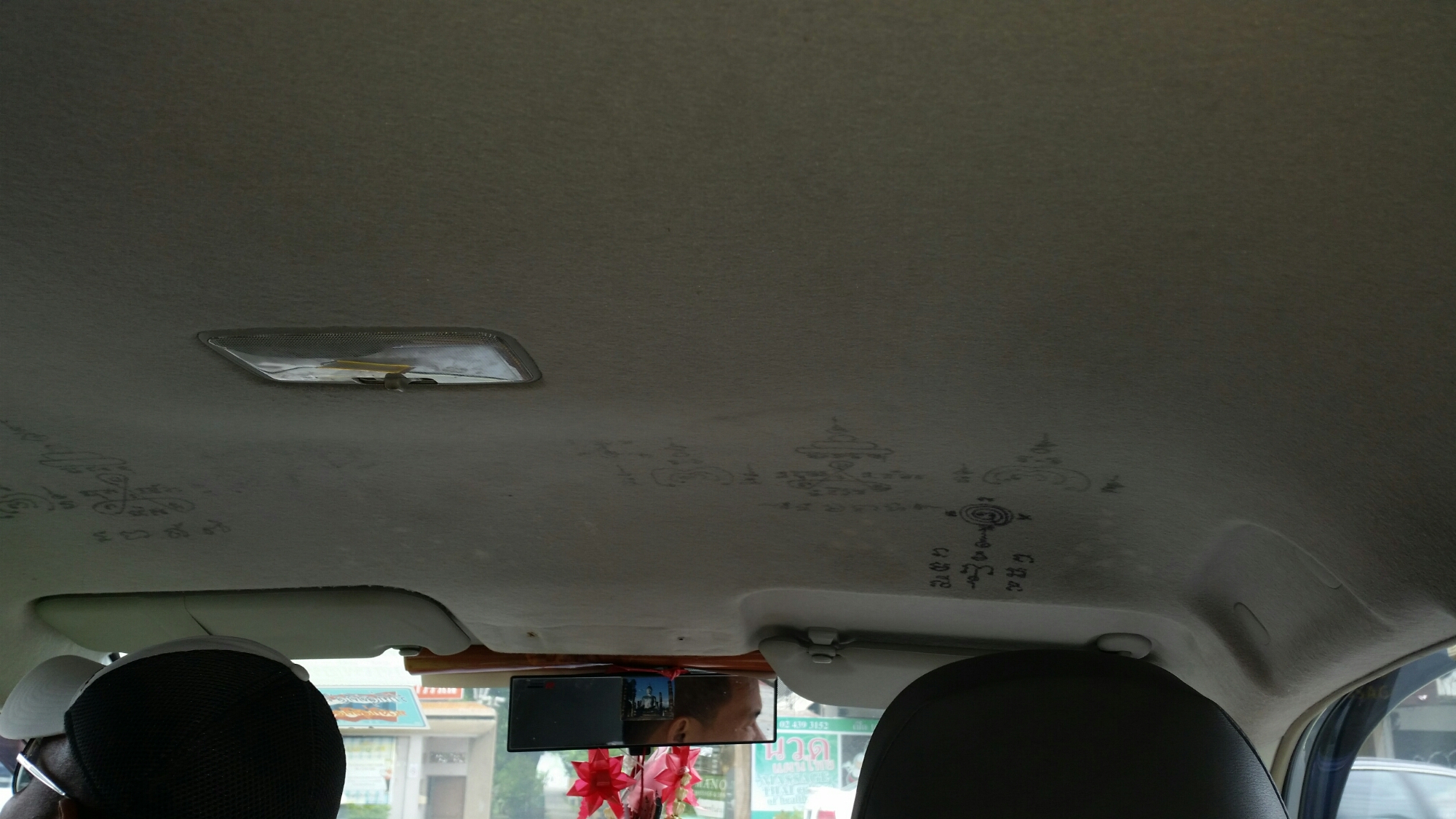
On a brief holiday to Thailand and noticed certain taxis (not all) have what look like Buddhist blessings on the inside roof of their cabs. This reminded me of the holy water that irish people always put into their new car and the Buddhist symbols I’ve seen on Taipei buses which I commented on in a previous post. Anyone got an explanation of this practice. Ps. Sorry to the driver, as I think I may have scared the shit out of him by not turning off my flash. 😦

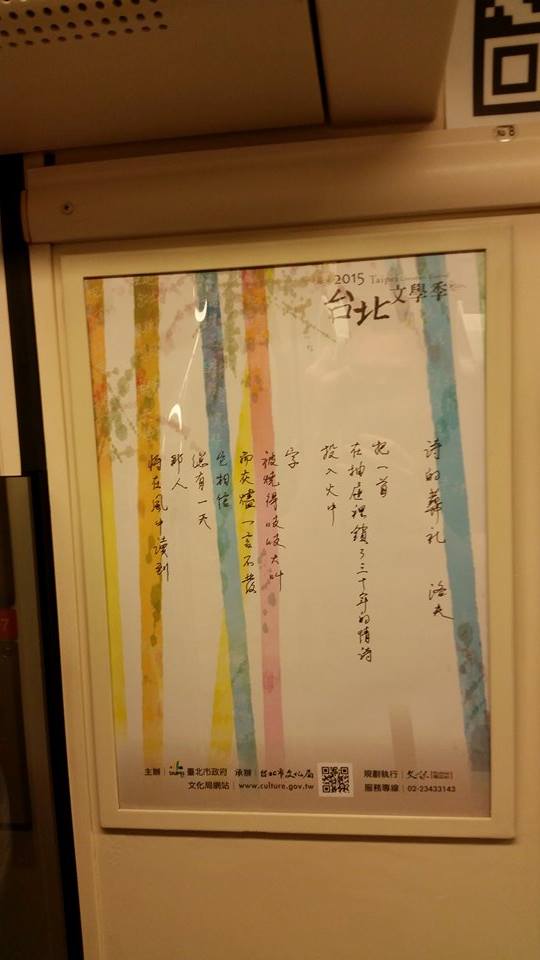
MRT Poetry 2: ‘Poetry’s Funeral’ 捷運詩: 詩的葬禮

111223


Another little poem on the MRT spotted. Anybody found any others?

詩的葬禮 A Poem’s Funeral
(洛夫著 by Lo Fu)

把一首
I put a
在抽屜裡鎖了三十年的情詩
Love poem locked in a drawer for 30 years
投入火中
Into the fire


The words
被燒得吱吱大叫
Screeched as they burned
而灰爐一言不發
While the furnace was silent
它相信
Believing
總有一天
That one day
那人
That someone
將在風中讀到
Would read it in the wind


Shamelessly Ashamed: 「不恥」 or 「不齒」 Part 2

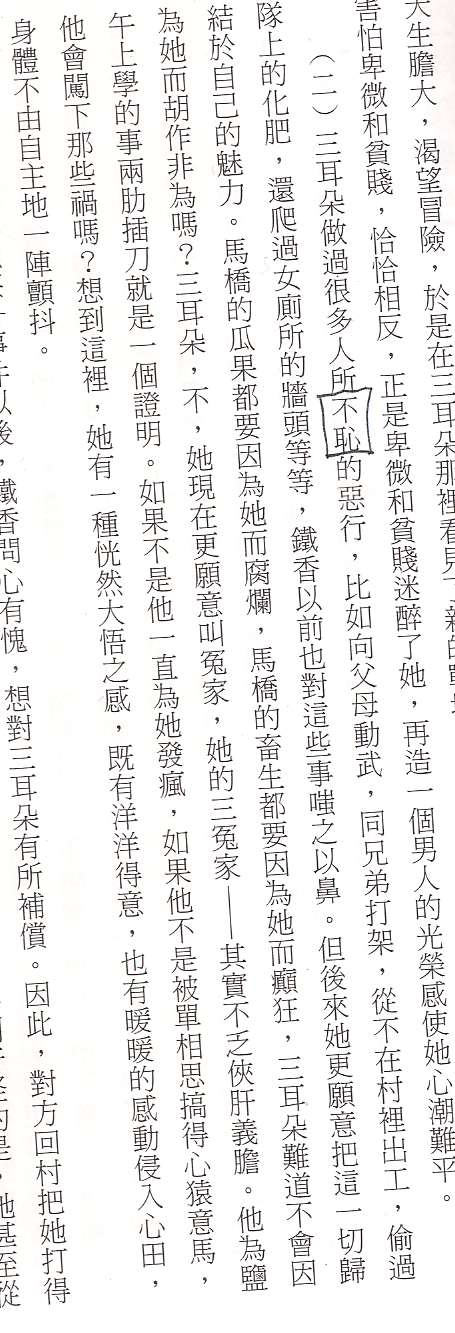
This is an update to a former post that you can check out here. The previous post described the use of the term 「不恥」(bu4chi3) in a short story by a Taiwanese author. I later came across the term again in 《馬橋詞典》 (A Dictionary of Maqiao), a book written by a mainland Chinese author:

buchi

The phrase containing it in Chinese reads:

(二)三耳朵做過很多人所不恥的惡行[……]

(2) Sanerduo had done some pretty despicable things[…]

Continue reading

A Dictionary of Maqiao 《馬橋詞典》書評

A Dictionary of Maqiao is a really considered and philosophical book, whilst managing to retain an earthiness and wit throughout. 10867069_10101763657599809_38699079_nI liked the way the narrator poses the book as an effort to deconstruct traditional story-telling. He sees the traditional novel as directing its gaze selectively – focusing in on those things that relate to the central narrative, while ignoring the things that are on the periphery of this:

Things that can’t be put in the traditional novel are normally “insignificant.” However, when your focus is theocracy, science is insignificant; when it is humanity, nature is insignificant; when it is politics, then love is insignificant; when it is money, then aesthetics are insignificant. I suspect that everything in the world has the same level of significance, however, and that the reason that some things appear insignificant at times, is because they are filtered out by the author’s framework of meaning and are resisted by the reader’s framework of meaning, as they are not exciting enough. Clearly, these frameworks are not innate and unchanging, but rather the contrary, they are reformed by fads, habit and cultural tendencies – this mould is then set in the form of the novel. [My translation]

Continue reading