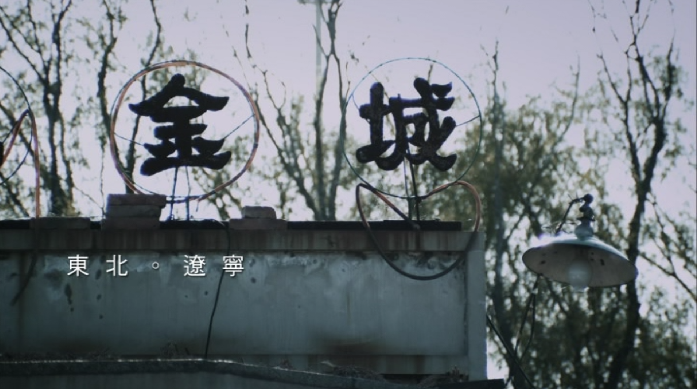
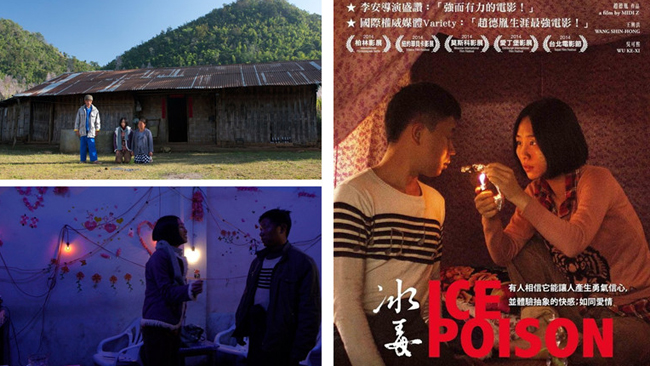
 This film is set in and around Lashio in Northern Shan State in Myanmar, a region populated by many ethnic Chinese. Some are later immigrants, while others are remnants of the retreating Nationalist Army – posted there as guerrilla forces after the main force retreated to Taiwan. Conflict between rebels here and the Myanmar central government spilled over into Yunnan province recently when a bomb dropped by a Myanmar Air Force plane killed some villagers there.
The film deals with a very current issue as the civil war in Myanmar between government forces and northern ethnic rebel groups continue. China has been struggling to outdo the US in wooing the government and the main opposition ahead of general elections there next year, although illegal border trade with China is believed to be the main supply line for rebels in the north. Chinese business people are also responsible for a lot of the illegal logging and mining taking place in the region (despite getting permits from northern rebels, many of them are aware that logging is illegal in Myanmar).
This had the unfortunate effect of raising my expectations for the film, as despite being located in a fascinating part of the world, I felt that the “love story” wasn’t done in a convincing way. The female protagonist returns from China where she has married a substantially older man, from whom she seemingly wants to escape. She travels home for the death of her grandfather, taking him funeral clothes from his hometown in Yunnan. She is driven home by a farmer-turned motorcycle driver, who is not very successful at his new job. She meets him again when he takes a message to her from the town, and eventually she proposes that they go into the meth business together, as her cousin is in the business and can set up deliveries for her. They fall in love while working together and both start using from their own supply. Eventually they get caught on a delivery and the male lead flees the scene, leaving her with all the blame. He then flees back to his rural village and appears to be in great mental trauma. The process of the female lead stripping the male lead of his innocence was portrayed in montage style, so we end up feeling distanced from the process which would have drawn us in and made us identify with the two of them. The girl’s life in China is never really presented in a way that allows us to understand in a visual sense why she comes back and what motivates her to get involved in the drug trade, as we just learn about her treatment in China through phone calls with her mother in law.
The film is beautifully shot and the issues it deals with, the rise of amphetamine in Myanmar and Southeast Asia and the poverty of Chinese ethnic groups in Myanmar, are interesting, although they get a more interesting examination elsewhere. Check out the references below for a more interesting analysis on how the meth trade is affecting China and for more news on Myanmar and South East Asia from a news site run by exiles from Myanmar.
That said, I thought that certain scenes were moving, like the death scene of the grandfather at the start of the movie and the bookend-style scenes on the male lead’s family plot at the start and end of the movie. The film does achieve its end in the sense that I was convinced of the frustration felt by these people and that there is no way out for them other than death from starvation or criminal behavior and prison, however, I felt this could have been achieved with a lot more pathos if the characters and the love between them had been more three dimensional than the “romantic montage” allowed for.