Tones play an even more important role in Chinese than accurate pronunciation a lot of the time, but you know you’re swimming in the deep end when even native speakers have to clarify the difference.
One of my friends was talking about a colleague of theirs and said:
「XX很雷,跟他共事很累。」 “XX is a real liability, working with him is exhausting.”
When the person he was talking to appeared confused, another friend clarified 「地雷的雷」.
Literally “thunder,” or “landmine” in the context of 「地雷」, 「雷」lei2 is an adjective used to describe someone as clumsy or always mucking things up. My friend made a real effort to emphasize that it was second tone, to distinguish it from 「累」 lei4 (tiring/tired).
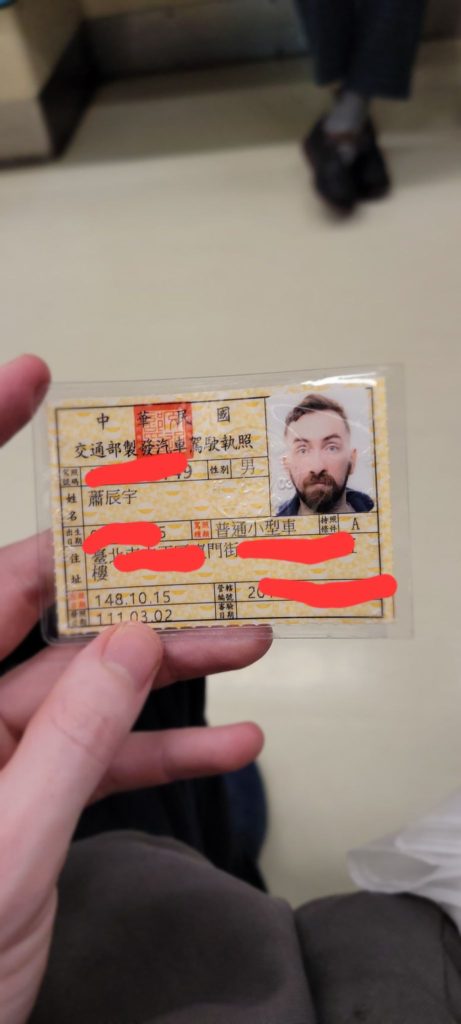
As I’m from Belfast, I thought that I’d have some difficulty swapping my license under the UK-Taiwan license exchange program. I did have to do some extra explaining but was able to swap successfully.
The initial announcement of the scheme when the memorandum of understanding was signed specified that Northern Irish licenses were excluded, but when the scheme launched in January of this year, no such exclusion was mentioned in the description of the scheme. I messaged the British Office, and they said they had no idea and told me to ask the Taiwanese Motor Vehicle Office. They were a bit more helpful and said that the agreement specified that it was the entire UK (which, of course, includes Northern Ireland).
If you’re from any part of the UK except for Northern Ireland, you can use the gov.uk system to create a check code for your license (used by the British Office to verify your license). If you’re from Northern Ireland, your license number won’t fit, however, and you have to use the NI direct system to create a check code (you have to create an account and apply to upload info on your license, but it’s reasonably simple). I created my check code (to be used within 21 days of creation) and printed out the docs.
I set off to the Taipei Motor Vehicles Office (臺北市區監理所) in Songshan District (about 10 minutes walk from Nanjing Sanmin MRT Station), but you can go to any office. When you arrive, you will have to proceed to the 2nd floor and hit the ticket machine for driver’s licenses.
Checklist:
Passport
ARC valid for at least six months
UK driver’s license
Check code
2 x Driver License (1 inch) photographs (there is a photo booth at the office)
NIA Certificate of Entry and Exit dates (Note: I didn’t bring this and they didn’t ask, but it’s listed by the British Office – link below)
The staff didn’t know what to do with the NI Direct check code, as they’d only been instructed to use the gov.uk system. So the woman came out and discussed it with me and I told her that Northern Ireland has a different agency and a different system and she said she would check with the British Office and get back to me.
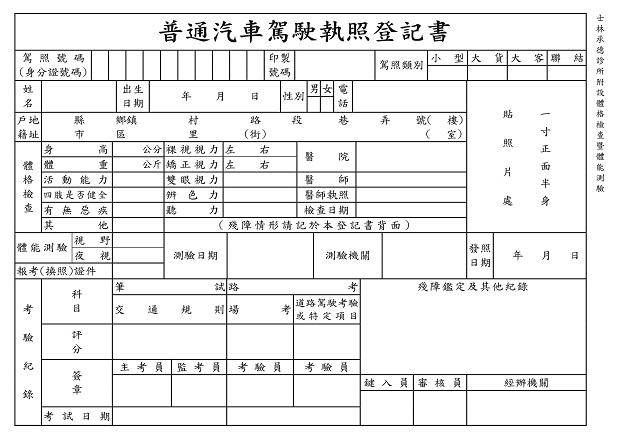
You don’t have to hand in your health check until you are contacted and your check code has been authenticated, but it’s quite convenient to do it the same day at the nearby Po Jengh Hospital (博仁綜合醫院). While you’re handing in your license info and check code, you can ask for the following form to do your health check:
Go to the main door of the hospital and tell the security guard that you want to do a driver license health check (駕照體檢/jiàzhào tǐjiǎn). He’ll stamp your hand with a blue “P” and tell you to go into an alley and go in a side entrance on the left. This is the special entrance for health checks. You take the elevator up and then take a ticket and wait for the various checks (it took me around 20-30 mins). Remember to take NT$300 in cash to pay for the health check. They check your hearing and sight and a few other basic checks. After you pay, you have to take the health check certificate back down to the main lobby of the hospital to get stamped (you don’t have to take a number, there should be a lady sitting to the left who deals with your form).
You don’t have to hand the health certificate in that day and can just wait for the office to contact you. They were pretty quick for me, I did it on the Friday before the 228 bridge weekend and got notified it was authenticated on the following Tuesday. I went back to the Motor Vehicle Office with my passport, ARC, my driver’s license, the health check and driver license photos (these have to be the same as the one you put on your health check form.
When you go back to the office, specify that it’s your second visit and they’ll go looking for your info. Then after a bit of staring at your ARC, passport and license (approx. 15 mins) they’ll hand you your Taiwanese license and take away your UK license (you can get this back if you return to the UK and return the Taiwanese license to the DVLA).
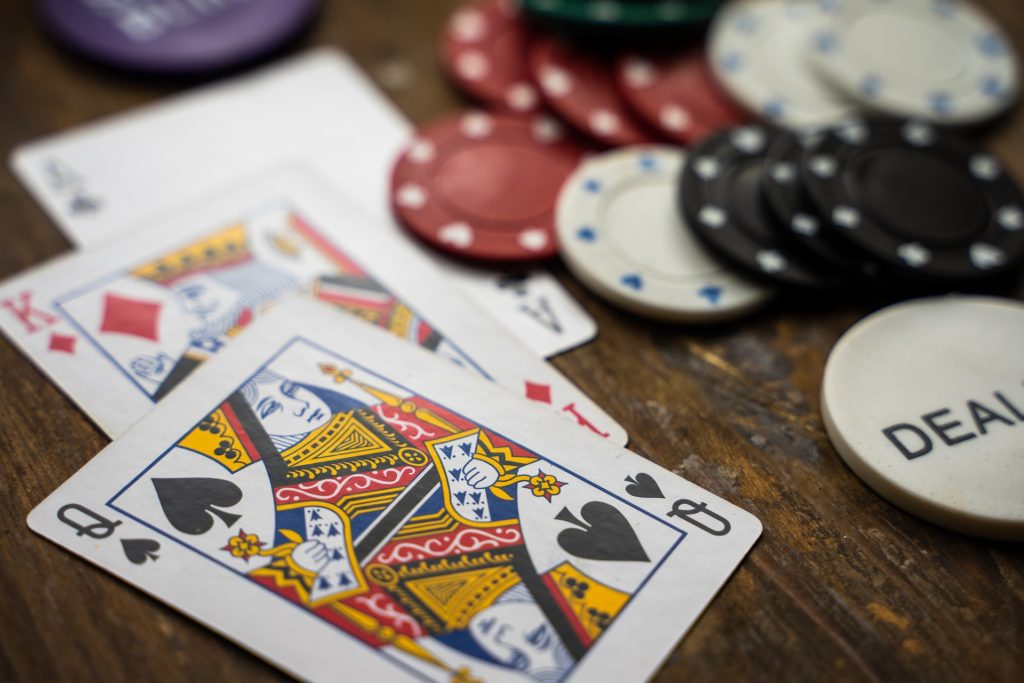
For most people, the world of gambling either conjures up glamourous Hollywood movies, like James Bond and Ocean’s 11, or grimy old men in bookkeeper shops betting on the horses. This novel by Yan Geling gives us a mixture here by portraying the stories of big rollers in China, but lifting up their masks and exposing the grubby little men lying beneath, body odor and all.
We’re introduced to the protagonist, a middle-aged single mother living in Macau called Xiao’ou, through a story of how gambling runs in her blood, with the tragic tale of her male ancestor’s addiction. This eventually led to him taking his life and, as a result, his wife became obsessed with wiping out the male line of her family to ensure the defective gambling gene wasn’t passed down.
From there we jump to Xiao’ou’s current job as a junket operator/bate-ficha (壘碼仔/ Cantonese: daap6 ma5 zai2) in Macau; basically, these are the middlemen who bring high-rollers into casinos. Topically enough, while I was penning this review, this story emerged, giving an insight into the real world goings-on behind this fictional account.
We gradually come to learn that despite her supposed scorn for gamblers, Xiao’ou is gambling by proxy, in that she borrows money from the casino on behalf of her clients, and then has to chase up the money with them after paying the casino back on their behalf. She also offers clients the option to treble or quadruple the actual chips on the table, in an under-the-table bet with her, which makes the stakes even higher. Many are subsequently unable to pay and she risks losing big if other debtors collect from the clients before she can.
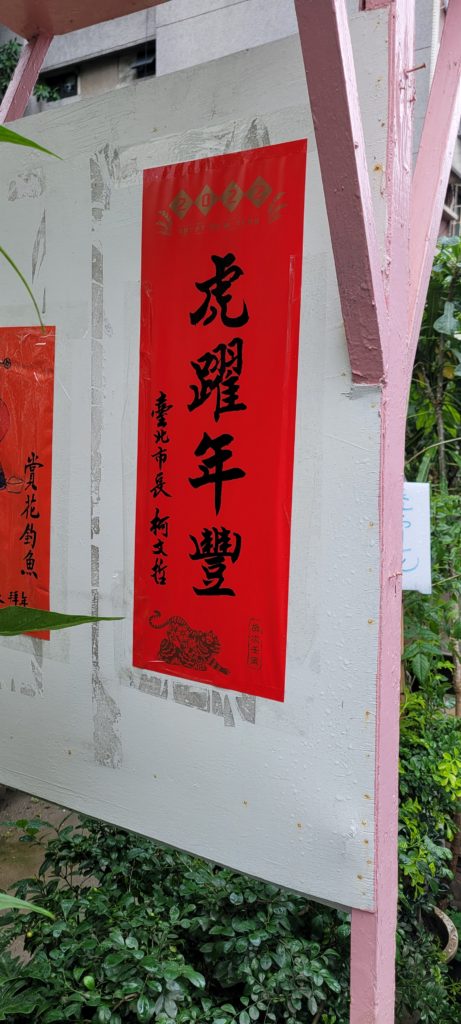
Out and about in Taipei over the new year, I spotted quite a lot of Year of the Tiger couplets, some printed, some more original. Some of them even gave an insight into the political persuasion of the inhabitants.
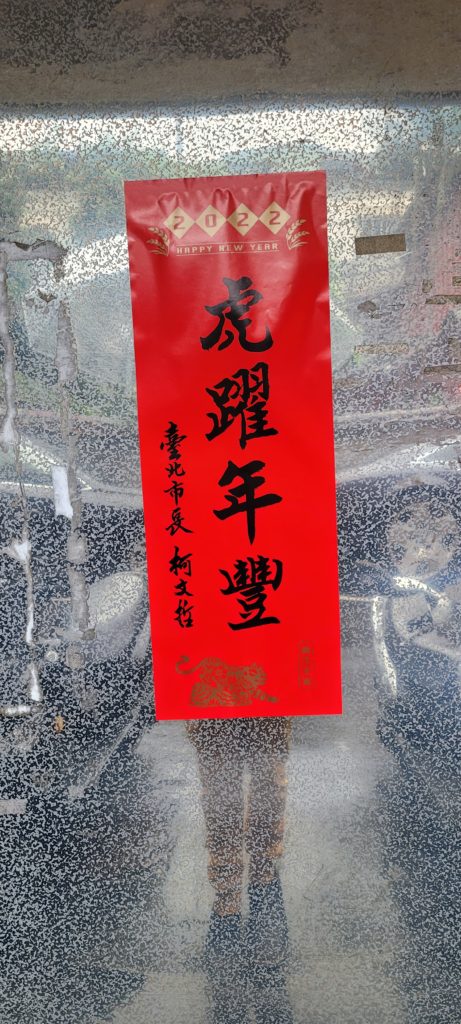
This couplet was distributed by Taipei Mayor Ko Wen-je (柯文哲), chair of the Taiwan People’s Party, and it was one of the main rivals to the one issued by President Tsai Ing-wen and Vice President Lai Ching-te. If you’re a Ko-fen (柯粉/a fan of Ko Wen-je) or just fancy a few political discussions in your lobby with neighbours of different political stripes, you can print it yourself at the Taipei City gateway here. The Chinese word for “tiger” (虎 hu3) is a near-homonym for 「褔」 (good fortune/fu2), especially in Taiwanese-accented Mandarin (台灣國語) in which the “h” sound is often pronounced as “f”. So this couplet is a play on this, with the first two characters having the dual meaning of “tiger pouncing” and “a jump in wealth.”
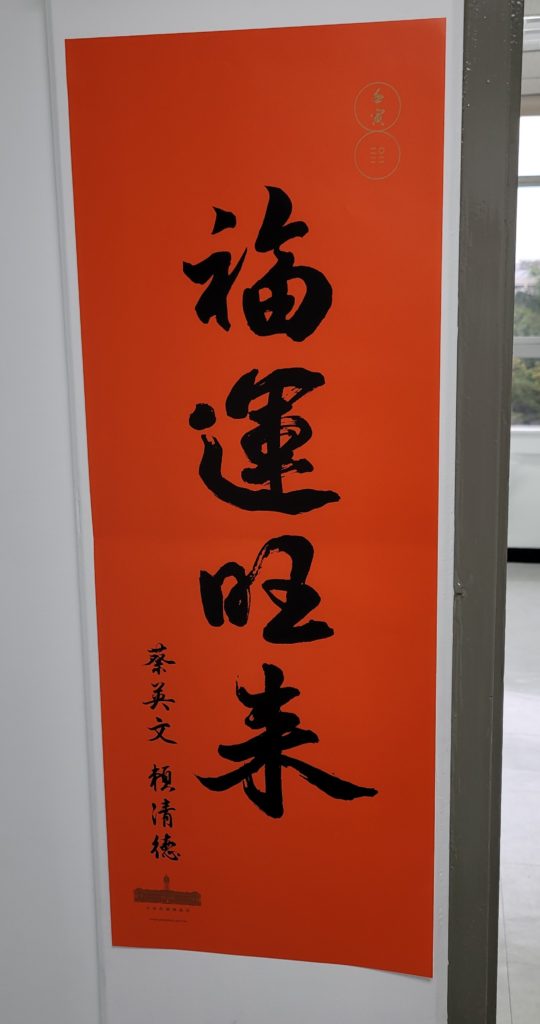
President Tsai volleyed with this snazzy design 「福運旺來」 (again, good fortune also hints at its near homonym in tiger):
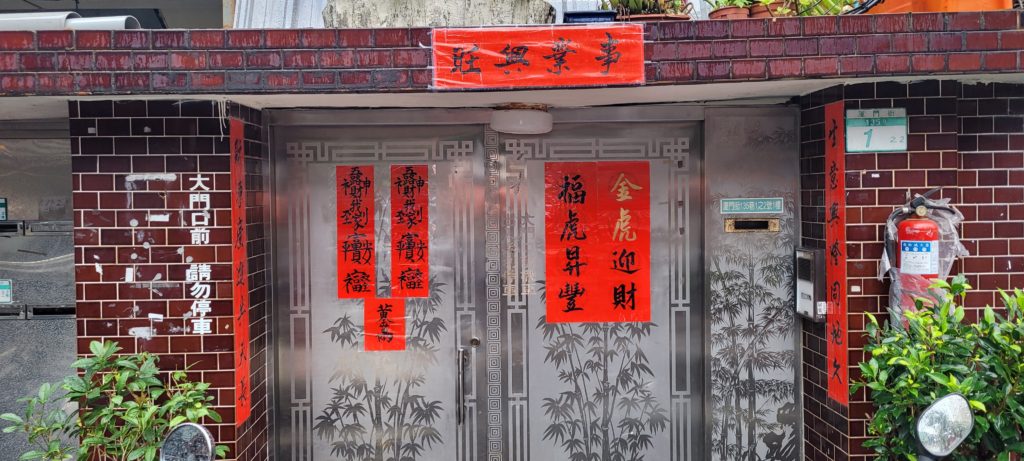
The couplet on the right of the doorway below reads: 「事業興旺」 (asking for success in career), while on the right panel there is another tiger couplet.
On the left panel of the door there are some quite cool examples of compound characters (合體字):
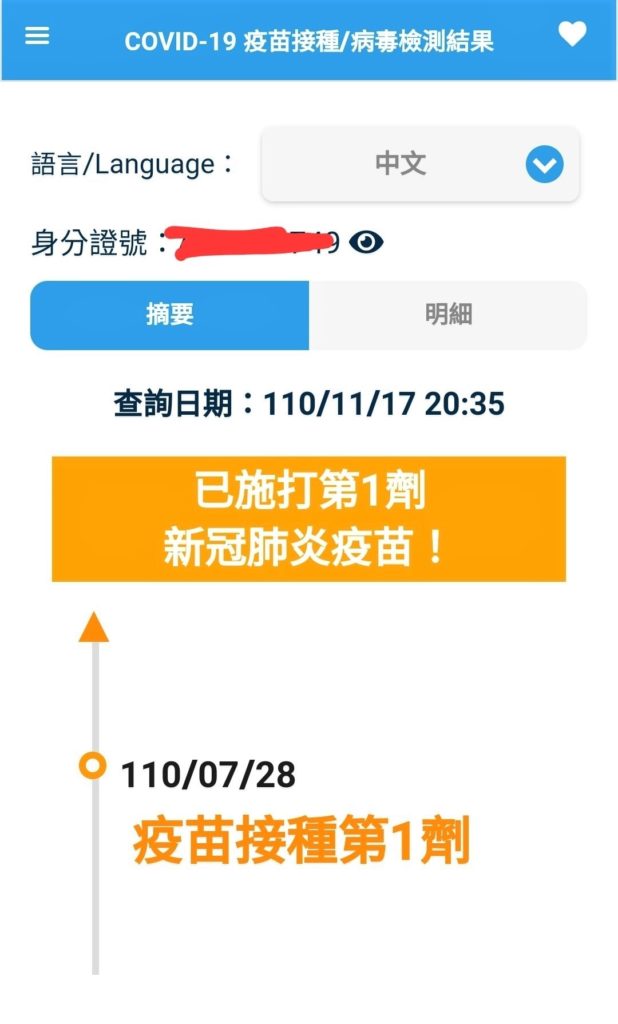
Up until around November 17 of 2021, the vaccination status of foreign residents in Taiwan wasn’t listed on their NHI app or in their card details. Some information was clearly available, given that so many foreign residents were able to get vaccinations and follow-up vaccinations on the online appointment platform, but what do you do if the information shown on your card is in conflict with the info displayed online or on the NHI app?
UPDATE (March 10, 2022): If you got your vaccinations before you updated your NHI card to match your new ARC number format, the vaccination record on your online records and in the NHI app won’t be carried over and you’ll also have to go through the process detailed below.
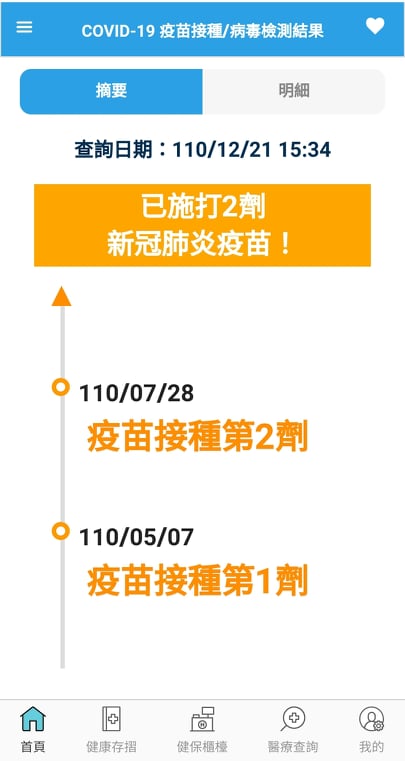
This happened to me, in that the Heping Branch of Taipei City Hospitals still haven’t uploaded info from my first vaccine in May, meaning that my second vaccination is listed as my first:
As the qualifying criteria for a booster dose is 5 months passing since your second dose, I thought I’d given the hospital a reasonable enough window in which to update the details if they were going to. So I called the 1922 hotline, and they told me to go to my local district health and welfare office (區衛生所), these are called district health and care centers (區健康照顧中心) or district health service centers (區健康服務中心) in Taipei City. The one for Zhongzheng District is here.
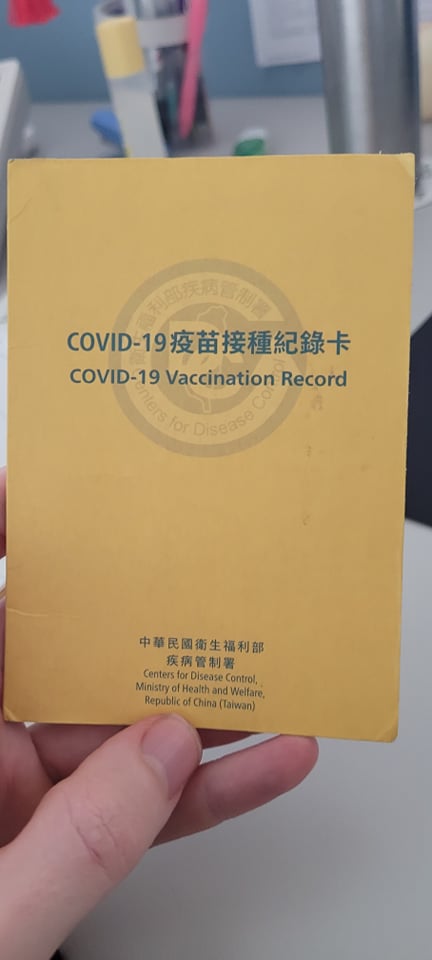
Take your yellow vaccination card and your NHI card to your local branch, and they’ll take your details at reception and ask you to fill out a form.
Essentially, the helpful lady at the counter told me that they will contact the hospital to request that they update their records and then they’ll contact me when it’s done.
UPDATE: The records were updated the following day:
It’s probably best to update your online status, so that when it comes time for your booster, the system will know when you become eligible (5 months after your second dose).
The use of Taiwanese in this Ministry of Foreign Affairs post struck me as interesting. As the term 「換帖」 exists in Mandarin too, they used romanized script to ensure that it is read in Taiwanese. I guess this makes it harder for people in a certain country to work out what it’s supposed to mean, but I also wonder how many Taiwanese people would catch on:
You could say Senator Cornyn is bosom buddies with Taiwan.
“uānn-thiap–ê” describes a close friendship formed by a blood-brothers style pact, wherein two friends exchange cards with information on each other (name, age, place of origin, family history), to forge a kinship. Now it’s used to describe good friends.
Another, more common term to describe a close friend is 「麻吉」. The term is pretty common and was even used for the title of the film Ted in Taiwan 《熊麻吉》:
There are several folk morphologies for this term, from the stickiness of mochi cakes (pronounced similarly in Taiwanese/ muâ-tsî) to a corruption of the word 「默契」 (though no clear reason for the corruption is given). The most convincing theory is that it’s a corruption of the English word “match” in Taiwanese. Whatever its origin, it’s a pretty handy word to use and will let everyone know that you’re in touch with the popular culture references of 10 years ago.
The humble brag needs little explanation, but it was interesting to hear the host of the GooAye podcast use a Chinese term that means something similar the other day when talking about him and a bunch of other renowned Taiwanese podcasters becoming fathers recently. Basically, he said that people have been recommending him thought pieces on how to be a parent, and some of them are a little fucked up.
Among the pieces people have recommended, I looked at a lot of them and they were pretty messed up. Like maybe the parent hadn’t studied properly when they were young, or, in some cases, the parent had done well in their studies, but never really pursued them to any conclusion. So it’s like they want to project themselves onto their children so that their children can help them accomplish what they never could. It’s fucked up like that. Then some of them are even “humblebrag” pieces. This word for “humblebrag” is used mainly in China, so don’t come after me word police. I just think it’s a pretty accurate expression. It refers to people who accidentally–and of course this “accidentally” is totally on purpose–let slip their own strengths and the strengths of their family members. This is called the “Versailles” genre of writing. So, for example: “Ugh! I told my husband not to buy me anything else. He’s so annoying! He only went and bought me a new maserati!”
After a bit of a search on Chinese social media, I realized that it can mean humblebragging, or satire of humblebraggers. As well as the obvious reference to the subtlety of the Palace of Versailles, the phrase (like a lot of popular Chinese slang) originated in Japanese manga. The Rose of Versailles / ベルサイユのばら / 凡爾賽玫瑰(玉女英豪 in Taiwan) was originally serialized in 1972-1973, but was revamped from 2013-2018. There have also been an anime series and a film.
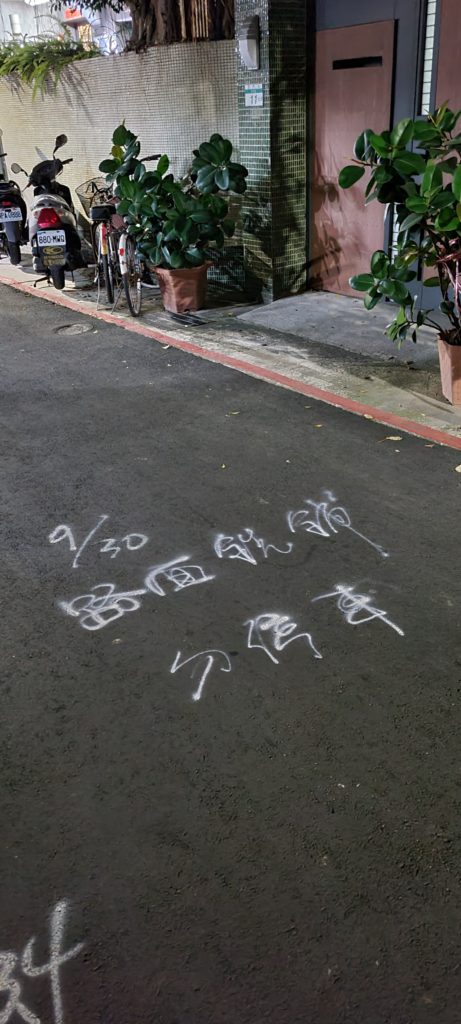
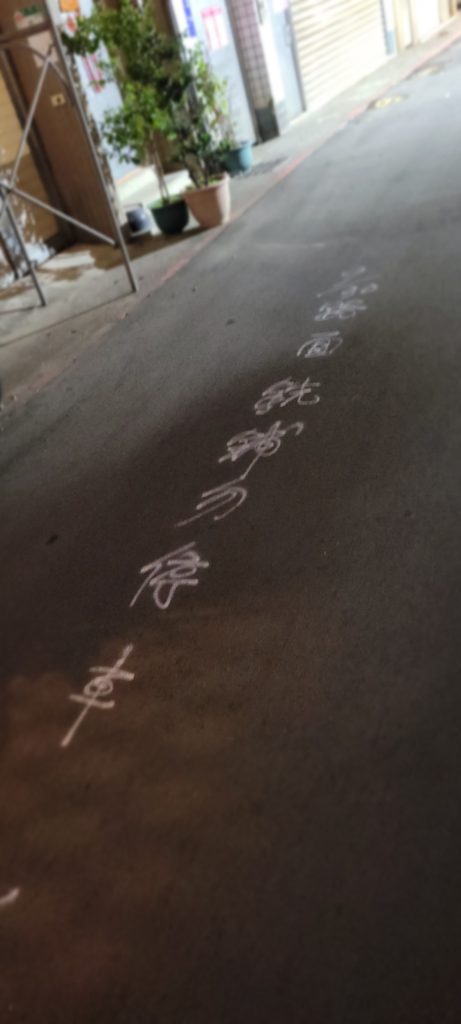
I came across these spray-painted messages on the road on the way to my local 7-11 last night. Messages sprayed on to the street are common in Taiwan, and they can be written by car/motorbike tow trucks telling people what number to call to get their vehicle back or construction companies or the city government telling people not to park in the street as construction is about to take place.
I could see that it said 「路面xx勿停車」 (“road surface XX, don’t park), but I was a little puzzled by the third and fourth characters, as they both looked like they had 「金」 as radicals. I assumed that as they were repaving the road, it’s likely that the second one was 「鋪」 (to pave), but I’d never seen the character 「銑」 before. So I wandered down the street a bit further to see another of the messages:
The 「鋪」 was a bit clearer in this pic, so I tried to look up the characters 「銑鋪」 (xiǎnpū), and came across this old video from the China Times, suggesting that I wasn’t the only one to be puzzled:
According to this video, the original meaning of 「銑」, milling, has been extended here, to mean “to roll flat/steamroll.” It seems to be a more technical way of referring to resurfacing roads, but a more common and colloquial way to say this is 「路面翻修」 (lùmiàn fānxiū).
As I’ve mentioned before, one of my neighbours is a prolific note writer who comes up with all sorts of imagined scenarios, from axe-wielding maniacs sneaking into the building to accusing people of chucking tapioca onto their awning and calling the fire brigade when anyone in a 400m radius lights a candle. A new neighbour has moved into the building, so the note writer has decided to show them who is boss, with these beautiful scrawls:
Despite their previous anger at people closing the door too loudly, the neighbour in question is continuing their tirade on the risks of the door ever being open at all. The new neighbour doesn’t have a buzzer, so has to come down the stairs every time they order food or (heaven forbid) have friends coming round.
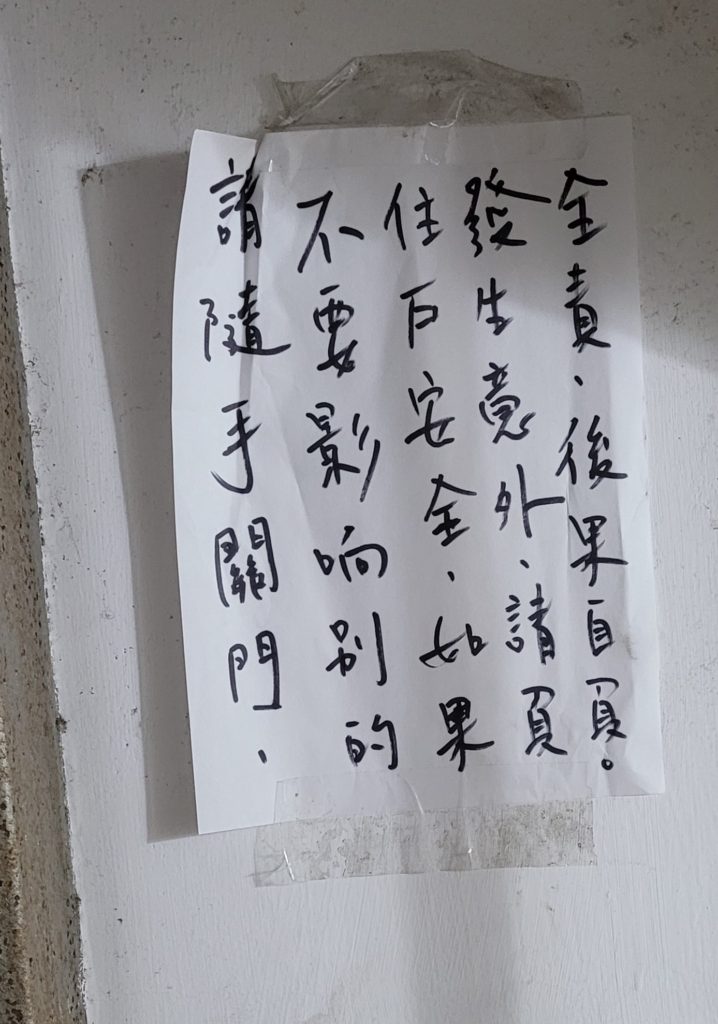
請隨手關門,不要影响(響)別的住戶安全,如果發生意外,請負全責,後果自負。
Please close the door after you, so as not to affect the safety of other residents. If an incident happens, please take full responsibility. You’ll have to face the consequences.
One thing to notice is the abbreviation of the character 「 響」 to 「响」, the simplified character, which goes to show how often the more complex characters are abbreviated in Taiwan. One note is never enough though:
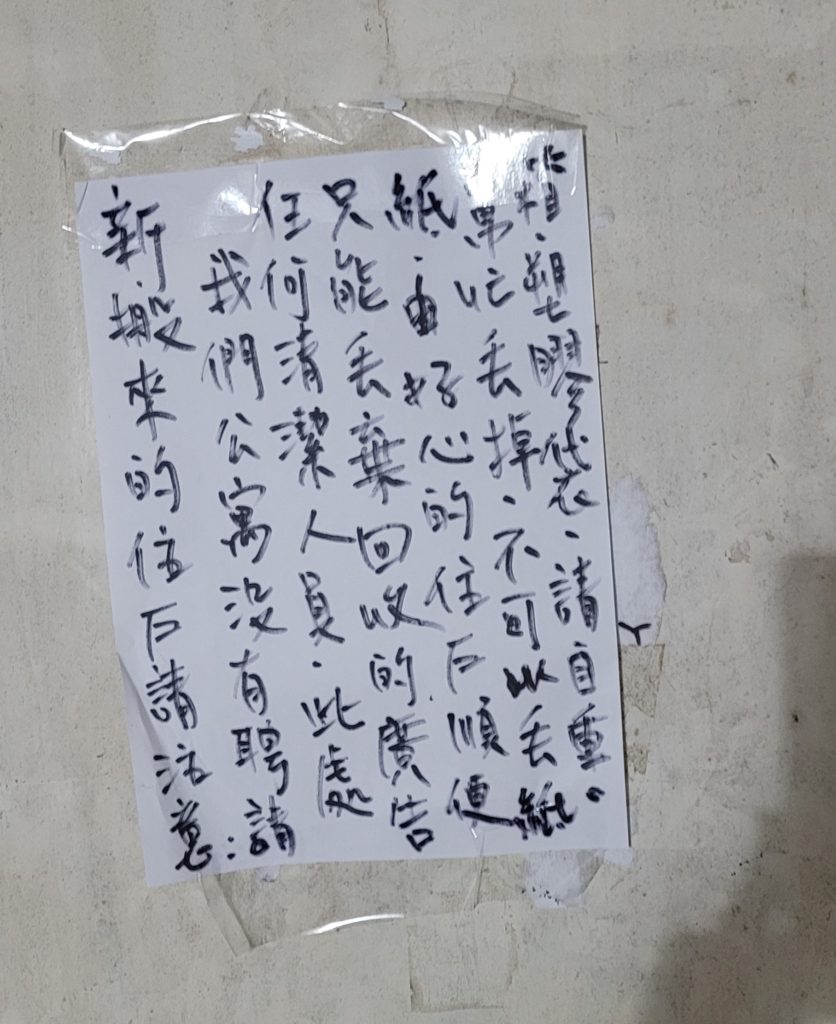
The new tenant should be aware that our apartment block hasn’t hired any cleaning staff. Here you can only throw away recycled advertising leaflets, which one kind-hearted resident [clearly a self-reference] helps to throw away. It is not permitted to throw away cardboard boxes or plastic bags here. Please behave with more decorum.
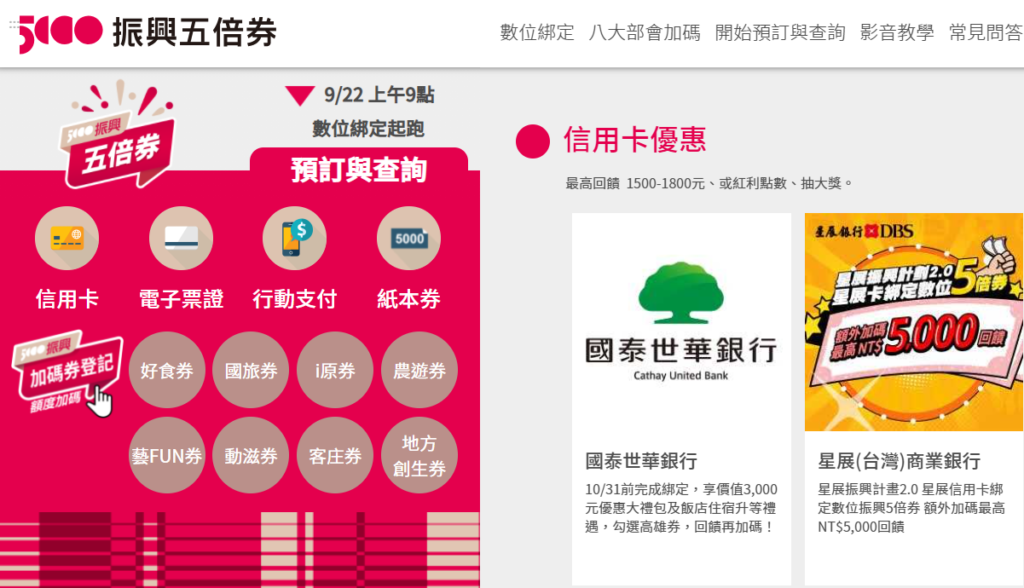
If your online banking is crashing today, it’s likely because the Executive Yuan has released NT$5,000 stimulus vouchers starting today and banks are making a ream of offers to early birds.
If you’ve got an APRC or are a Taiwanese citizen with household registration and a bit of patience, you can get them by navigating to the dedicated website here or the English version here.
There are four options:
You can wait until to book the paper version in advance: First round advance booking: September 25 – October 1 First round withdrawal: October 8 – October 21 Second round advance booking: October 25 – November 1 Second round withdrawal: November 8 – November 21
You can register to tie the vouchers to your credit card.
You tie them to Easycard style cards (like Ipass etc)
You can tie them to a digital wallet, like Taiwan Pay, etc
Currently, the website is patchy as it’s getting a lot of hits, so it’s best to go through your bank or payment method of choice, which all feature prominent links.
I chose to tie mine to Taiwan Pay through the Megabank app. Most banks have a simple enough interface to navigate but don’t give up if they throw up an error message, as everyone is rushing on the first day.
If you’ve panicked and want to check exactly what you’ve registered for, you can use this function to check your status.
The advantage of using digital versions, is that there are often additional offers. The downside, as I’ve mentioned before, is that you don’t get to brag on Instagram.
There are additional bonuses you can accrue, depending on which bank or payment app you tie your vouchers to:
Taiwan Pay is offering additional funds to a certain number of registrants. ESun is offering NT$50 for single registrants, but you can increase this by registering as a group.
Note: the spending period for the vouchers starts October 8!
For Taiwan Pay, the first period of payment runs from October 8-22, which is when they’ll calculate what bonuses you get back. This will be deposited in your account November 1. Then the second spending period runs from October 23-29 and the kickbacks will be deposited into your account on November 8. The third spending period runs from October 30 – November 5, and the kickbacks are deposited on November 15.