Taiwanese Language

I’ve been making an effort to learn more Taiwanese lately, and have been trying to find some sort of pattern between Mandarin and Taiwanese that can provide me with an alternative method than just memorizing by heart. Some Taiwanese I’ve picked up from TV, KTV songs and from the Human Condition (《人間條件》 series of plays that I researched for my masters, but my vocabulary is limited to the very basic at the moment, so I hope that by starting a blog I’ll be more motivated. My approach to the language is not going to be scientific, but rather I’m going to rely on my own perceptions to build up an idea of how grammar and pronunciation rules work on my own terms, although I’m familiar with some of the rules around the language, as we were taught a limited amount as part of my master program.

Most of the phrases I’ve learned so far have only been simple greetings, basic common phrases or insults, as below:

你好: [Click on each syllable to hear it] (Strangely enough, to my ear the direction of the tone mark seems to be counter-intuitive, as I would describe it as a slowly falling 4th tone.) – Hello

Going to test a few theories, as I continue learning:

we see “n” turn to “l” [and this may be limited to a third tone in Mandarin when followed by an “i” or may not]  [ㄋ->ㄌ]

“i” (zhuyinㄧ) remains similar in Mandarin and Taiwanese [which may be limited to when preceded by an “n” in Mandarin and an “l” in Taiwanese] [ㄧ->ㄧ]

“h” remains similar in both Taiwanese and Mandarin [which may be limited to when it’s followed by “ao” in Mandarin and “o” in Taiwanese or not] [ㄏ->ㄏ]

“ao” changes to “o” [which may be limited to when it’s preceded by “h”] [ㄠ->ㄛ]

Tones: I know that in speech, tones are affected by tones sandhi, but for the minute I’m going to ignore this, as I’m taking individual vocabulary and tone marks from a dictionary – later I’ll try and examine this in more depth

Tones: Third tones in Mandarin change to second tone (high-falling – ˥˧ (53) [Tainan] or falling – ˥˩ (51)[Taipei]) in Taiwanese [3->2]

這個人我熟似 chit-ê lâng góa se̍k-sāi (我認識/熟悉) – I know that guy/person

“zh” in Mandarin changes to “j”/”ch” in Taiwanese [which may be limited to when it’s followed by “e” in Mandarin or “it” in Taiwanese] [ㄓ->ㄐ]

“e” in Mandarin changes to “it” in Taiwanese [which may be limited to when it’s preceded by “zh” in Mandarin or “j/ch” in Taiwanese] [ㄜ->ㄧㄊ]

Tones: Fourth tone in Mandarin changes to fourth tone (low stopped – ˨˩ʔ (21) [Tainan] or mid-stopped – ˧˨ʔ (32) [Taipei] in Taiwanese [4->4]

“g” in Mandarin disappears [which may be limited when followed by “e” (ㄜ) in Mandarin] [ㄍ->_]

“e” in Mandarin turns into “e” (sounds like ei ㄟ in Mandarin) in Taiwanese [May be limited to when it’s preceded by a “g” in Mandarin, and has no final] [ㄜ->ㄟ]

Tones: neutral tone in Mandarin changes to fifth tone (rising – ˨˦ (25) [Tainan] or ˩˦ to ˨˦ (14~24) [Taipei]) in Taiwanese [5->5]

“r” in Mandarin turns into “l” in Taiwanese [may be limited to when followed by “en” in Mandarin or “ang” in Taiwanese] [ㄖ->ㄌ] *Note* I’ve also head 人 is pronounced “jîn” in different contexts

“en” in Mandarin turns into “ang” in Taiwanese [may be limited to when preceded by “r” in Mandarin and “l” in Taiwanese] [ㄣ->ㄤ]

Tones: Second tone in Mandarin turns into fifth tone (rising – ˨˦ (25) [Tainan] or ˩˦ to ˨˦ (14~24) [Taipei]) in Taiwanese [2->5]

“w” in Mandarin turns into “g” or “gu” in Taiwanese [may be limited to when followed by “o” (ㄛ) or “oa” (ㄨㄚ) in Taiwanese] [ㄨ (initial) -> ㄍㄨ/ㄍ]

“o” in Mandarin turns into “oa” in Taiwanese [may be limited to when preceded by a w in Mandarin or a “g” in Taiwanese] [(ㄨ)ㄛ->ㄨㄚ]

Tones: Third tones in Mandarin change to second tone (high-falling – ˥˧ (53) [Tainan] or falling – ˥˩ (51)[Taipei]) in Taiwanese [3->2]

“sh” in Mandarin changes to “s” (sounds like sh) in Taiwanese [limited to followed by “ou” in Mandarin or “ek” in Taiwanese] [ㄕ->ㄕ]

“ou” in Mandarin changes into “ek” in Taiwanese [limited to following “sh” in Mandarin] [ㄡ->ㄧㄎ]

Tones: Second tone in Mandarin turns into eighth tone (high stopped –˥ʔ (5) [Tainan] or high stopped – ˦ʔ (4) [Taipei]) in Taiwanese [2->8]

“s” in Mandarin changes to “s” in Taiwanese [may limit to preceding “i” in Mandarin or “ai” in Taiwanese] [ㄙ->ㄙ]

“i” in Mandarin changes to “ai” in Taiwanese [may limit to following “s” and “sh”] [~(i)->ㄞ]

Fourth tone in Mandarin turns into seventh tone (mid – ˨ (22) [Tainan] or mid- ˧ (33) [Taipei]) in Taiwanese [4->7]

我相信 góa siang-sìn/siong-sìn – I believe

我(see above)

“x” (ㄒ) in Mandarin turns into “s” (sh) in Taiwanese [which may be limited to when followed by “i” with nasal final] [ㄒ->ㄒ]

“iang” in Mandarin remains as “iang” in Taiwanese [may limit to following “x”] [ㄧㄤ->ㄧㄤ]

or “iang” in Mandarin turns into “iong” in Taiwanese [may limit to following “x”] [ㄧㄤ->ㄩㄥ]

Tones: First tone in Mandarin turns into first tone (high – ˦ (44) [Tainan] or high – ˥ (55) [Taipei]) in Taiwanese [1->1]

“x” (ㄒ) in Mandarin turns into “s” (sh) in Taiwanese [which may be limited to when followed by “i” with nasal final] [ㄒ->ㄒ]

“in” turns into “in” in Taiwanese (sound the same) [ㄧㄣ->ㄧㄣ]

Tones: Fourth tone in Mandarin turns into third tone (low – ˩ (11) [Tainan] or low-falling – ˧˩ to ˨˩ (31~21) [Taipei]) [4->3]

白癡 pe̍h-chhi – Idiot

“b” in Mandarin turns into “p” in Taiwanese (though may be the same sound) [may limit to preceding “ai”] [ㄅ->ㄅ]

“ai” in Mandarin turns into “eh” (sounds like “ei” ㄟ) [may limit to following “b”] [ㄞ->ㄟ]

Tones: Second tone in Mandarin turns into eighth tone (high stopped –˥ʔ (5) [Tainan] or high stopped – ˦ʔ (4) [Taipei]) in Taiwanese [2->8]

“ch” in Mandarin turns into “chh” (pronounced similar to q/ㄑ in Mandarin) in Taiwanese [may limit to preceding “i”] [ㄔ->ㄑ]

“i” (~) in Mandarin turns into “ih” in Taiwanese (sounds like ㄧ (i)) [may limit to following “ch” in Mandarin or “chh” in Taiwanese] [~(i)->ㄧ]

Tones: First tone in Mandarin turns into first tone (high – ˦ (44) [Tainan] or high – ˥ (55) [Taipei]) in Taiwanese [1->1]

流目屎 lâu-ba̍k-sái (流眼淚) – To cry

“l” in Mandarin remains “l” in Taiwanese [may limit to followed by “iu”] [ㄌ->ㄌ]

“iu” in Mandarin becomes “au” in Taiwanese [may limit to preceded by “l”] [ㄧㄡ->ㄠ]

Tones: Second tone in Mandarin turns into fifth tone (rising – ˨˦ (25) [Tainan] or ˩˦ to ˨˦ (14~24) [Taipei]) in Taiwanese [2->5]

“m” in Mandarin becomes “b” in Taiwanese [may be limited to preceding “u” in Mandarin or “ak” in Taiwanese] [ㄇ->ㄅ*nasal]

“u” in Mandarin becomes “ak” in Taiwanese [may be limited to following “m” in Mandarin or “(m)b” in Taiwanese] [ㄨ->ㄚㄎ]

Tones: Fourth tone in Mandarin becomes eighth tone (high stopped –˥ʔ (5) [Tainan] or high stopped – ˦ʔ (4) [Taipei]) in Taiwanese [4->8]

“sh” in Mandarin becomes “s” in Taiwanese [may be limited to preceding ~(i)] [ㄕ->ㄙ]

“i” in Mandarin becomes “ai” in Taiwanese [may be limited to following “sh” and “s”] [~(i)->ㄞ]

The list goes on, but I’ll save the two Taiwanese songs I know for later posts. Below are a list of theoretical rules for shifting between Mandarin and Taiwanese, most of which are obviously not the case, but I will improve upon it as I go along:

[~(i)->ㄞ] preceding ㄙ          
[~(i)->ㄧ] preceded by ㄔor ㄕ or ㄙ        
[~i->ㄨ] before ㄙ            
[1->1]  
[1->8]              
[2->2]              
[2->5]  
[2->8]            
[3->2]      
[3->4]              
[4->3]            
[4->4]            
[4->7]      
[4->8]              
[5->5]              
[ㄅ->ㄅ] followed by ㄞ            
[ㄆ->ㄅ] before ㄤ            
[ㄇ->ㄅ*nasal] followed by ㄨ,ㄧㄢ, ㄥ      
[ㄈ->ㄏ] followed by ㄥ            
[ㄉ->ㄉ] before ㄚ            
[ㄊ->ㄊ] followed by ㄡ            
[ㄋ->ㄌ] followed by ㄧ, ㄧㄢ          
[ㄌ->ㄌ] followed by ㄧㄡ            
[ㄍ->_] followed by ㄜ            
[ㄍ->ㄍ] followed by ㄨ, ㄨㄚ          
[ㄎ->ㄎ] followed by ㄢ            
[ㄏ->ㄏ] followed by ㄠ, ㄨㄚ          
[ㄐ->ㄎ] followed by ㄧㄠ            
[ㄑ->ㄐ] followed by ㄧㄥ            
[ㄒ->ㄒ] followed by ㄧㄤ 西        
[ㄓ->ㄉ] followed by ㄨㄥ            
[ㄓ->ㄐ] followed by ㄜ            
[ㄓ->ㄗ] followd by ㄤ            
[ㄔ->ㄑ] followed by ~            
[ㄕ->ㄕ] followed by ~(i), a          
[ㄕ->ㄙ] followed by ~(i)            
[ㄖ->ㄌ] followed by ㄣ            
[ㄖ->ㄍ] followed by ㄨㄢ            
[ㄖ->ㄐ] followed by ㄣ            
[ㄘ->ㄗ] followed by ㄨㄥ            
[ㄙ->ㄕ] followed by ~(i)            
[ㄙ->ㄙ] followed by ~            
[ㄚ->ㄧㄚ(n)] preceded by ㄕ            
[ㄚ->ㄨㄚ] before ㄉ            
[ㄛ->ㄨㄚ] preceded by ㄨ            
[ㄜ->ㄟ] preceded by ㄍ            
[ㄜ->ㄧㄊ] preceded by ㄓ            
[ㄞ->ㄟ(h)] preceded by ㄅ            
[ㄡ->ㄠ] preceded by ㄊ            
[ㄡ->ㄧㄎ] preceded by ㄕ            
[ㄢ->ㄨㄚ~n] preceded by ㄎ            
[ㄣ->ㄤ] preceded by ㄖ            
[ㄣ->ㄧㄣ] preceded by ㄖ            
[ㄤ->ㄧㄣ] after ㄆ          
[ㄥ->ㄤ] preceded by ㄇ            
[ㄥ->ㄨㄥ] preceded by ㄈ            
[ㄧ->ㄐ] isolated            
[ㄧ->ㄧ] preceded by ㄋ            
[ㄧ->ㄧㄊ] isolated            
[ㄧ->ㄨㄚ] isolated            
[ㄧㄝ->ㄧㄚ] isolated            
[ㄧㄠ->ㄚ] preceded by ㄐ            
[ㄧㄡ->ㄠ] preceded by ㄌ            
[ㄧㄢ->ㄧㄣ] preceded by ㄇ          
[ㄧㄣ->ㄧㄣ] preceded by ㄒ            
[ㄧㄤ->ㄧㄤ] preceded by ㄒ            
[ㄧㄤ->ㄩㄥ] preceded by ㄒ            
[ㄧㄥ->ㄧㄥ] preceded by ㄑ            
[ㄨ (initial) -> ㄍㄨ/ㄍ] followed by ㄛ            
[ㄨ->ㄚㄎ] preceded by ㄇ            
[ㄨ->ㄛ] isolated            
[ㄨ->ㄧ(h)] preceded by ㄨ(initial)            
[ㄨ->ㄨㄊ] preceded by ㄍ            
[ㄨ(initial)->ㄅ] isolated            
[ㄨ(initial)->ㄇ] followed by ㄨ            
[ㄨㄚ->ㄨㄟ] preceded by ㄍ, ㄏ          
[ㄨㄢ->ㄨㄣ] preceded by ㄖ            
[ㄨㄥ->ㄤ] preceded by ㄘ            
[ㄨㄥ->ㄩㄥ] preceded by ㄓ          

Restless spirits on the Heping Line 安撫和平幹線上的冤魂

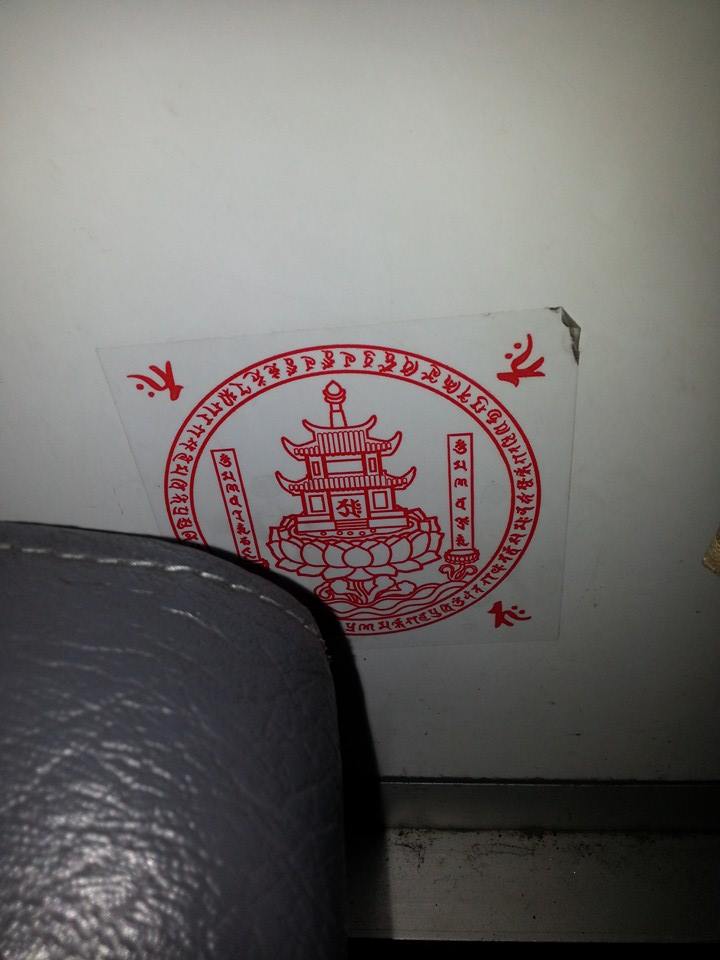
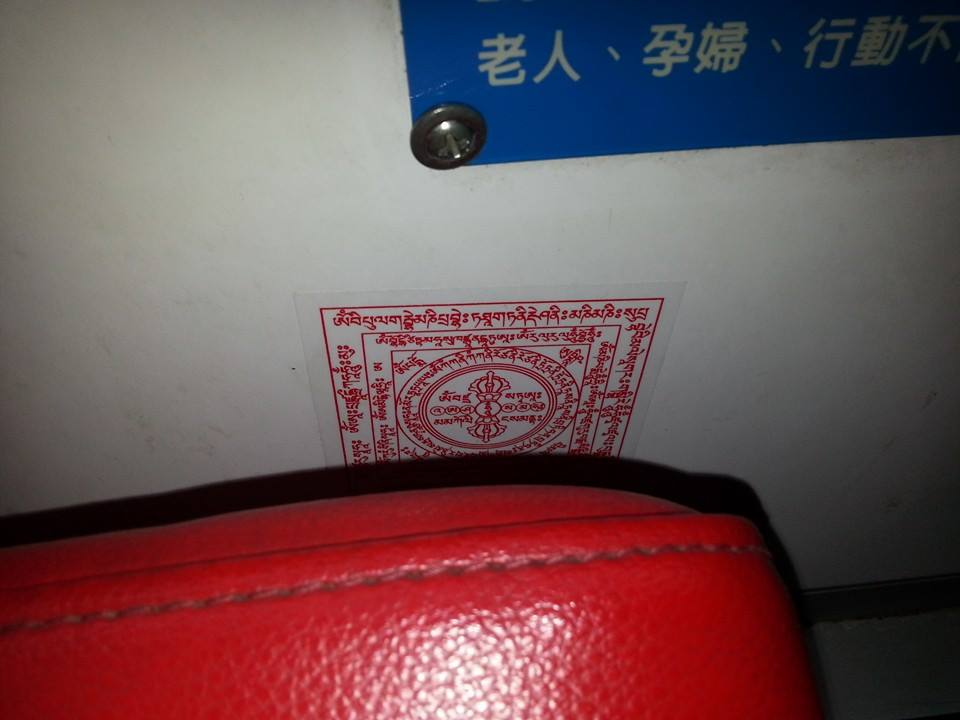
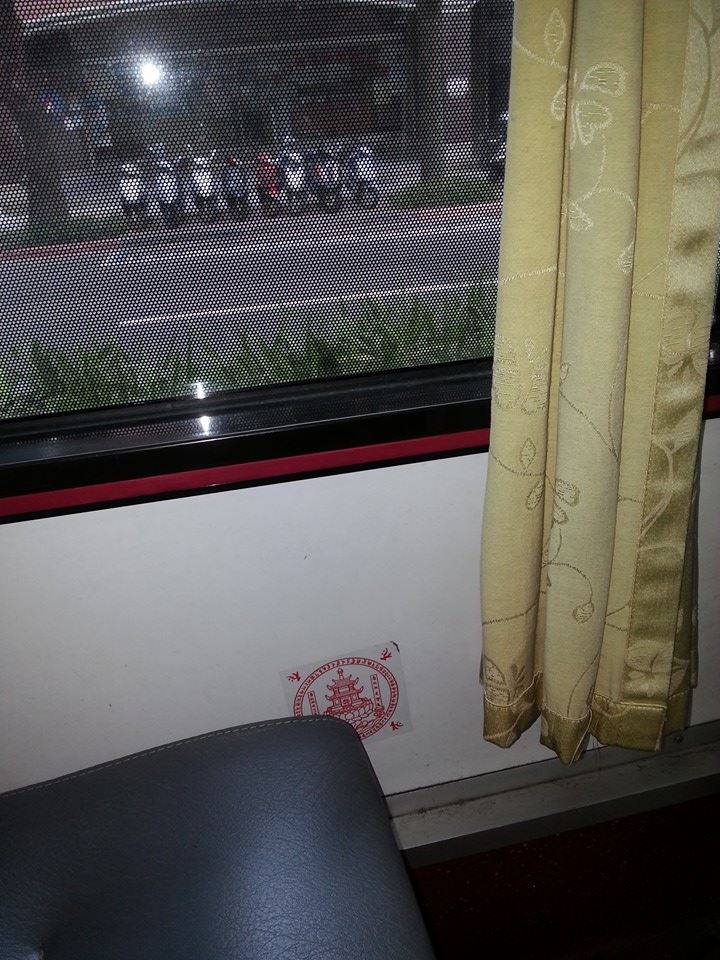
On the bus to work this morning, I saw these stickers stuck below seats on the bus. They were stuck on in a rather inconspicuous way, which suggested they weren’t necessarily there to be seen.

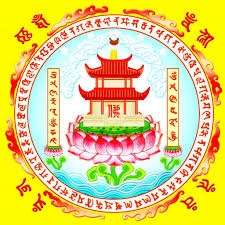
I’d downloaded a program at work called Mojikyo, which allows you to type obscure and antiquated Chinese characters – which don’t have a unicode assignation (a system that allows for consistency in characters across different systems), as well as oracle bone and seal scripts, into Word with special fonts which modify modern Chinese characters. It also has something called Siddham characters, which I later learned from Wikipedia is a form of Sanskrit. I recognized the characters from in the picture below from playing around with the program:

10381979_10101476033480849_1534977843506232867_n

I worked out that the character on all four of the outer sides of the picture were all the Siddham character 102632. Through a little guess work I found out that the two vertical pillars within the circle were Buddhist mantras associated with Guanyin (觀音), also known as Guanzizai (觀自在) and Avalokiteśvara – who is incredibly popular in the Chinese-speaking world, and is known for his/her compassion for the suffering of humanity.
[On a side note, the ambiguity of Guanyin’s gender came under fire recently from a Christian preacher Kuo Mei-chiang (郭美江), whose comments sparked public outrage in Taiwan:

She starts off this diplomatically by saying: “Guanyin, this evil spirit, is neither male nor female…”

She’s also paranoid that Taiwan’s universities are being “invaded by gays” but that’s another story for another day. Back to Guanyin mantras on the bus…]

The mantras seem to be the same as this one:

images

It is pronounced “oṃ ma ṇi pa dme hūṃ” according to a website on different Buddhist mantras, which has been translated to English as “oṃ the jewel in the lotus hūṃ”, although there are questions about this translation which you can find out more about at the website.

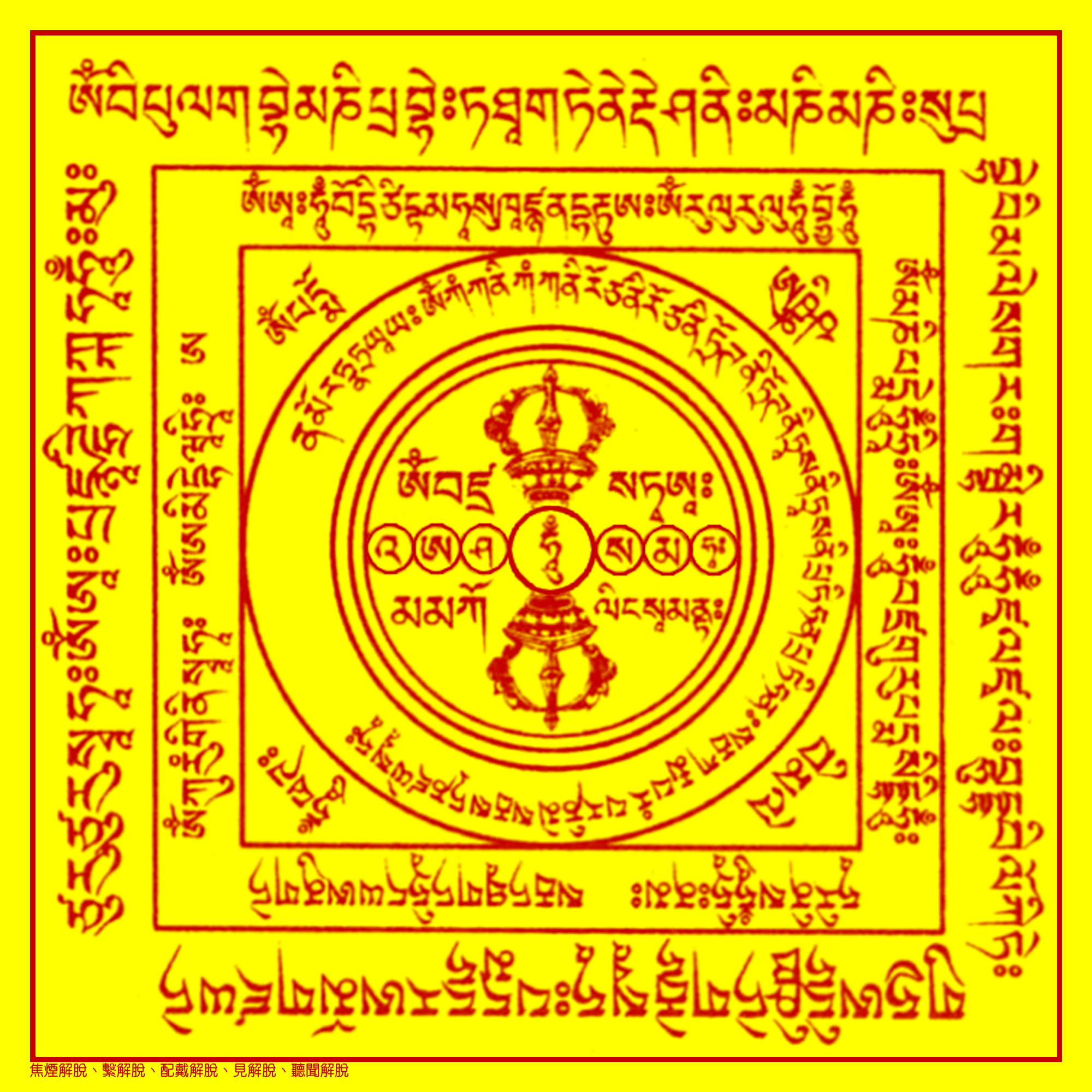
One of my Taiwanese friends whose family is quite heavily into Buddhism told me that the first sticker is the “大寶廣博樓閣善住祕密陀羅尼咒輪” and that the second, which is below, is the “四解脫咒輪”, written in Tibetan script.

“大寶” can mean bodhisattva, or Dharma, “廣博” is broad or expansive, “樓閣” is pavilion, “善住” is one of the 36 guardian deities that is in charged with protecting from deadly injuries. “陀羅尼” is the Chinese for Dhāraṇī – which is a kind of protective charm which summarizes the meaning of a sutra.

0

The first sticker would seem to be to protect people from deadly injury, while the second is to help the dead move on after they’ve died, which fits in with what my friend told me when he said that it was likely that the bus had been in a deadly accident before, and the stickers were an attempt to exorcise the spirits of the dead. He said it wasn’t definitely the case but it was a possibility, and that this is part of Taiwanese culture, and it reminded me of my curiosity at flowers being tied to fences at the side of the road in the countryside in Ireland at accident black spots.

If anyone has any more information or corrections to make, suggestions are welcome in the comments section.

I’m going to continue to try and decode the Siddham characters on the first sticker, and will update in the comments section too. Here’s a list of websites I found pretty useful:

References:

Visible Mantra : Buddhist Calligraphy: http://www.visiblemantra.org/avalokitesvara.html

Mojikyo: http://www.mojikyo.org/ (the content has to be downloaded from another site though, see this site for tips on how to get the fonts and the character map: http://tinyapps.org/blog/windows/201002130700_mojikyo_character_map.html )

A Dictionary of Chinese Buddhist Terms: http://mahajana.net/texts/kopia_lokalna/soothill-hodous.html


What not to watch: Mazu Procession review 最好不要看的《媽祖迺台灣》影評

1233333

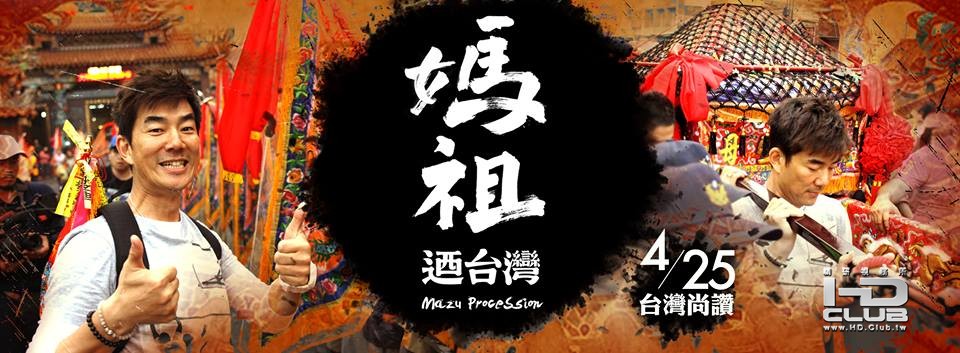
OK, so I’ll start with the positives, this is not the worst film on the Mazu procession that I’ve ever seen, but that’s mostly because I had to trawl through the NTU vault of Taiwanese documentaries to write a review every week for my professor. The film makes a good (albeit an unquestioning and superficial) attempt at explaining what’s going on formalistically during the pilgrimage, which sets out from the north of Taiwan over 9 days, bringing Mazu, the sea goddess from her home temple to tour the island before returning home, followed by pilgrims hoping to get her blessing by carrying flags which they get blessed at every stop along the way. The film also made an attempt to explain why people were providing food and the different ways in which people participate in the pilgrimage, which already beats out the shaky student films that don’t even put Chinese subtitles, with only a brief, rather smug voiceover telling you the name of each bit in Taiwanese, but no explanation offered as to what it actually represents. You soon realize that this film was made with a specific purpose, however, and that purpose is encapsulated well at the end when the indefatigably cheerful presenter Richie Jen (a Mandopop star and actor, who finishes almost every sentence in the film with an 喔!/wo! a 加油!/jiayou! or a 辛苦啦!/sin-khó͘la!) sings a song which is as about as subtle as China’s foreign ministry: he changes the lyrics of his previous saccharine hit 〈對面的女孩看過來〉 (Look over here, girl [opposite]), to 〈對面的觀眾看過來〉(Look over here, audience [opposite]) into a marketing ploy packaging the Mazu procession for tourists from what I’m guessing he means by 「對面的觀眾」(the audience opposite), could it be… on the other side of the strait? (shock horror! Quick! Take siege to the theaters!).

[youtube http://www.youtube.com/watch?v=6aosRlnxg9I&w=420&h=315]

The changes aren’t limited to the title, he continues to drivel on about how cute Taiwanese people are, especially the old ones and the young ones (Yes, yes, Taiwan, we already got the memo… NO, BUT WE’RE REALLY FRIENDLY!!! REALLY REALLY FRIENDLY喔!!!!!… Yeah, you’re alright I suppose… NO, WE’RE REALLY REALLY SUPER FRIENDLY! SUPER FRIENDLY, LIKE REALLY REALLY FRIENDLY喔!!!!!… I know, I know, Taiwanese people are very friendly… THAT’S BETTER喔!!!!!!!). The film failed to examine any darker side of the procession, like the associations between mafia and certain temples in Taiwan, although it pretended it was going to for a while in Changhua with the promise of fights over the direction of the pilgrimage by local temples, though it ultimately led to nothing. Other documentaries on the subject go into this link in more detail, and it provides a more interesting perspective than this cutesy romp. It also failed to give any critical perspective on the social purpose of Mazu, or to question the beliefs of those taking part. This wasn’t in the film’s remit, however, as it was essentially a promotional video – a glorified travel program, representative of the ruling Kuomintang’s line on mainlanders, specifically, “let’s take them for all the money we can.”

2/10 (It at least made an effort to be understood)

That is all.


Book Review: The Dream Devourer by Egoyan Zheng 伊格言《噬夢人》書評

egoyan's bookI was first asked to translate an excerpt from this book by author Egoyan Zheng for eRenlai, and it was only later that I realized that it was in fact an excerpt from a full-length novel – somewhat of a rarity in Chinese language fiction. A lot of Taiwanese fiction focuses on the contrast between modernity and tradition or queer themes, which meant this intercontinental science fiction spy romp set in the future, with a serious psychological edge to it, came as a bit of a bolt from the blue for me. The book still touches on the identity issues of the “Taiwanese condition,” but in a way that can be applied to global issues.

The book is set against the background of an eerie new world order (for the Taiwanese reader this may be a not-so-subtle imaginary of expanded Chinese power, although for Western readers it finds more resonance in the NSA prism spying scandal.) The book employs the science fiction trope of an enslaved and persecuted sub-race of “biosynthetics”. This has been seen a lot in science fiction movies, but instead of a robot race, or artificial intelligence, the subjects are clones educated and emotionally stunted through the use of dreams. The author’s brief stint as a student of psychology at National Taiwan University, before he dropped out and read Chinese Literature at Tamkang University stands out here, as Lacan and Freud remain popular among university professors in Taiwan and psychoanalytic theory features heavily in their literary graduate courses. The race of biosynthetics are emotionally stunted as a result of a complicated dream process with which they are educated to obey mankind.

What stands out about this book is the world built for the audience in the various footnotes – some of which extend for several pages – in a more lively fashion than Tolkien, Zheng explores everything from performance artists who genetically engineer a real life Hello Kitty, with no mouth that has to be fed through a nose tube, to a race of blind dwarfs that has seemingly been isolated from mankind for thousands of years, but suspiciously speaks a tongue remarkably similar to English, and the future of the porn industry, with porn stars becoming obsolete with heightened virtual reality. All of them relate to the story-line, however, and are not just random interruptions to the main text, and provide vital clues in the protagonist’s struggle for the “truth”.

The protagonist, K, is a double – some would say triple – agent. The world through K’s eyes is emotionally stunted, as the life of a biosynthetic should be, as dictated by the dreams that raised them. He struggles with pseudo-schizophrenic hallucinations and personality disorders however, and embarks on a major turning point in his life, when he is confronted with the mysterious Godel, and when he realizes that he is going to be discovered as a biosynthetic posing as a human, thanks to a surprise check on his agency, and a test that he is unable to cheat successfully.

K has aspects of a film noir hero, which in combination with his “shallow” emotional range, gives him an almost autistic character which leaves him disconnected from everyone. We see him struggle to rediscover the secret that lies behind his schizophrenic episodes with a hope that some depth lies behind his robotic facade. Alongside the protagonist, we begin to question his drive to become human, and cheer him on as he begins to work with the Biosynthetic Liberation Front, in their struggle against human hegemony.

Love also plays a role in the book, a key building block in K’s construction of a “normal human life”, something he has desired since he found himself abandoned in a derelict building, and later a major factor in his questioning of this drive within himself. The book’s puzzling denouement will leaves you with two conflicting opinions of what exactly has been going on and will have you thinking about it for days.

To elaborate on what I described as the Taiwanese issues brought up in the book, they include nuclear power issues, animal rights issues, identity issues and intelligence concerns.

The book includes a scene where K hallucinates that he sees a child being consumed by the nuclear explosion in Hiroshima in 1945 – a theme which he develops in his new book, Ground Zero, set in the wake of a modern nuclear holocaust. The issue of nuclear power, and specifically the opening of a fourth nuclear power plant on Taiwan, which has been pushed for by  the ruling KMT, has been a hot button topic in Taiwan, with large-scale protests occurring in the wake of the Fukushima Daiichi nuclear disaster in Japan, including the participation of prominent scholars and activists. The stop-start progress of the fourth nuclear plant is summarized here, although the referendum has still failed to materialize. An alternative look at the nuclear issue can be seen at eRenlai, in their No Nuke No Future focus.

Another issue which features prominently in the book is animal rights. This pertains not only to cruelty to animals, but also to genetic manipulation and the murky line between animals and humans. Animal rights are an important issue for many Taiwanese people, as Huang Zong-hui states in an interview she did with me for eRenlai:

[youtube http://www.youtube.com/watch?v=uKD2usyhMdo&w=560&h=315]

The anti-China tendency of the recent protests against the KMT’s attempt to force a cross-strait trade-in-services pact through the legislature is representative of a general fear of the Communist Party leadership of China, which takes shape in the novel as a new world order government, shrouded in mystery. Outside of the cross-strait context, the espionage resonates with the revelations of Edward Snowden about the US’s NSA spying program.

Overall, this book is a thrilling read, and running through it is a conspiracy that will keep you turning pages, and thumbing through footnotes.

Film Review: No Man’s Land (2013) 影評:寧浩的《無人區》

111223

I heard about this film on the Sinica podcast, where it was described by a critic as a Coenesque dark comedy. When I heard Coenesque I was thinking Burn after Reading, The Hudsucker Proxy or Fargo, not No Country for Old Men, but the film resembled the latter more than the Coens’ out-and-out comedies. Despite this, I thought many aspects of the film were funny, especially the comparison between Lü, the hotshot Beijing lawyer and the ruthlessness and uncouth spite of the “simple” people of the West of China. For this reason the climax of the movie, in which Lü suddenly grows a conscience was a little forced for me, and took away from the idea that despite his education and his sophisticated life in the city, he is no different from the extortionists and bullies he meets in the West of China, even though he thinks he is, which had been the underlying premise of the film in my eyes up to that point. Sadly the director feels the main character needs redemption, and he sacrifices himself selflessly when he could have gotten away, which seems a little bit of a stretch for the character, as we know him, up to that point. The film has a little bit of the character of Yu Hua‘s ‘Leaving at Home at Eighteen’ (余華的〈十八歲出 門遠行〉) but all that grit is lost to the melodrama of the ‘brave self-sacrifice’ trope  that is typical fare in Chinese films and crime dramas.

The villain of the piece didn’t have any of the gravitas or psychological depth of Javier Bardem in No Country for Old Men, and by the end of the film we’re left confused as to his motives, as he neither seems purely motivated by money or psychotic enough for his desire to kill being about anything more than money, which results in a two dimensional traditional pantomime villain role, instead of the potentially more nuanced role i felt the character could have been given. The other characters from the west were more believable, including the comic scene where one of the falcon dealers is hammered to death by an innocent-looking mentally handicapped rest-stop resident.

The film is interesting in that it lends another, slightly more gritty perspective, to traditional American monster flicks, like Wrong Turn, or The Hills Have Eyes, except that the monsters aren’t some bizarre inbred mountain tribe, they’re just people driven by poverty or greed to survive. I thought that the discussion about the difference between animals and humans was another interesting aspect to the film, which I talked about in another film review here. It also came up in an interview with Professor Huang Zonghui of National Taiwan University here:

In this film, many of the characters featured are “animalized humans” as Cary Wolfe puts it, which makes the title a play on words – as in there are no people in this place, only animals masquerading as humans – they have been reduced to fighting for survival. One scene that highlights this, is the scene in which Lü is stuck behind a truck carrying straw, which results in a confrontation, in which one of the men in the truck pisses on Lü’s car, like an animal, displaying its superiority . What makes Lü’s emotional journey in the film a little incomprehensible is that his behaviour towards the denouement of the film is at odds with his insistence that the only difference between man and beast is that man can make fire. This is the moment in the film when I thought he was going to set himself alight, but ended up just setting the truck alight with him inside it. I wasn’t sure how his thought process turned towards redemption, as he had previously rationalized all his actions on the basis of survival. Why then does a country bumpkin girl’s attempt to save his life, stop him from abandoning her, when he had been deaf to her pleas before.

One possible explanation is that it is the only way that Lü can see himself as different to the falcon dealer, and as more than just an animal. The falcon dealer can thereby be seen as a mirror for Lü, in which he sees his true nature, from which the only escape is the final gesture of self-sacrifice.

Despite this rather forced ending, the movie is darkly comic in a good way at parts, which distinguishes it from Yu Hua’s short stories (which are simply dark without the comedy). 3.5/5

For Chinese speakers, you can read reviews by film critics Wang Mu and Zhou Liming here

‘The Pretty Boy from Hanoi’ by Roan Ching-yue 阮慶岳的〈河內美麗男〉

Tháp_Rùa_6

Translated from the Chinese by Conor Stuart. This is a short story taken from City of Tears (哭泣哭泣城 kuqi kuqi cheng, 2002) by Roan Ching-yue (阮慶岳) , an architect and professor based in Taipei.

Can I still be heart-broken

He arrived in Hanoi in the afternoon. He didn’t know what to do, so he just wandered around the busy districts and the little alleys near Hoan Kiem Lake, buying a few things for the sake of it, then an old opera house building towering at the end of the street drew him over; there were people queuing up to buy tickets at the booth, he approached and asked a woman what was going on, she said it was an event celebrating the fortieth anniversary of something, and that there was an opera performance from Paris, she said it would be really good and that he shouldn’t miss it.

There was still some time remaining after he’d bought the ticket, and after turning a few corners he came across a beer garden where he sat down to order a drink; there were a few western patrons scattered throughout the bar, mostly in couples or in groups, he was sitting alone, feeling a strange unsettling feeling of not knowing where to direct his gaze. He was still unable to convince himself that he was already here in Hanoi, or indeed of the reasons why he had come, it didn’t seem that this was the course his life should be running, but he really sitting here now, it was strange but inescapable.

The sky darkened suddenly, he paid the bill and then made his way gradually back to the opera house. Along the road there were young pedlars, one of them wouldn’t go away and followed him through a few alleys, a beggar woman urged her daughter, who couldn’t have been older than three or four years old, to hold on tight to his trouser leg; this all made him rather uncomfortable, he had a french opera to enjoy, if only these people, the onslaught of which he was helpless against, would stop appearing in front of him, in the square in front of the opera house he could still see the young policeman standing at attention, indifferently looking on without seeing, he even began to feel resentment against the Vietnamese government for allowing these two completely different worlds to coexist, such inappropriate neighbours with no way to avoid clashing. Continue reading

Review: The Man With Compound Eyes – Chapter 1 《複眼人》第一章

Been planning several posts, but have been a little busy lately so apologies for the blogging hiatus, though I’ve got a translation of a short story by Roan Ching-yue (阮慶岳) and a review of the amazing Thoughts from Tribeca (《瓊美卡隨想錄》) by Mu Xin (木心) in the works . I’ve decided to review the next book chapter by chapter, so that there will be more regular content on the blog, and so I can give enough weight to each chapter as the story develops.

ImageImage

On the recommendation of Dan Bloom, I started reading the original Chinese version of The Man with Compound Eyes —《複眼人》— by Wu Ming-Yi (吳明益) which has just been published in English translation. I realized later that I’d actually perused another book by the author in a bookshop in Taipei, a short story collection called The magician on the footbridge (《天橋上的魔術師》) , it had looked good but I hadn’t any money on me that day so I couldn’t buy it, and I promptly forgot about it.

The first chapter is divided into three parts. After the first fragment in which the Han Chinese sounding Li Rongxiang (李榮祥) is caught up in what I assumed was an earthquake, comes the second chapter, which tells the story of an island people. The story, seemed to incorporate adapted and more exaggerated, sexed up versions of Taiwanese aboriginal customs (like those of the Amis/Pancah) and those of other Pacific cultures – like women choosing their sexual partners by tickling them in some tribes, which is portrayed in the story through the series of sexual encounters the protagonist is compelled to go through in the bushes with women from the tribe while he searches for the girl he really likes before his departure from the island, as all second sons must depart the island when they come of age – related in a casual tone but in an anthropological register, which reminded me somewhat of the issues raised about the Han portrayal of aboriginal culture brought up in this essay by Huang Yuqian and about the private vs public duality of the famous anthropologist Bronislaw Malinowski in the film Savage Memory which I watched recently at the Taiwan International Ethnographic Film Festival. Given the controversy over representation and exploitation of aboriginal people that has surfaced in the past – including that surrounding one of the curator’s of the ethnographic film festival Professor Hu Taili, when she shot a documentary in Orchid Island and was accused by the locals of exploitation despite the clearly sensitive approach her film takes (see a review of it here) – I thought it was interesting that an ethnically Han Taiwanese author would choose to take this approach in describing what is clearly a fantastical parallel to Orchid Island. Following these two parts there is another shift in time and space. Alice, who lives in H county, which seems to be more or less synonymous with Taidong county, is grief stricken and planning her suicide after the disappearance of her Dutch boyfriend and his son in an earthquake while they were mountain climbing. The calm way in which she went about planning her own death reminded me of the Singaporean film 15 in which a young Singaporean goes on a tour round the city to see if he can find a non-cliche building to jump off, so that his suicide can be cool. The character Alice brought up several points which I thought were interesting. The first was her criticism of academia in Taiwan, which she criticizes as overly bureaucratic and she criticizes academics as overly business minded. As I have first hand experience of studying a literature degree in Taiwan I recognized this character as similar to some of the people I’ve met during my studies, as she’s almost a caricature of the typical Taiwanese young woman who wants to write but is sucked in by depression and blames everything around her for her own problems. Not that academia doesn’t have its problems – the sheer amount of work involved means that reading is always hard to fit in to your schedule, and lots of professors in Taiwan seem more interested in how much grant money they can get rather than having any passion for scholarship itself.

The second issue was the idea of development in Taiwan. She mentions that the city has changed and developed into an urban sprawl – which reminded me of a ted talk i saw but can not locate, about a guy who had originally been protesting the construction of the Suhua highway, but who discovered that he was being called a traitor by the local people who saw the highway as bringing much needed development to the region.  The same dilemma is thrown up in the book when after hearing Alice’s complaints at the development being inauthentic, her colleague replies: 「照妳這麼說,那真的應該是什麼樣子?」(According to your logic then what should it really look like?). I felt this was an interesting way to introduce doubt towards the unreliable narrator, as the controversy over urban renewal projects in Taiwan often have two sides encapsulated by this statement. When discussing this issue with aboriginal students in Taiwan I came across two different points of view, some being in favour of economic development which can help the people in terms of earning enough to survive, though it erodes traditional culture, the other favoured cultural heritage but at the cost of many people’s livelihoods.

余華之《活著》書評 A Review of To Live by Yu Hua

111223

余華的短片小說我念大學時就讀到幾篇了,讀到時候感覺很新鮮——尤其是〈現實一種〉這篇——人物跟敘事者對小說中的血腥行為保持客觀的距離、漠不關心的態度,似乎主角在害他弟弟時也沒有多留意就心被分到光線那邊去。讀了許多年的刻版式的課文的我突然感覺有了活力——原來中文也有不濫情的、現代主義小說。不過,看《活著》看到一半又有一點失望,余華在這個作品中的敘事形式很像寫實主義的那派「傷痕文學」或賽珍珠的《大地》,只是以平民的視野去敘事內戰、文化大革命時期的那段歷史。這當然不見得是不好看,只是我在念高中時看這類型的小說看膩了,例如《野天鵝》、《落葉歸根》等等。

然而到最後(死了很多人之後)又讓我想到史坦貝克之《憤怒的葡萄》悲觀的收場。只是余華似乎跟史坦貝克的意圖不同,到最後富貴還是以正面的態度繼續活著。他那樣地接受所謂的「天意」令人想到台灣新電影的風格,尤其是《戀戀風塵》。

This was an average but ultimately disappointing read from an author whose short stories promised something more. ‘A Kind of Reality’ had an interesting narrative style, completely unengaged from the tragedy that occurs in the story, To Live, however, seemed derivative of a lot of the scar literature I read as a teenager, like Wild Swans, Life and Death in Shanghai, and Falling leaves return to their roots. Not that these books were bad, it’s just that I expected a more interesting technique from Yu Hua than a more or less straightforward narrative, although Yu Hua distinguishes his story somewhat in being less critical of the Communist Party than other novels in the genre. The almost Job-like persistence of Fu Gui, despite the death of his entire family brought to mind the determinism of the New Taiwanese Film wave, particularly films like Dust in the Wind. Although I identify more with the outlook of Steinbeck at the end of Grapes of Wrath or Hemingway at the end of A Farewell to Arms.

Drowning – Out the World

The music came again, reaching a crescendo as I saw the therapist’s lips moving – I could have guessed what she was saying if I’d had the motivation to try, even though the music made it impossible to hear her words. In her clinically jovial tone she was telling me I had relapsed, that I had disconnected again. We had traced a familiar route through the hospital, that, if not for the music getting in the way, would almost been a nostalgic trip down – as Myles na Gopaleen would have put it – that cliche of a tourist trap that is memory lane, but we found no trace of the familiar waiting room at the end of the emotionally-vacant journey, and only then was it that my mother must have fumbled hurriedly for the letter as I watched on indifferently. The clinic had moved to the other side of the hospital, it transpired. My mother’s apologies would have been met with an ever-cheerful facade of small talk and smiles, masking the therapist’s minor irritation at our late-coming. I tried responding to her, resisting for a moment against the pull, but it was hard to talk over the music, which surged every time I opened my mouth – it was easier to comply. It had been ever-present over recent months, and I had lost the will to overcome it – lectures, television, headlines, documentaries, deadlines, a friend’s painful break-up, the death of a family friend – it all sank into meaninglessness beneath the powerful beat – that limbo-like grip that the music held over me. Had I been able to think over the music, I might have remembered again with bitterness the way the therapist had once poked at a tightly held secret of mine, suggesting that others who heard the music tended to be feel more effeminate, asking me if I identified more with women than with men, if I had ever had feelings for other boys. This had not been out of concern for me, but rather she had simply been helping out a student conducting a study on the effects of the music on gender identity – to me as a patient who had always performed like an eager circus animal for all the doctors, the disinterest and scrutiny in an area out of my comfort zone had left me feeling betrayed and had simply buried my secret deeper – her lack of praise for my answers had stung, and belied her previous lip-service praise of my progress. When I had gone into recovery, I sometimes believed her apparent hypothesis – as it had been around puberty that the music had first contained me – although it didn’t feel like containment… or rather it only felt like containment when one struggled against it, like the background music turned up too loud in the pub, so that it drowned out the voice of the person talking to you across the table. So that their concerns, their joy, their character became simply a few snippets of different sentences from an amusingly animated face, the snippets that could be understood were mostly pronouns and those that could be guessed by the shape of the mouth – that was when the disinterest had started to accompany the music. People no longer kept my attention with their “He… it… and… he…. “, “What… me… the…” – and the music became stronger when I tried to concentrate, weakening my resolve to attempt to understand. Without the music, I might have questioned this again now, as I had come out and had lived happily with my identity for a long time before the music’s return – but as it was I would have found it hard to have any thoughts, let alone these ones. The things I had been so concerned with now inspired nothing in me, my mother’s concern, a need to please the people around me, the need to argue, the need to please both strangers and friends, political indignation, lust – all things were now drowned  – leaving me out of the world.

[youtube=http://www.youtube.com/watch?v=9HtHEgINHO0&w=560&h=315]

The Sound of a Falling Angel in the Night – Lolita Hu 夜裡天使墮落的聲音——胡晴舫

Image Lolita Hu (胡晴舫) was born in Taipei and graduated from the Foreign Languages Department of National Taiwan University and went on to get her masters in the Theatre Department of The University of Wisconsin. In 1999 she moved to Hong Kong. She writes cultural criticism as well as short stories and essays. Her works have been published in the media in Mainland China, Taiwan, Hong Kong and Singapore. She currently lives in Tokyo.

Dim light is cast by the dragon-head-shaped wall lights, the pulse of electro shakes the entire space, comfy sofas divide the room into different nooks and crannies for people to drink in, pink nylon and muslin hang from the ceiling to the floor, prints of hundreds of bored faces are faintly discernible upon it. It could only be the hottest spot in Beijing this weekend.

Every three months a new nightclub appears in Beijing, and everybody trips over themselves to go there. The nightclub will normally be in a hutong, a dilapidated courtyard style house or a factory that’s about to be demolished. The same people every time scurry along to explore the new bar, they spout their cigarette smoke while telling you in lofty tones how the music in this new place is cool. After three months have passed, if it’s not that the style of the music has changed, or that the building which houses the club has suddenly been demolished by the city government, then it’s that it loses popularity for no particular reason whatsoever. Another bar opens, it’s also housed in an old factory, a hutong, or a traditional courtyard style house, wherever it may be, it always sounds incredibly cool.

Everyone vies with one another to be the first to spread the news. Then, at the new bar you meet the same familiar faces who recommended the old bar to you so enthusiastically.

When someone mentions the old bar, it’s as if they’re talking about a has-been celebrity. It’s so passé, they say. I don’t even know why it was so popular in the first place, it’s only logical that it’s become as out of fashion as it should have been in the first place.

It’s Friday night at 2am at the hottest bar of this couple of months, situated in the Sanlitun area. She has drunk quite a lot, but she’s still quite sober. She came with a friend who had a song twenty years ago which was popular throughout the whole of Beijing but who never followed it up with any other songs, when meeting a stranger he would always say “I’m so-and-so, do you want to buy me a drink?’. She would stand next to her friend, then not long after that she would ditch him, and sit down next to an immaculately dressed foreigner.

Continue reading