At the beginning of spring, the rain slouches The sun is sluggish, like a wound that has scabbed in deep winter The dreamscape sways back and forth with the splish-splashing I see my childhood years riding on an ox back, walking towards me from the water
Zhan Che (詹澈 (Chan Chao-li) is a Taiwanese poet from Changhua. He has worked on various poetry journals and magazines, including founding Grassroots, and has long campaigned for local farmers’ rights.
Initially, I was quite excited by this book, as I’d previously watched a documentary by this late director (I reviewed it here). The book starts off with a moving account of the disintegration of the author’s family and the effect of his sister’s death on him and the larger family.
As the book develops, however, the same story is repeated ad nauseum and seemed almost like the author was trying to impose his own moral interpretation of his riches to rags story on the reader. The tone also seemed more appropriate to the essay format, rather than a long-form novel as he seemed to get a bit lost in his own narration after giving the broad strokes of the initial story. There are interesting aspects to the narrative. In the context of the gay marriage referendum, there has been a shift towards conservatism within the gay movement, and this has led to clashes within the movement, between those attempting to be inclusive to the extent of embracing what they call “chem sex culture” and BDSM fans and those in pursuit of (what their opponents would call) heteronormativity. The author seems pulled by these two conflicting strands of the gay community throughout, which may be what drives his switches between the first and third person at points throughout the book.
I’ve never really been a fan of autobiographies and towards the end of the book, it started to grate on my nerves a bit. The author teases the reader a little by suggesting he’s going to reveal the details of his life, but apart from brief references to a few of his relationships, a disjointed scene where we assume he’s having chem sex, the author’s main purpose throughout the novel seems to be to air the dirty laundry of the rest of his family members, while he maintains a Madonna-like status of victimhood throughout. There’s a lot of anger and resentment in the book, and this comes across in passive-aggressive comments and made the book come across as quite monotonous. Whereas in fictional works like Moonlight, there is a layer of separation between the author/director and the anger of the protagonist towards their family, the first person narrative here left us with nowhere to go, as the author doesn’t seem willing to reflect on the larger social context and systematic problems surrounding his family’s downfall in the same way that Moonlight tries to give the protagonist’s mother a human side.
We almost get to a scene comparable to the scene in Moonlight when the author faces his father’s mortality, but it doesn’t have the same impact for me as the film. Reading the book was almost like listening to someone you don’t know gossip about the people in their life, or someone showing you their family photo album. As a reader, I found it hard to care. Maybe due to the author’s familiarity with his family members, we’re never given a complete picture of them, just who they are as they relate to him, and, frequently, how they’ve victimized him. The central theme of the book is the tragedy that occurs in the author’s childhood. The tone flits between brief moments in which the author portrays something genuinely moving, snarky quips, boasting and wallowing in self-pity. While it’s nice that the author broke up the heaviness of the tragic portrayal of his sister’s death and his family’s disintegration, the other bits of the book felt a little posed, and there was a lot of name-dropping. Essentially they are there to show us what a famous, witty and high-performing luvvie the author is despite the loss of his sister and the break-up of his family home initiated by his father.
If I were to take a more cynical view on the change between the first and third person I mentioned above, it could be seen as an attempt to “be literary”. Combined with certain other comments throughout the book like “The small hole in the back of the intricate doll, now looking back, of course, was a massive symbol for leaving my carefree childhood”, just came across as pretentious attempts to sound educated. I felt this came across in a passage in which the author talks about drug-fueled sexual experiences at the Taiwan Youth Park, and he switches from the first to the third person, reflecting perhaps the disassociation that he feels from taking Ketamine:
It wasn’t until the Taiwan Youth Park became Taiwan’s gay beach that he understood how much earthly pleasure could be derived from a perfectly round asshole. In the shower rooms there were always seductive twinks, beckoning you over brazenly with their assholes, then after riding a motorcycle together and eating shaved ice with brown sugar from the shop beside Jianguo High School, it was time for the even sweeter treat of fucking them. Lots of pretty boys will remain frozen with their brow slightly furrowed in the childish expression that comes just before an orgasm on an IKEA sun lounger, their assholes suddenly tightening dramatically as I can’t stop myself cumming in that blurry world of K, I thought of the fragrant scent of afternoons on the moors from my English Literature classes. The boys would sigh gently in satisfaction and then cuddle against you to sleep, as you hold their youthful bodies, with their faint sweet smell, with the lingering whiffs of the leftover Rush adding to the mix, and as the smell hits the nostrils you fall into the naivete just like that of youth, and the past goes up in smoke.
As men age, the ongoing resplendent sexual history is never as sweet and innocent as the classical era. Perusing to a certain page, sexual experience with the smell of rush, on E and Foxy Methoxy (5-MEO-Dipt), implying each other’s guilt with the most complex of symbols in an iron corrugated book, it’s hard to replace the myriad momentary sensations of the penis, the asshole and the nipple. The world on a grain of sand, spreading out and blossoming everywhere. A flower blossoms from the asshole, the penis is an awesome tree. He felt his entire body had turned into an iron-clad book, with the age rings of sensation and the codes of whispered nothings. Whispering in my ear, the body is memory itself.
I liked the fact that he inserted an apparently random thought into a sexual experience, as it made it ring truer, but everything the author does seems aimed at proving his extensive learning, which is why the random thought is about his English Literature classes.
In another of the brief interludes where we get a glimpse of the author himself and not just his family, he talks about his sexual relationship with one of his long-term partners:
At night we always went to the rustic local showers. As soon as we locked the door Lao Luo and I would start passionately groping at each other. The soap suds flowed between our buttocks and around our erect cocks. Our army mates would knock impatiently on the door as Tony Leung from Happy Together spits as he enters Leslie Cheung, without any KY, without a condom. This was our diethyl ether-scented first memory, entranced with passion on a Summer evening, and it cuts through layer upon layer of memory to emerge again.
Some of the author’s comments on class are a bit over the top, particularly as he’s aware himself that he’s one generation away from a similar level of poverty. He’s constantly emphasizing how educated he is as a way to elevate himself:
That year, when Lao Luo and I had just gotten out of the army, I continued to teach English at a cram school, working hard to earn money to study abroad. He worked painting houses, and when he got off work he liked to go for a tipple, and play arcade and pachinko games with his friends. We had no friends in common and I hated the pack of scoundrels he hung out with, whereas he thought all my friends were from another planet. As soon as we started to argue, there was no buffer zone, there was noone to mediate, there was just the two of us clashing hard and going after each other. Young as we were, we didn’t understand that sometimes, no matter how deep the love you feel, it can’t cross the class divide.
One interesting aspect of the narrative is how the mainlander/local Taiwanese division functioned beside class divisions. His father’s family is local Taiwanese, which plays a large part in his father’s rags to riches story. The author’s paternal aunt marries a 「不愛講話的外省老芋仔」 (a taciturn mainlander), who is 30 years older than she is. Another of his paternal aunts manages to escape from a 「wife-beater」only to marry a butcher who starts another family on the other side of the Taiwan Strait. When she goes to confront her husband’s wife in China about this, the fight that results makes the local paper in Guangzhou and the author jokingly refers to it as 「為國爭光」(winning glory for one’s country). The author’s father is said to have a consistently patriarchal attitude to everything that befalls his sisters, even though they are often providing him money to provide him investment for his hair-brained get-rich-quick schemes and bail him out of financial trouble.
Overall, it’s worth a read, although it might wear on your nerves a bit. The author, also a director, passed away recently.
(Contains spoilers) Go Set a Watchman is really a story that completes To Kill a Mockingbird and seems more relevant to the contemporary debate over race relations. The title is a quote from The Prophecy Against Babylon in Isaiah 21:
1 The burden of the desert of the sea. As whirlwinds in the south pass through; so it cometh from the desert, from a terrible land.
2 A grievous vision is declared unto me; the treacherous dealer dealeth treacherously, and the spoiler spoileth. Go up, O Elam: besiege, O Media; all the sighing thereof have I made to cease.
3 Therefore are my loins filled with pain: pangs have taken hold upon me, as the pangs of a woman that travaileth: I was bowed down at the hearing of it; I was dismayed at the seeing of it.
4 My heart panted, fearfulness affrighted me: the night of my pleasure hath he turned into fear unto me.
5 Prepare the table, watch in the watchtower, eat, drink: arise, ye princes, and anoint the shield.
6 For thus hath the Lord said unto me, Go, set a watchman, let him declare what he seeth.
7 And he saw a chariot with a couple of horsemen, a chariot of asses, and a chariot of camels; and he hearkened diligently with much heed:
8 And he cried, A lion: My lord, I stand continually upon the watchtower in the daytime, and I am set in my ward whole nights:
9 And, behold, here cometh a chariot of men, with a couple of horsemen. And he answered and said, Babylon is fallen, is fallen; and all the graven images of her gods he hath broken unto the ground.
10 O my threshing, and the corn of my floor: that which I have heard of the Lord of hosts, the God of Israel, have I declared unto you.
11 The burden of Dumah. He calleth to me out of Seir, Watchman, what of the night? Watchman, what of the night?
12 The watchman said, The morning cometh, and also the night: if ye will enquire, enquire ye: return, come.
13 The burden upon Arabia. In the forest in Arabia shall ye lodge, O ye travelling companies of Dedanim.
14 The inhabitants of the land of Tema brought water to him that was thirsty, they prevented with their bread him that fled.
15 For they fled from the swords, from the drawn sword, and from the bent bow, and from the grievousness of war.
16 For thus hath the Lord said unto me, Within a year, according to the years of an hireling, and all the glory of Kedar shall fail:
17 And the residue of the number of archers, the mighty men of the children of Kedar, shall be diminished: for the Lord God of Israel hath spoken it.
Babylon was a grand historic city that had sacked Jerusalem and taken the survivors back to the city where they mistreated them as suggested in Psalms 137. It was thought that the destruction of Babylon was impossible given its size and grandeur. Its eventual destruction signifies liberation and vengeance for the wrongs down against God’s chosen people. In the context of the book, Babylon is presented as the American South and the enslaved citizens of Jerusalem forced into exile, the former black slaves. Jean-Louise’s childhood and her respect for Atticus was to some extent built upon this Babylon too.
The book is set many years after To Kill a Mockingbird, when Jean-Louise returns to Maycomb from New York where she has been living. Other central characters from the first novel are no longer on the scene; Jem has dropped dead and Dale is living overseas. Atticus has taken another of Jean-Louise’s childhood friends, Henry (Hank), under his wing to work as a lawyer. Hank has become somewhat of a love interest for Jean-Louise although she refuses to marry him as this would mean she would have to return to live in the Maycomb that she escaped. She also visits Calpurnia, the housekeeper who essentially raised her and Jem together with Atticus, but she discovers a rift has arisen between her and Calpurnia, who treats her with a polite distance. The central event of the novel is when Jean-Louise spies on Atticus and Hank attending a citizen’s council meeting at which a speaker makes dehumanizing comments about black people. A few incidents have foreshadowed this, with references to the NAACP interfering in what Atticus suggests is a just system. This suggests a different motive lay behind Atticus’s defense of Tom in To Kill a Mockingbird. It’s only after witnessing the citizens’ council meeting that Jean-Louise comes to the realization that they are on different sides of an argument. Although Jean-Louise is opposed to Federal interference in state issues, she thinks that in this case it was the better option. That the Atticus from her childhood who had always been so respectful to black people and who had defended Tom in his trial could take part in a meeting such as this disgusts her. After confronting Hank and Atticus separately about the meeting, she learns that Atticus has beliefs which are diametrically opposed to her own. This shatters her illusions of Atticus as her moral compass and she feels the urge to flee from Maycomb and never contact anyone there again.
Her uncle had tried to prepare her for this shock to her system that he knew was coming and it is her uncle that eventually tries to persuade her to stay in Maycomb and to treat Atticus with respect, even though she might disagree with his views. His suggestion is that her outrage and her decision to flee Maycomb won’t do anything for the community or for the black people she wishes to help. He suggests rather that being a friend to someone you vehemently disagree with is the most productive path forward for the South.
Despite having been written before her first novel, this one seems completely in tune with the contemporary debate around race relations. Atticus, who was hoisted high as an example of a good man in the racist south, turns out to be the propagator of a more insipid kind of racism against black people, in that his inability to see them as his equals is hidden from plain sight by his politeness. Atticus sees them only as a force that will destroy the South, while Jean-Louise is able to see humanity in them.
We can see almost direct parallels between the Black Lives Matter movement and the NAACP in the novel and between the attachment of Atticus and Hank to romanticized notions of Southern society and those who want to “Make America Great Again”.
Jean-Louise’s uncle’s speech could be compared to recent remarks on “patience with others” by George Bush on divisiveness in politics:
都可以 It can be both 有時候是阻擋 Sometimes it obstructs 有時候是歡迎 Sometimes it welcomes
進,或者出 Entry, or exit 都可以 It can be both
它真正的意思 Its real meaning 只是通過 Is just passing through
This is a nice little poem from author and poet Chiang Hsun (蔣勳). He was born in Xi’an in 1947, and moved to Taiwan with his family in the wake of the Chinese Civil War. He had some involvement with the anarchist movement in France while studying abroad there and supported the democracy movement in Taiwan while working as a professor on his return to Taiwan.
下雨的晚上 On a rainy night
看不見星星和月亮 The stars and the moon can’t be seen
他們也跟我們一樣 Just like us
被媽媽關在屋子裡 They’ve been shut up in their rooms by their mother
要等雨停了 And have to wait for the rain to stop
才可以出來玩 Until they can come out to play
Although this poem is from a children’s poet, which may explain its simplistic language, I have to admit I’m not a fan of talking down to kids and it’s not my favourite.
Hsieh Wu-chang (1950-) is a children’s author and poet. He previously worked in advertising and as an editor.
For me this film doesn’t work for completely the opposite reason that another film by this director, Ice Poison, didn’t work. Whereas Ice Poison is centred around the rather hackneyed trope of “young man led astray by damaged young girl”, this film is rather unclear in its voice and direction.
The film is underlaid with a pseudo-neo-colonial gaze, as much of it is pure exposition aimed at a Taiwanese audience, what people earn in relation to wages in Taiwan, what the different smuggled Chinese imports cost etc. This is not an unworthy goal, given that South East Asian workers are reported to have faced substantial discrimination and exploitation when employed in Taiwan and China, but I’m not sure if this makes the film interesting beyond its Taiwanese context. Otherwise the kind of poverty that they suffer, although awful, is rather unexceptional: the struggle to find work and support oneself and one’s family.
Temple; Source: Return to Burma
Not much happens in the film and I felt that, although the director might be aspiring to capture the fatalistic outlook of the characters in Hou Hsiao-hsien’s films in the face of tragedy, the tragedies seemed too distant from the core of the film to give the impassivity of the protagonist any gravity in contrast. We hear his sister was kidnapped and forced to marry an older Chinese man, but she’s resigned herself to her circumstances and is wealthier than the rest of her family now, with two kids that she loves (interestingly Ice Poison shows us a woman who makes a different choice, in that she runs away from her husband in China and, long story short, she ends up in jail for drug-dealing (moral lesson: stay with your kidnapper?)). While I might criticize that sentiment, it underlines the desperate poverty of many of the people featured in his films. It’s also a common trope in the Chinese anti-modernist tradition, in which writers like Shen Cong-wen suggested that though tradition might seem overly exploitative or repressive of a certain group or class (i.e. women), the discretionary power inherent in traditional social relations tended to mitigate this harshness in everyday practice and that “modernity” could actually be more repressive in its lack of this discretionary power (see his short story 〈蕭蕭〉).
There is no real exploration of the political state of Myanmar (Burma) in the film (it occurs in the run-up to substantial political change) and the regime is largely invisible, other than the rather amusing pro-government songs that play, praising the new congress and a vague reference to strict anti-smuggling measures. This in a way reinforces the neo-colonial idea that the film is aimed solely at creating “Taiwanese guilt” for the way they take advantage of this poverty, which, although it may have some merit, doesn’t do anything to address any of the domestic causes of this poverty. Nor is there any exploration of the ethnic conflicts that have surfaced in the country over the last decades. This means that the telling of this story of poverty is so universal, that it would have had to take a more interesting narrative line or adopted a more interesting technique to keep it from being a rather monotonous retelling of what we’ve all heard before. I almost feel that Ice Poison was an attempt at breaking from this monotony by staging a romance, it’s just a pity that it felt so… staged.
In that instant, I thought of my father carrying a big bag of his things on his back, with his electric drill, his hammer and countless other tools I don’t even know the name of inside. Under contract from the moneyed classes to build the city of Taipei, he consulted the architect’s blueprint and listened to the instructions of the foreman, before, just like the scaffolding and walls of plants from the building site, weathered by the wind and rain then scorched by the sun until hollowed out, he returns to obscurity, sheepishly withdrawing from the city, allowing these symbols of grandeur to establish themselves there.
It was he who built this city, but he who is held beyond its limits.
節錄自《第18屆臺北文學獎得獎作品集》
This kind of prose always repels me to some extent, although I admire the imagery of the scaffolding. One reason for this is because I always think that overtly political art (with the possible exception of newspaper cartoons) generally comes across as preachy and tends to oversimplify nuanced issues. This was also one of the reasons I really didn’t like a lot of the work of theatre director Wang Molin. Another reason is that it echoes a lot of the political rhetoric of trade unionists and implies a sense of unpaid debt to the imaginary working class builders, mechanics and plumbers that pepper the speeches of Conservative politicians when they’re trying to incite anger against immigrants or intellectuals. The subtext to this is an implication that newcomers to the city and non-working class people are being rewarded at the expense of working class people. This kind of notion is often what feeds the xenophobia and inter-class resentment that featured heavily in both the Brexit referendum campaigns and in the recent US election campaign by Donald Trump.
Despite this, I do have sympathy for the chip on the shoulder view of Taipei that many people from central and southern Taiwan have, as I had the same chip on my shoulder when visiting London from Belfast growing up. Lots of people in Taiwan call Taipei the 「天龍國」 and Taipei citizens 「天龍人」. This is a term suggesting that they are elitist and look down on others. It takes its origins in the term “World Nobles” (Japanese: 天竜人 Tenryūbito)from Japanese manga One Piece and literally means “Heavenly Dragon Folk”, snobby arrogant elites who serve as the world government in the manga.
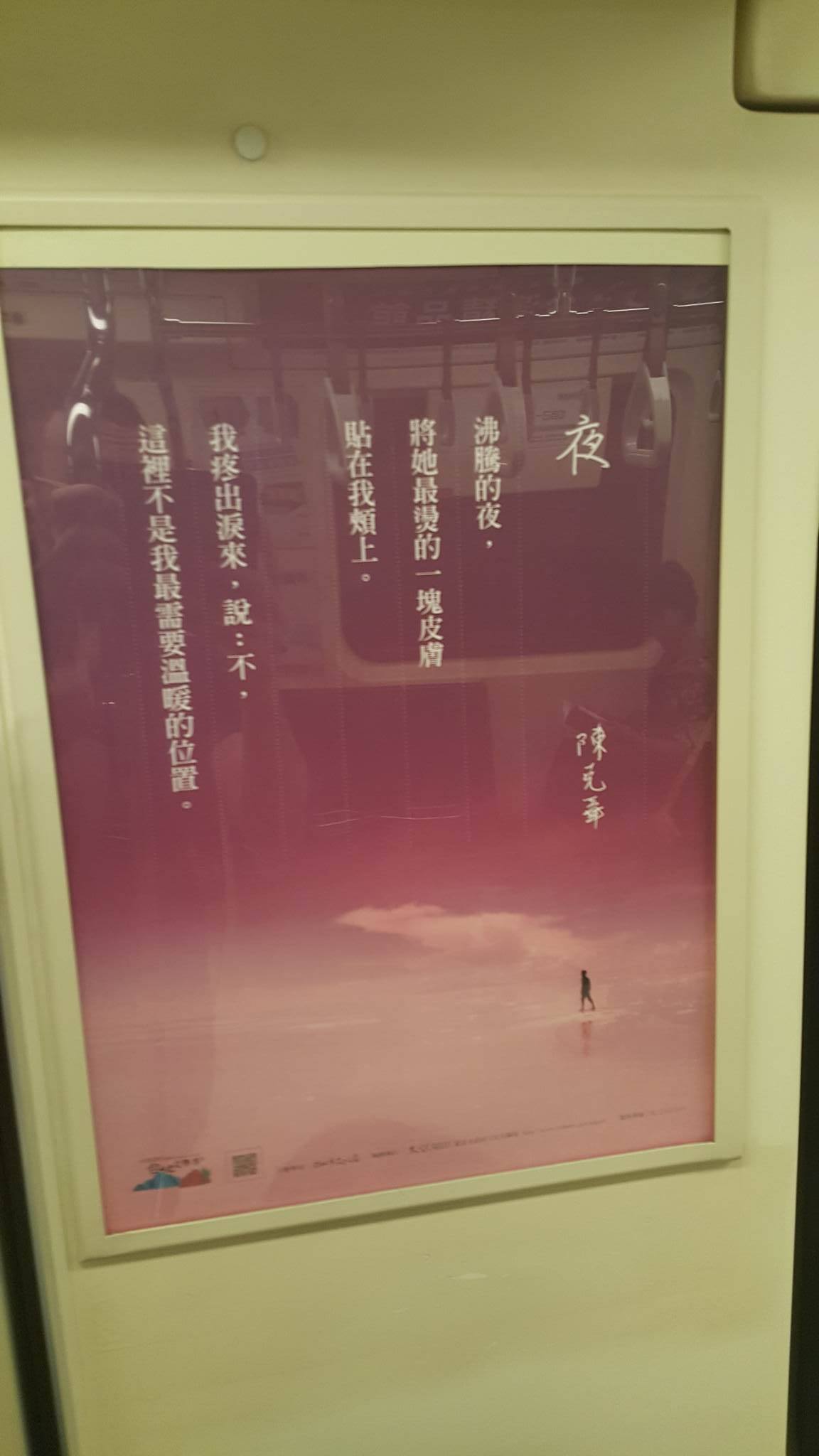
Another day, another opportunity to lean over someone to take a photo of the poem on the MRT behind them. This one’s by Chen Ke-hua and I thought it was pretty appropriate for this humid summer night.
夜 Night
沸騰之夜, The Simmering Night,
將她最燙的一塊皮膚 Lays the most scalding piece of its skin
貼在我頰上。 Against my cheek.
我疼出淚來,說:不, I cry tears of pain and say, “No”,
這不是我最需要溫暖的位置。 This isn’t where I’m most in need of warmth.
Chen was born in 1961 and was born in Hualien in Taiwan, although his family were originally from Wenshang in Shandong. After graduating from Taipei Medical University he started his career in medicine. In 1997 he studied at the Harvard Medical School, returning to Taiwan in 2000. He now works at the Department of Ophthalmology of Taipei Veterans General Hospital and as an assistant professor at the medical school of National Yang Ming University. As well as his medical career, he’s also a poet, an author, a painter and a photographer.


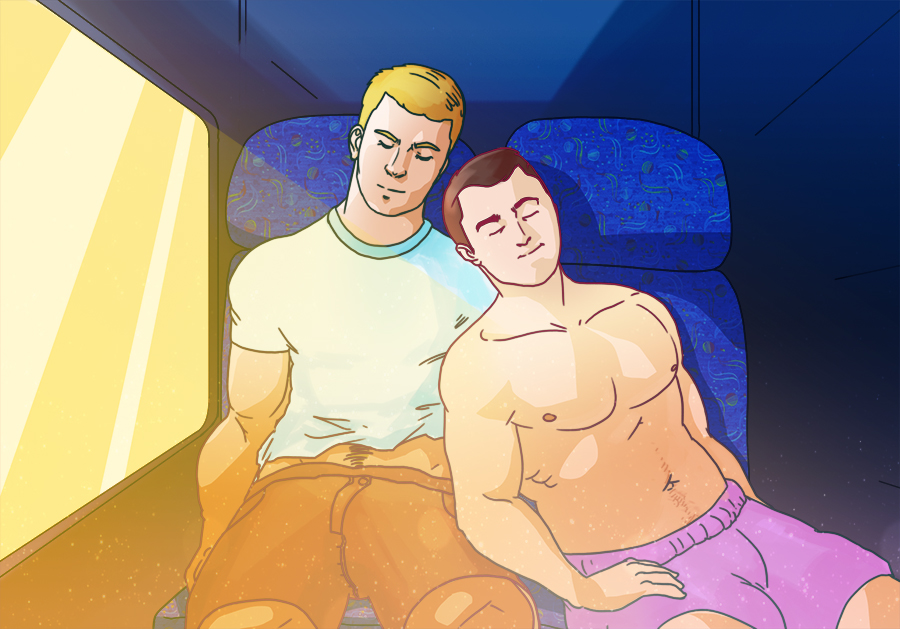 他們已經上了客運要從海邊回到城市。雖然曬傷了,不過身體還沒感覺,只是全身疲憊,終於可以坐下來了很舒服。因為整晚都在眾多篝火之間跳舞、玩水,所以除了體味,J跟K兩個人身上還有一股煙味,混著海水留下的那種腥味。客運坐滿了跟他們一樣過完了篝火節要回城市的人,因此,他們不能跟平常一樣坐在前後兩排的雙人座,隔著椅背講話,只能並坐在同一張椅子上。雖然空間有限,J還是照常地把雙腿張開。K感到J的腿輕輕地貼著自已的腿,臉稍微熱了起來。車離開車站的時候,J已經睡著了,但K還沒有睡意,一直看著窗外。海平線那兒,晨光剛開始流過海面,覺得很美。
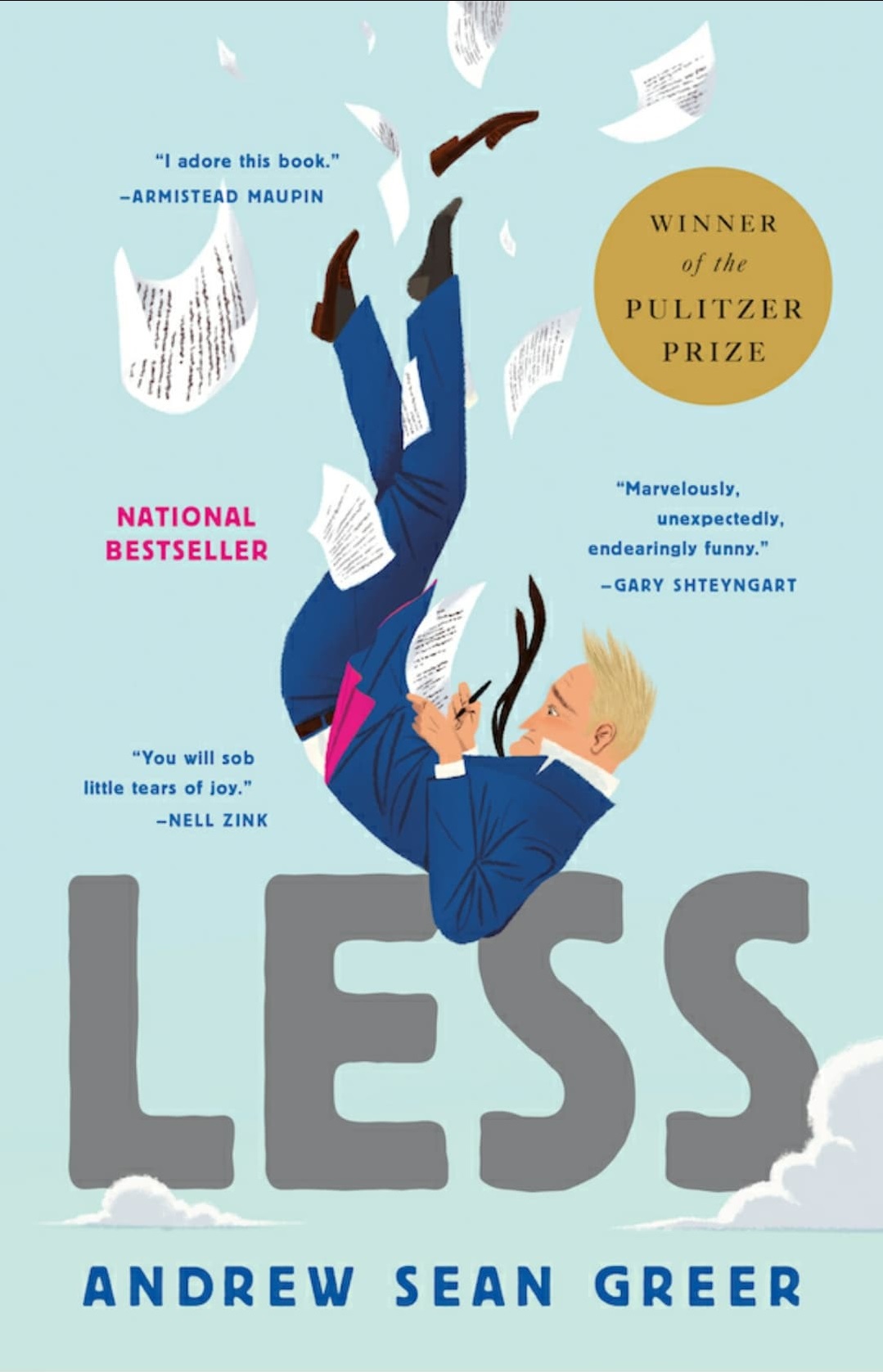 我最近在看一本名為《Less》的同志小說。主角Less是一位年近五十的同志小說家,他在二十幾歳的時候曾經跟一位比他大二十歳的大師級詩人在一起,但他四十幾歳的時候則是跟一位比他小二十歳的青年交往。然而,正當Less要邁入生命的後半段時,那位現在已經三十幾歳的情人找到了跟他年紀相近的伙伴,所以與Less分手。
 (Contains spoilers) Go Set a Watchman is really a story that completes To Kill a Mockingbird and seems more relevant to the contemporary debate over race relations. The title is a quote from The Prophecy Against Babylon in Isaiah 21: