Small Town Culture and the Chinese Dream in ‘Mountains May Depart’

Mountains May Depart (《山河故人》 Jia Zhang-ke, 2015) depicts the breakdown of small town culture and a family unit in China, the price paid for the pursuit of the Chinese Dream and ‘going West’.

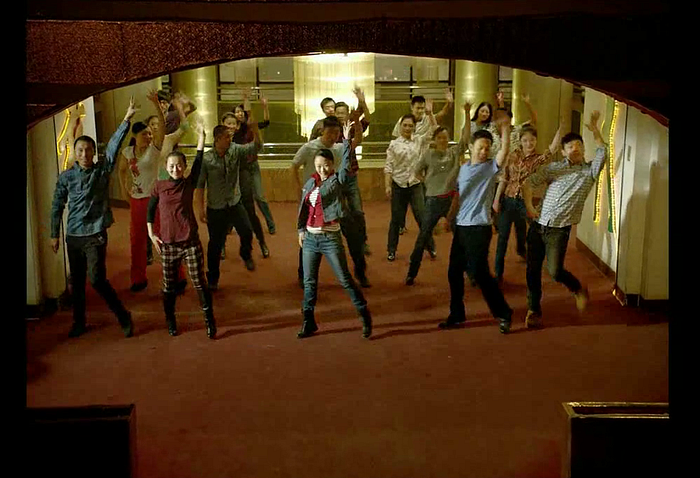
The film opens with a surreal scene of a group of people dancing to the Pet Shop Boys’ cover of ‘Go West’ by the Village People. Although this appears jarring at first glance, the symbolism of the song when sung from a Chinese perspective, ties in with the stated ambition of one of the protagonists, Zhang Jinsheng, to bring the object of his affection, Shen Tao, to the US. In the small town of Fenyang in Shanxi Zhang has a violent falling out with his friend Liangzi over the pursuit of the female lead, Shen Tao. There are then successive jumps through time, from 1996 to 2014 and finally to 2025.

We follow Zhang Jinsheng as he wins Tao’s affections (attempting to bomb Liangzi in the process), they get married and have a baby together, while the spurned Liangzi travels to another province to work in mining. As we jump again, we learn that the marriage has failed and Zhang has taken their son to live in Shanghai, while Shen Tao remains in her hometown. She has limited contact with her son, Dollar, and they have several tense and awkward exchanges when he returns from Shanghai for her father’s funeral.

With the next jump in time, Liangzi returns home after being diagnosed with lung cancer and meets again with Tao in Fenyang where she offers to pay for his treatment. An increasingly unhinged Zhang Jinsheng has taken Dollar to live in Australia, where he has all but forgotten his mother. Zhang himself hangs around with other people from his province, unable to return due to ongoing corruption purges back home and largely unable to communicate with his son, having to resort to Google Translate to hold a conversation. Dollar subsequently develops a romantic attraction to his Chinese teacher, an older woman from Hong Kong (and mother substitute), and announces that he is leaving his father. The film ends with another rendition of ‘Go West’, this time with Tao dancing alone.

As Michelle Huang’s (黃宗儀) points out in her book ‘New Feelings Between China and Hong Kong: The Politics of Emotion in Dreams of Development’ (《中港新感覺:發展夢裡的情感政治》), the culprit in the eventual misery of each of the characters in the film seems to be globalism and new iterations of the “Chinese Dream” that spur people on towards an illusory upward mobility. Contrary to popular representations of the nouveau riche in China as an aspirational identity, Huang suggests the film’s subversion of the conventional perception of the nouveau riche (「新富」) stating:

在《山河故人》中,新富人不再被單純地再現為得意洋洋的發達者或忘本者,相反地,窮人和新富都成為某種意義上的「歷史廚餘」,在社會的發展之下喪失了自身的慾望與時空感。

In Mountains May Depart, the nouveau riche aren’t purely represented as smug members of the developed world, or as those who have forgotten their roots, on the contrary, impoverished people and the nouveau riche become the ‘kitchen waste of history’, with societal development they lose their desires and sense of orientation.

Zhang JinSheng ticks all the boxes of the Chinese success story on the surface, but in reality, he is unmoored in Australia (which although in the cultural west, is ironically east of China), hanging around with a group of fellow exiles from his home province and isolated from his son. Huang talks about how Zhang Jinsheng is never really able to make the conversion from small town mindset to global or international point of view and part of this is represented linguistically. Part of this small-town mentality, is Zhang’s (rather clumsy and over the top at times) hypermasculinity, whether it is his incel-like plot to blow up his friend and rival for the affections of Shen Tao, or the collection of guns he keeps in Australia. This association of small town mindset with traditional gender roles also applies to Dollar, who Shen Tao scolds for the effeminacy she perceives as Shanghai (metropolitan/cosmopolitan) affectations, which she contrasts with the 「爽快」 (lit. frank and straightforward; read masculinity) values of small towns. She angrily removes his cravat and tells him his use of the Chinese equivalent to “Mummy” (媽米) instead of “Ma/Mum” (媽) isn’t manly enough:

「到樂,怎麼不跟媽媽說話呢?叫媽
「媽咪」
「媽咪?什麼人教你這麼叫的?」
「爽快點,叫媽」
「媽」
「不男不女的,誰給你繫的?」

-Dollar, why aren’t you speaking to your mother? Call me ma!
-Mummy
-Mummy? Who taught you to say that? You should be more straightforward, and call me ma.
-Ma
-Are you a boy or a girl? Who put this thing on you?

The distance between mother and son is also emphasized through the latter’s use of Shanghainese on the phone to the woman we suppose is his step-mother and his inability to speak the local dialect. Huang states that Dollar’s ultimate unhappiness also subverts the conventional portrayals of the 「富二代」 (second-generation wealthy) in China:

全球化之下崛起的中國富二代,原本是社會轉型下最後贏家的符號,但在影片中卻被再現為一個無根者,Dollar充滿了對於空間壓縮的困感,體驗著後社會主義發展下的無奈。

Conventionally portrayed as the final victors in the social transition spurred by China’s rise and globalization, the second-generation of wealth in the film is portrayed as rootless. Dollar feels constricted and exasperated by post-socialist development.


Huang points to Tao as the embodiment of the small town culture that we see eroded throughout the course of the film, represented in the decline of Chinese New Year traditions (and Tao’s role in them at the start vs. when Liangzi returns from the other province):

在《山河故人》中,賈樟柯透過角色沈濤肉身化了鄉土情義的理念,以映照他記憶中(更準確地說是想像中)的故鄉小城。

In Mountains May Depart, Jia Zhang-ke uses the character of Shen Tao to embody nativist affection and values, to reflect the small hometown of his memory (or more accurately his imagination).

This evoked for me Shen Cong-wen’s portrayal of the border regions of China, chronicling an era on the brink of its own demise.

Some parts later in the film, particularly those parts filmed in Australia felt a little more melodramatic and corny compared to the rest of the film, but overall the film was well-paced and moving.
‘What the f*ck?’ in Taiwanese from 是在哈囉 to 洗嘞哈囉

I’ve been hearing the phrase 「是在哈囉」 for a while now. The most recent case of which was a while back when a Taiwanese friend responded to a former member of the diplomatic service who wrote tell-all posts on his Facebook lodging his complaints about his former colleagues.

https://www.facebook.com/freeTAIPEI/posts/381023249137797

According to this handy slang guide from Business Next, the phrase takes its origin from when Americans say “Hello~~~?” (wavy intonation) to mean “What the f*ck is going on with you?”. Originally I’d thought the phrase meant attracting attention just for the sake of courting controversy, but according to the Business Next interpretation, it’s basically “up to f*ckery” or “behaving or acting bizarrely”.

中天 (whoops) posted this video suggesting that lots of people don’t really know what it means but get the general gist:

As with much slang, different people use it in different ways and it evolves over time (see the varying interpretations of 「三八」 to start your journey down the rabbit hole), so I thought I’d pick a few random examples of its use from across the internet so that you can troll strangers without nagging doubts about the appropriateness of your cutting remark on their new Instagram pics.

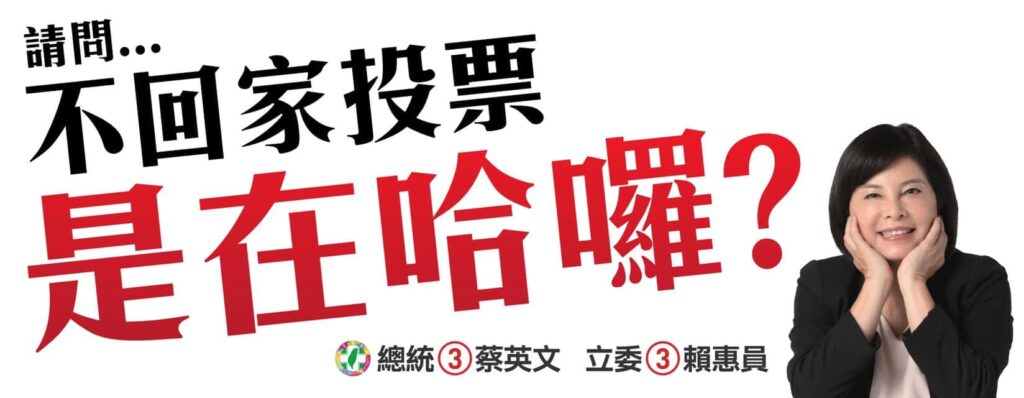
This example is an ad trying to encourage people to return to their hometowns to vote:

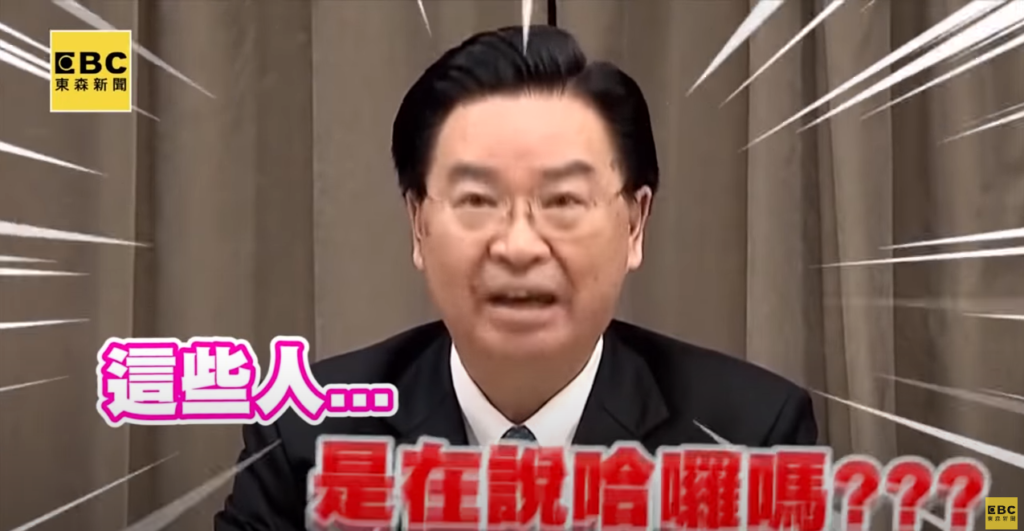
Even Minister of Foreign Affairs Joseph Wu has apparently employed the phrase when questioning the actions of the WHO:

Do these people live in a parallel universe? What the hell is going on?

A Taiwanese soap star Brent Hsu also made the Taiwanese version of the phrase popular in the Taiwanese drama Proud of You (《天之驕女》):

In the phrase 「洗嘞哈囉」, the character 「洗」 is used to represent the pronounciation of the character 「是」 in Taiwanese, and the character 「嘞」”lei” in Mandarin and “leh” in Taiwanese represents the Taiwanese character for 「在」 (to be doing s.t.). Then the 「哈囉」 is just a representation of the borrowing of the word Hello from English.

As you can see many of these posts are from last year or the year before, so expect saturation with this phrase at some point and a few rolled eyes if you use it at this point.

Another way to say “What the f*ck!?” in Taiwan is to use the phrase 「花若發」 (huā ruò fā) which is an approximation of the sound of the English phrase (What the f*ck) using Chinese characters (and Mandarin pronounciation).

MRT Masks: Going Like Hot Cakes

You can get some fancy MRT-themed masks today if you register with the new MRT app (Android: 捷運Go or Apple: 捷運Go), although beware, you might have to suffer through several crashes:

Once you’ve signed up for the app, (you’ll need to verify your phone number, head to 「好康活動」 on the orange nav bar and click on 「捷然不同的通勤時尚」 and then register for the promotional event by pressing 「拿口罩」 on the bottom of the screen. You’ll then be prompted to pick a station to pick your masks up at on March 28 (from 10am – 6pm). Then hit 「領券」 pick up my voucher. You’ll be able to go to the MRT counter to exchange them on March 28, but brace yourself for queues judging by how much the app has been crashing.

Just a quick note for pun-lovers. The name of the promotion 「捷然不同」 is a pun on the phrase 「截然不同」 (jiéránbùtóng / entirely different), substituting the first character for the 「捷」(jié / rapid) in 「捷運」(jiéyùn / MRT).

Anti-Taiwanese vandalism on International Mother Language Day

I’m not sure quite what was going on with this angry red spoldge of red spray paint on the 「拍謝」 on the construction site sign below:

construction site sign Taiwanese language with characters scored out

「拍謝」 is the informal way to write the Taiwanese term 「歹勢」 or “phái-sè”, which is the Taiwanese equivalent of the Mandarin term 「不好意思」 (sorry).

I’m curious about the motivations of the vandalizer. Are they against the use of Taiwanese on a formal sign? Are they against the borrowing of Mandarin sounds to represent Taiwanese, rather than the 「歹勢」 that is used more commonly? Or are they against the use of Chinese characters to represent Taiwanese at all? Or was it just a random stain that got on the sign somehow?

Given the history of its suppression, language tends to be a sensitive issue in Taiwan. Writer Huang Chun-ming (黃春明) even took off his shirt during a lecture back in 2011 due to a disagreement with Associate Professor Wi-vun Chiung (蔣為文) in the audience over the necessity for Taiwanese-language instruction for primary schools and Huang’s unwillingness to adopt Latin script to represent the Taiwanese language (as implied by the sign below).

Huang Chun-ming with his shirt off
professor holding up a protest sign in Taiwanese
Taiwanese writers don’t use Taiwanese language, but use Chinese language to create, oh the shame!

Ironically you’ll see Professor Chiung uses the Simplified version of the character 「國」 in his sign. Linguistic hardliners are not really my cup of tea, and I much prefer the hodge-podge of English, Mandarin and Taiwanese that the construction site sign portrays.

Passive Aggressive Food Fights in the Workplace: Don’t f*ck with my biandang! + heart emoji

note in Chinese requesting that people do not turn off the machine

If you work in an Asian office, a biandang/lunchbox/bento warmer is a standard bit of kit. Lots of people have metallic lunchboxes which you can put inside to keep them warm until lunchtime.

There has been an escalating passive-aggressive argument lately in my office, as someone has been turning off the warmer as soon as they take their own lunch, leaving the remaining coworkers with lukewarm lunches, which is the eighth of the seven deadly sins (James 2:15-17).

I’m a microwave kind of guy, so haven’t been involved in the tussle, but the note was posted back in January without the highlighted text or scrawl down the side:

敬請最後一位使用者關掉即可,感謝!(想吃熱便當 heart emoji)
以上 2021.01.21
Please only turn off the machine if you are the final person to use it! (I want a hot lunch)
Yours Jan 21, 2021

Since then, while innocently waiting for the microwave to finish, I’ve noticed the door ajar and the machine off a few times with quickly cooling biandangs still inside.

This led to the escalation down the side and the addition of dots and highlighted text:

*不要再關啦!2021.2.8
Stop turning it off! Feb. 8, 2021

I’m sure the culprit is someone with good intentions but over-wrought anxiety about the biandang warmer never being turned off and consuming the whole building in flames, however, it does seem like a bit of a dick move to continue to turn it off.

Out and About with Variants in Taiwan

I’m always interested to see how variants of standard Chinese characters are still used in everyday life, whether it’s handwriting, signs or an author making a stylistic choice.

I spotted this beauty at a petrol station in Taitung. You can understand the reason for the simplification of the top of the character given the chunky font required by this kind of paint:

This character is 「嚴」(yán/strictly), but the top has been simplified along the same lines as the simplified version of the character 「严」. It retains the 「敢」 of the traditional character though:

You can look up these kinds of variants in the variant dictionary here.

Funnily enough there is a standard 「嚴」 on the sign to the left of the one circled.

Have you ever caught a p̶o̶k̶e̶m̶o̶n̶ Chinese character variant in the wild? Submissions welcome!

Year of the Ox: Door Dressing Guting

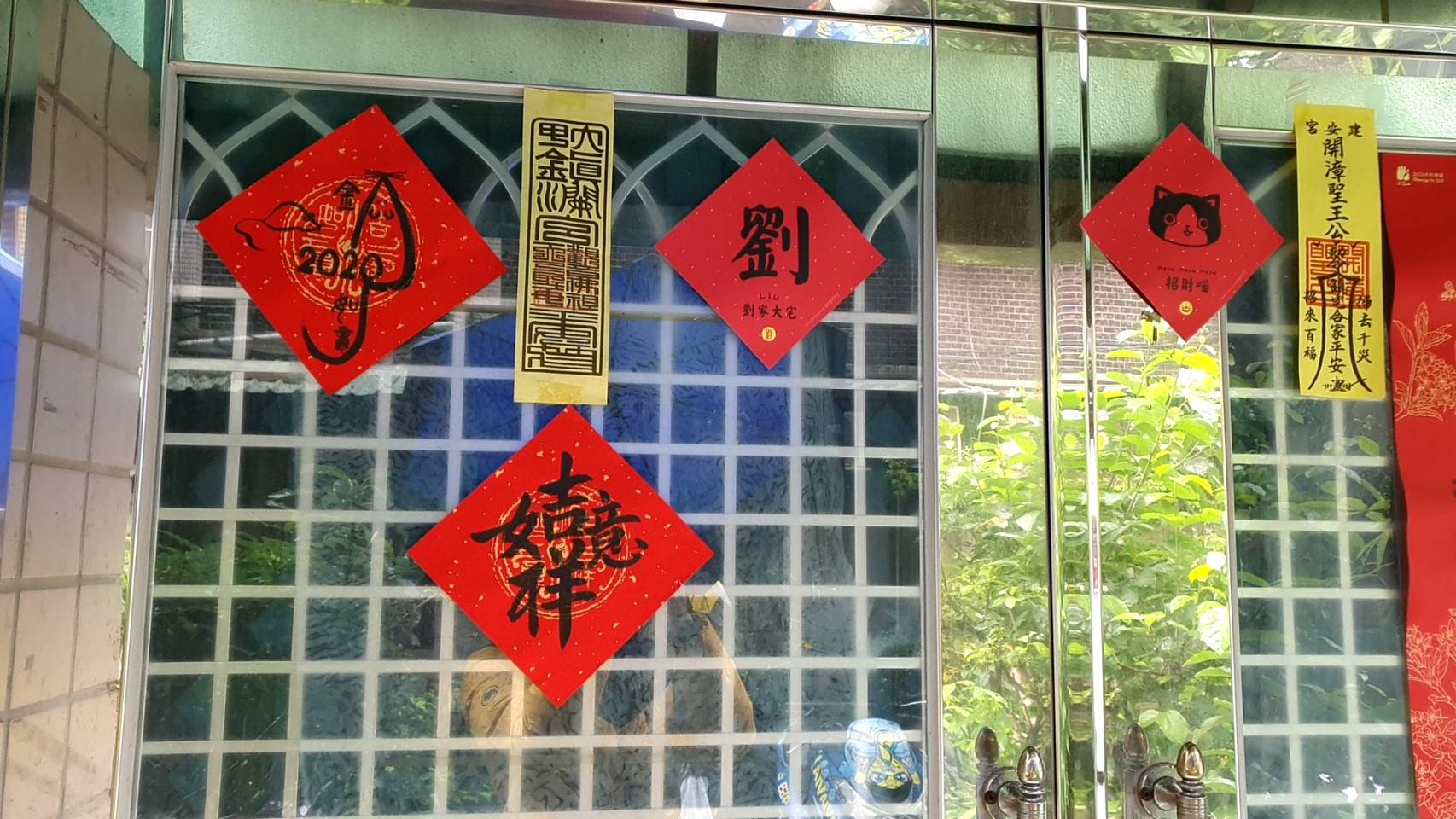
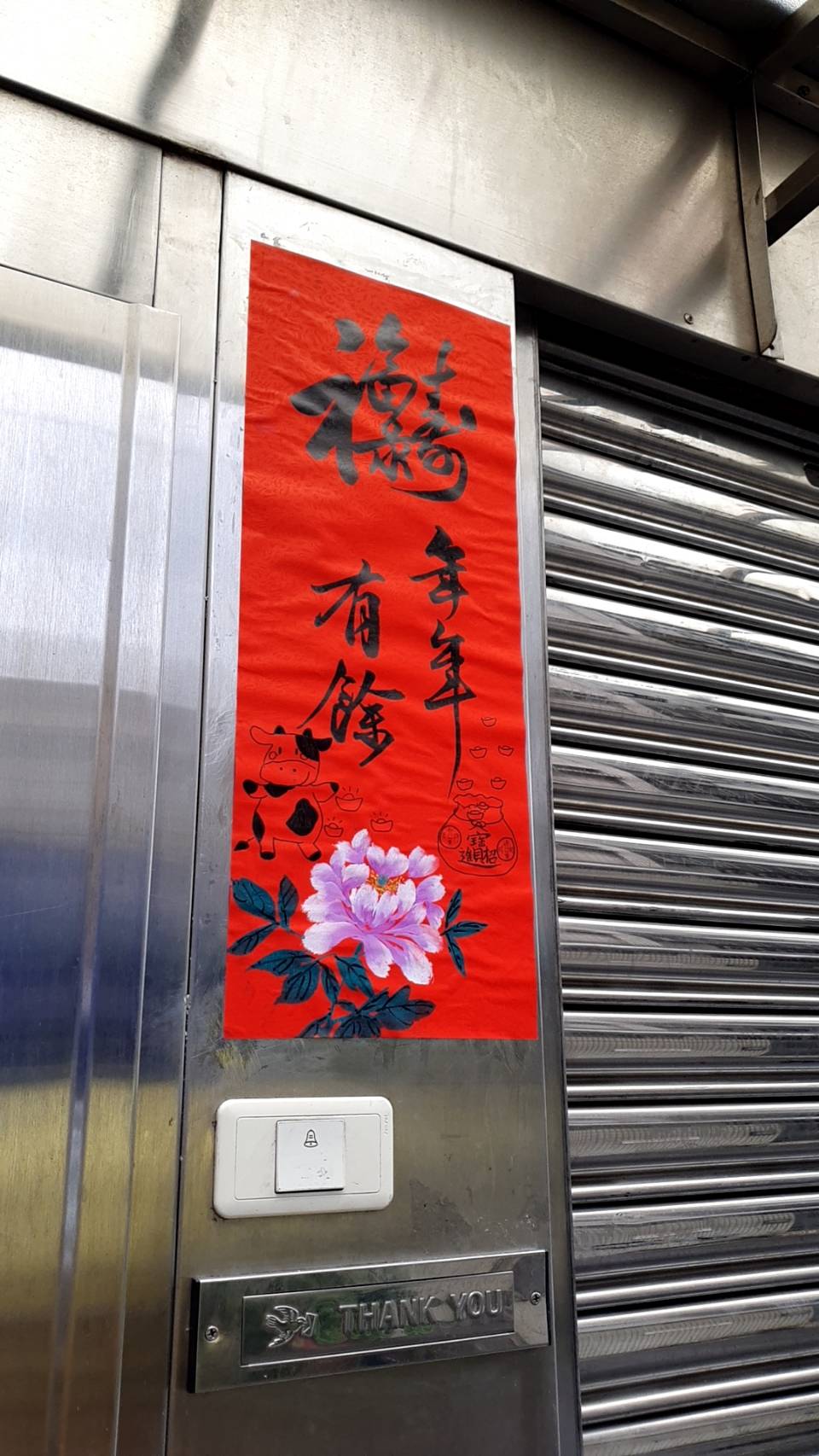
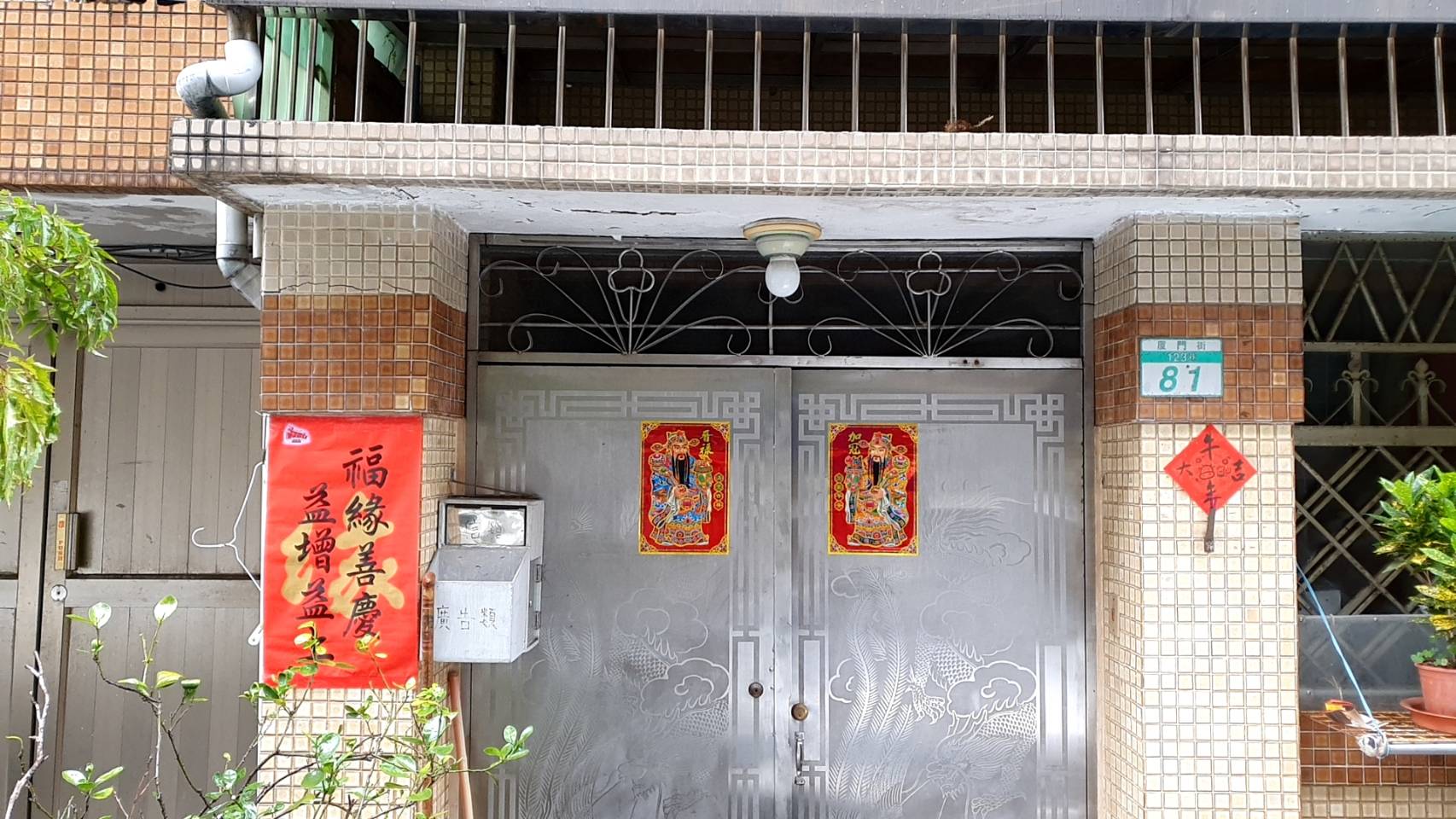
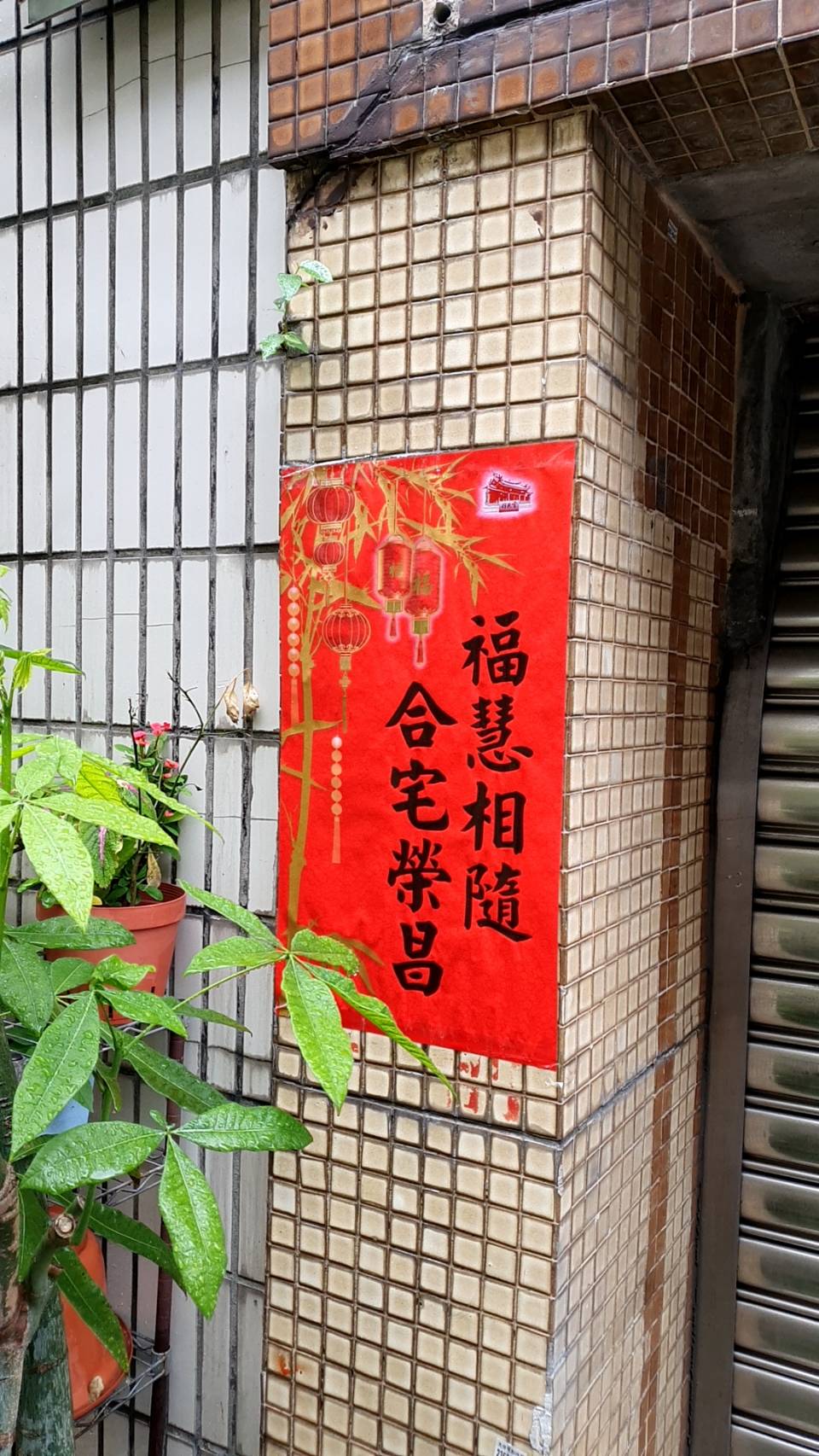
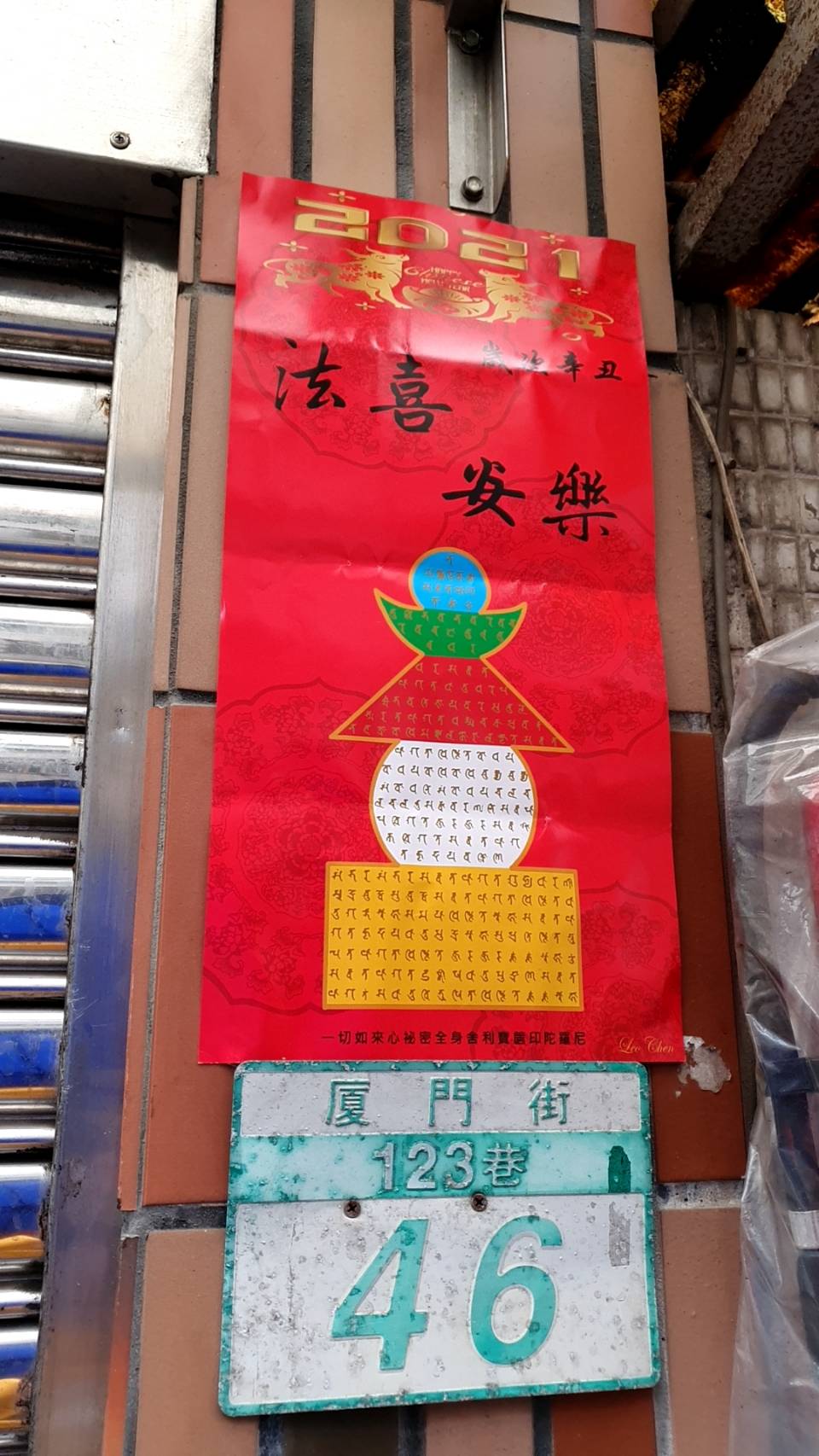
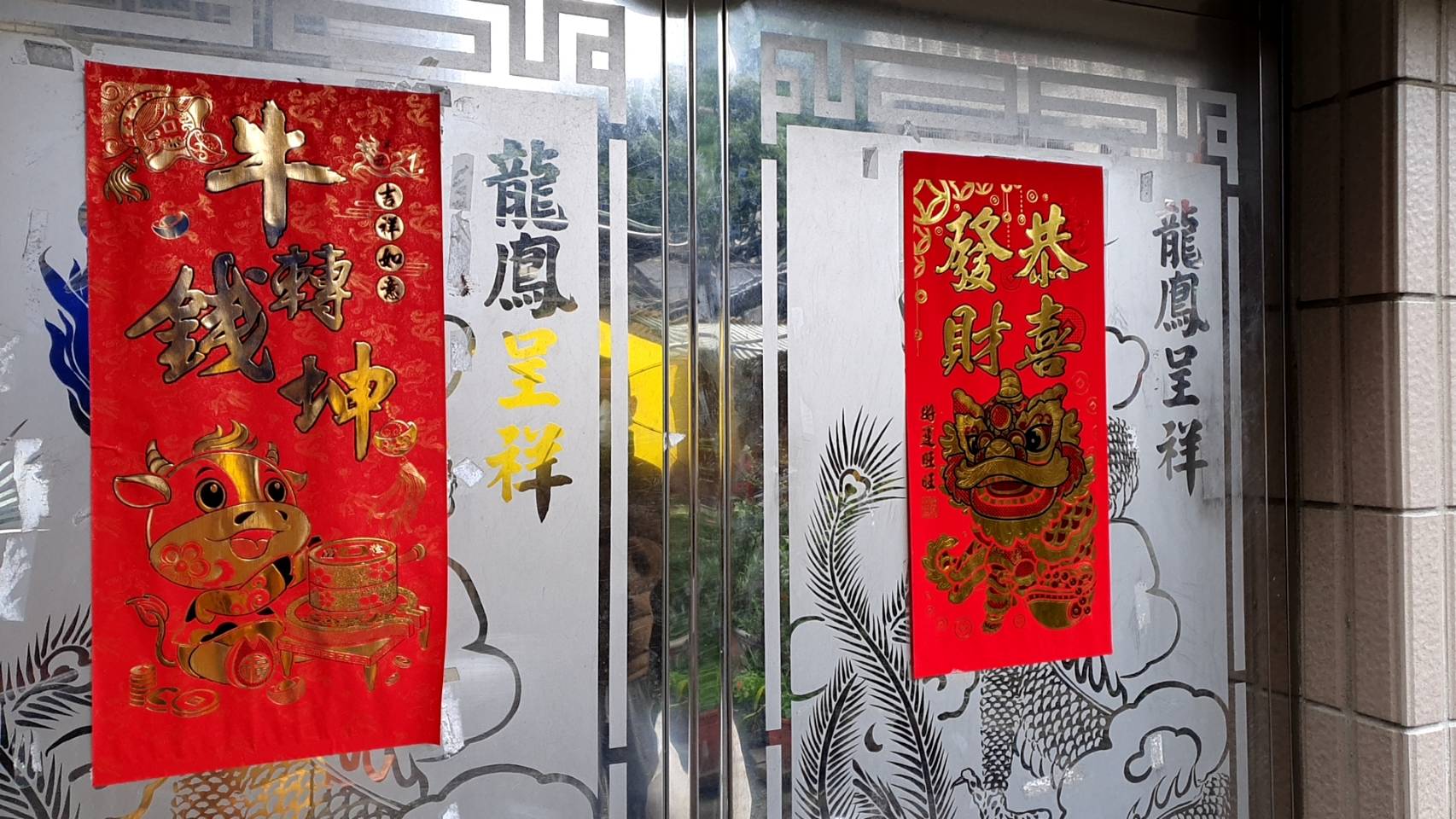
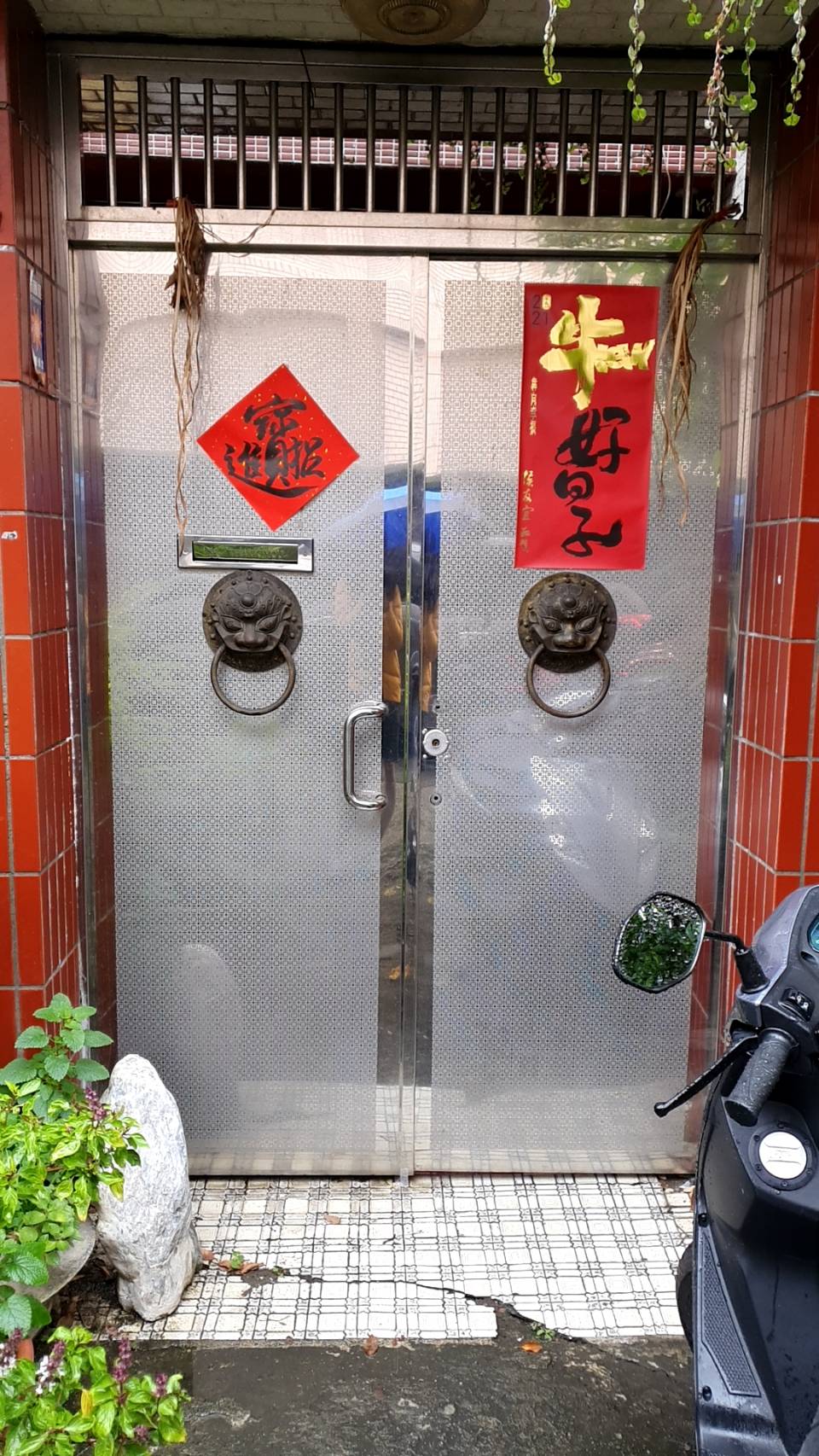
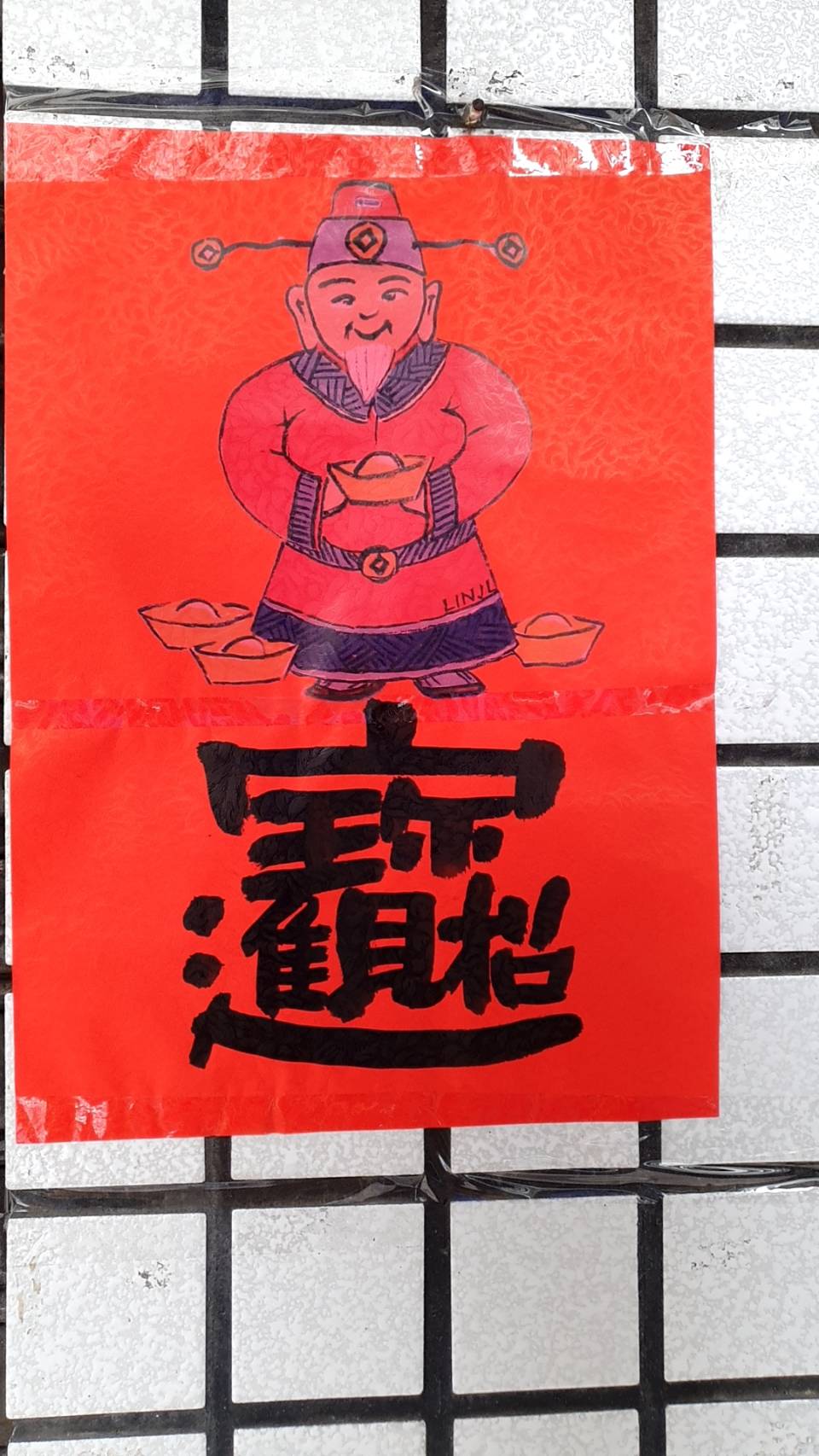
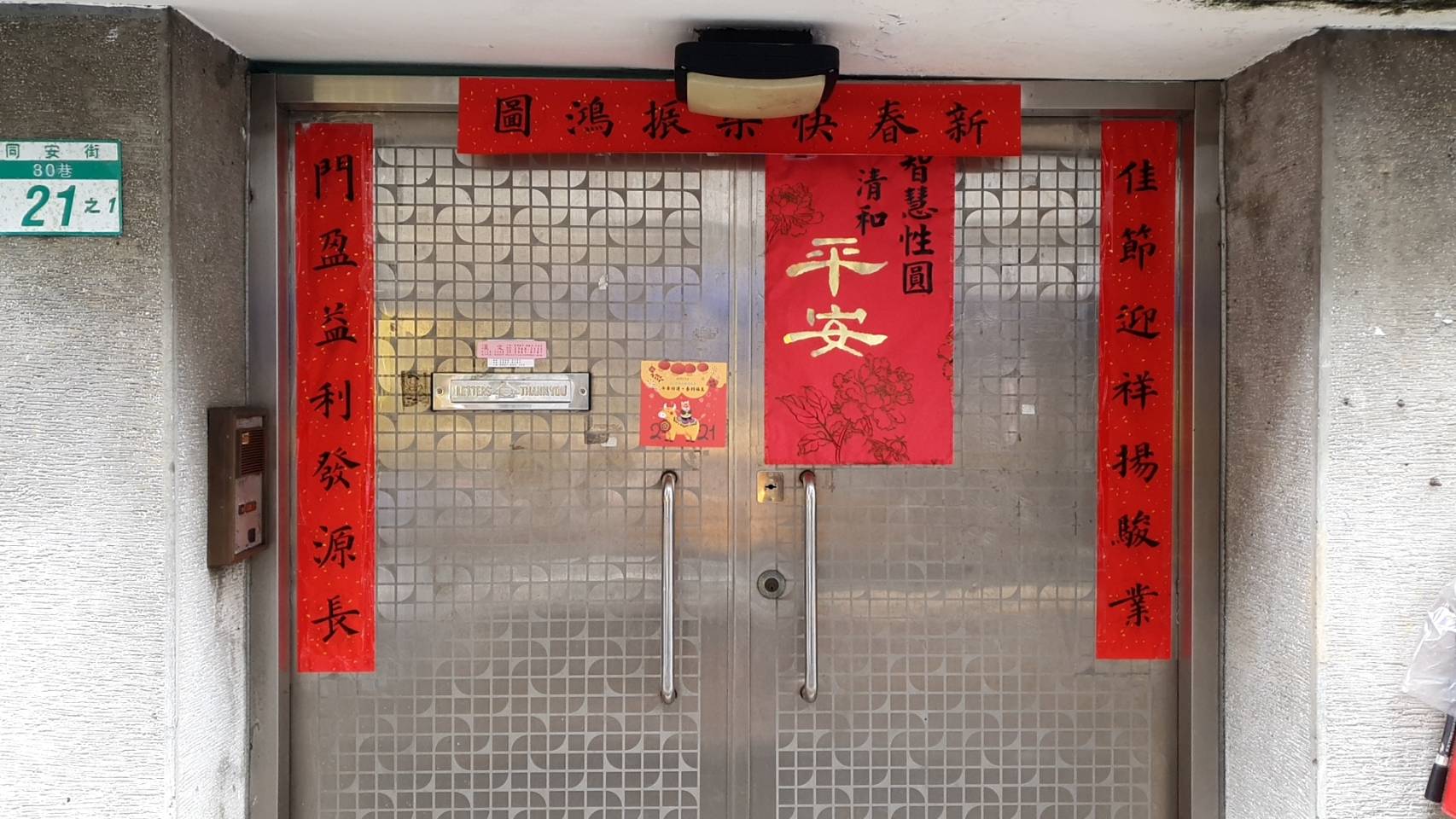
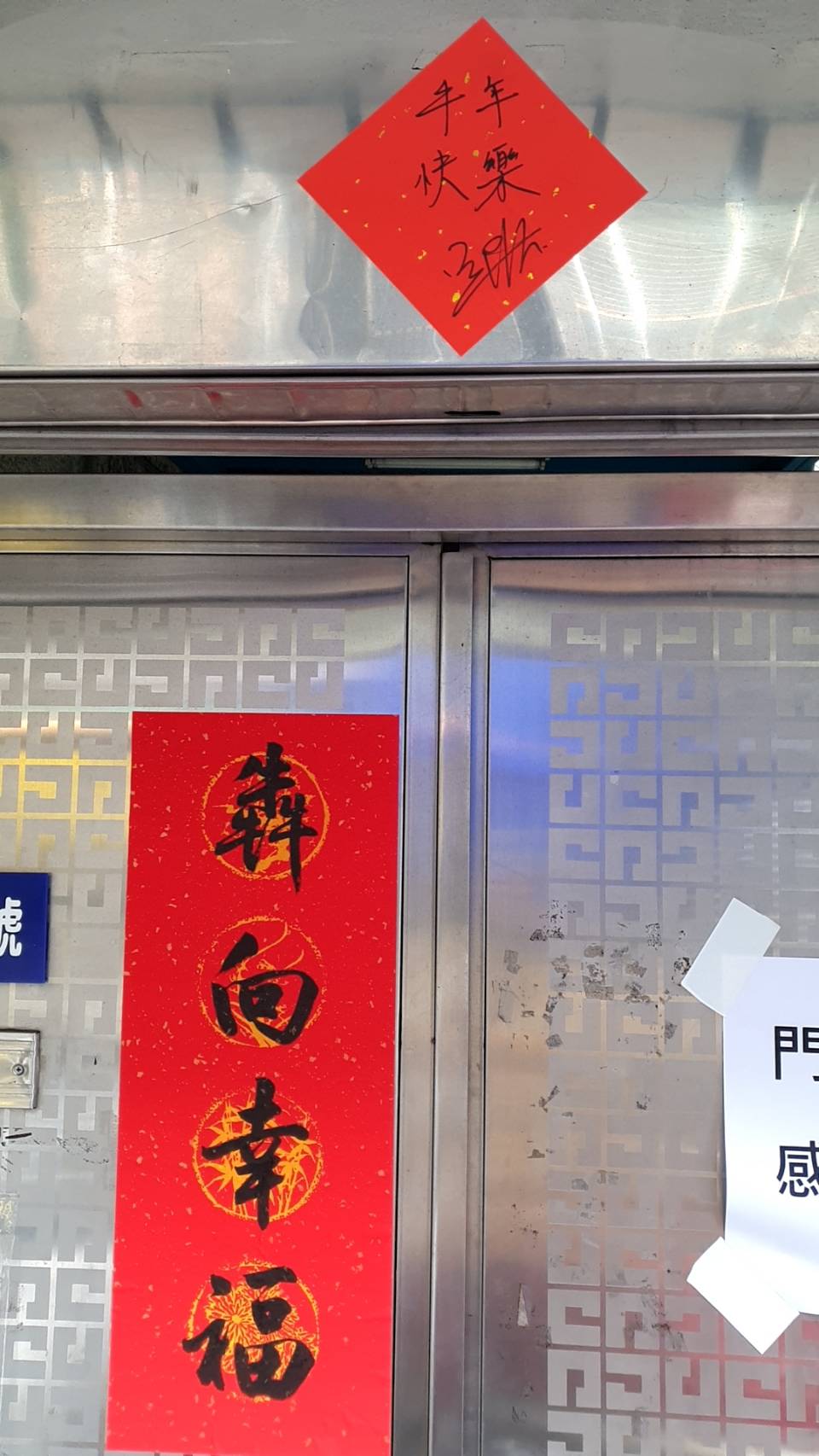
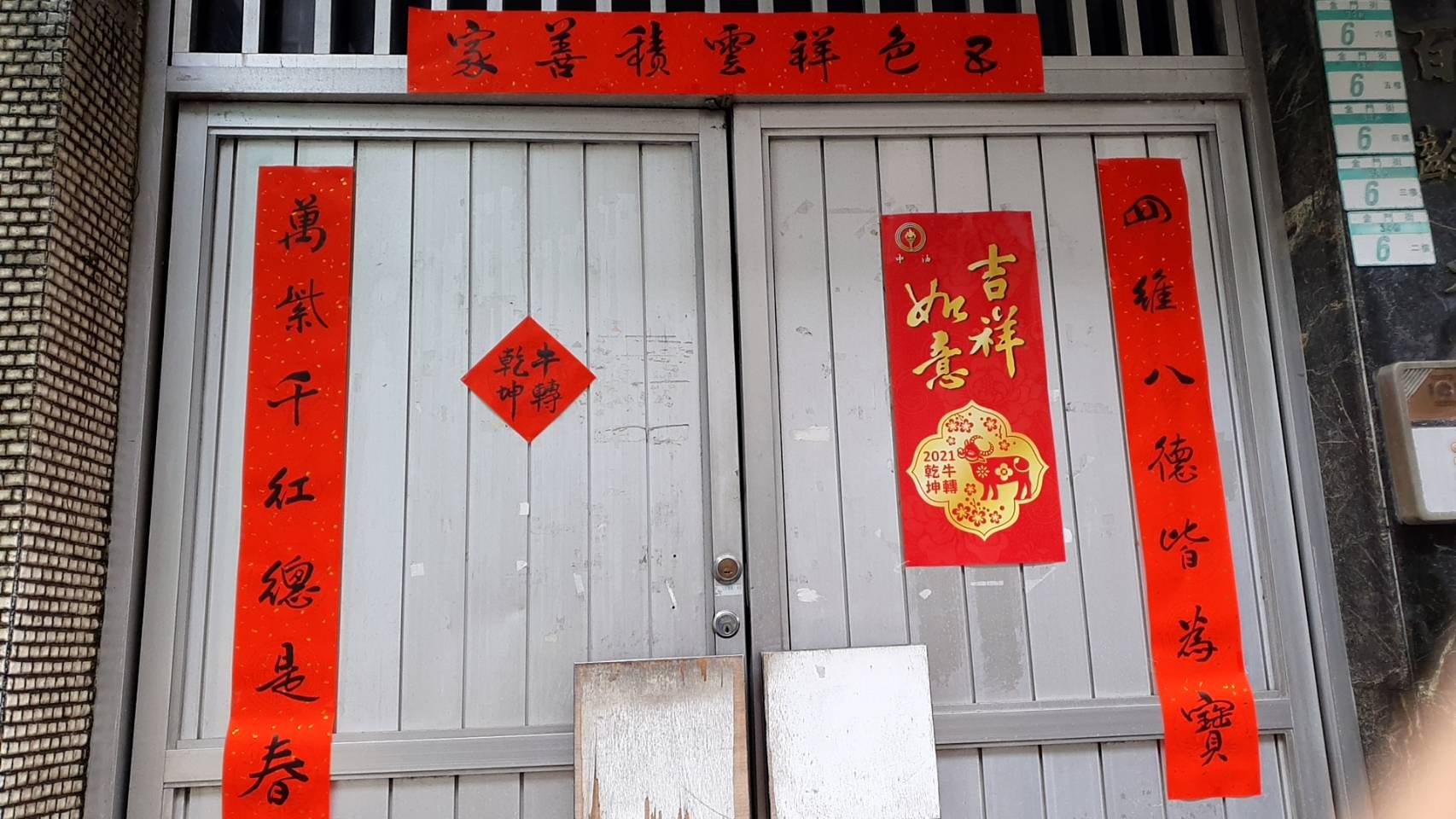
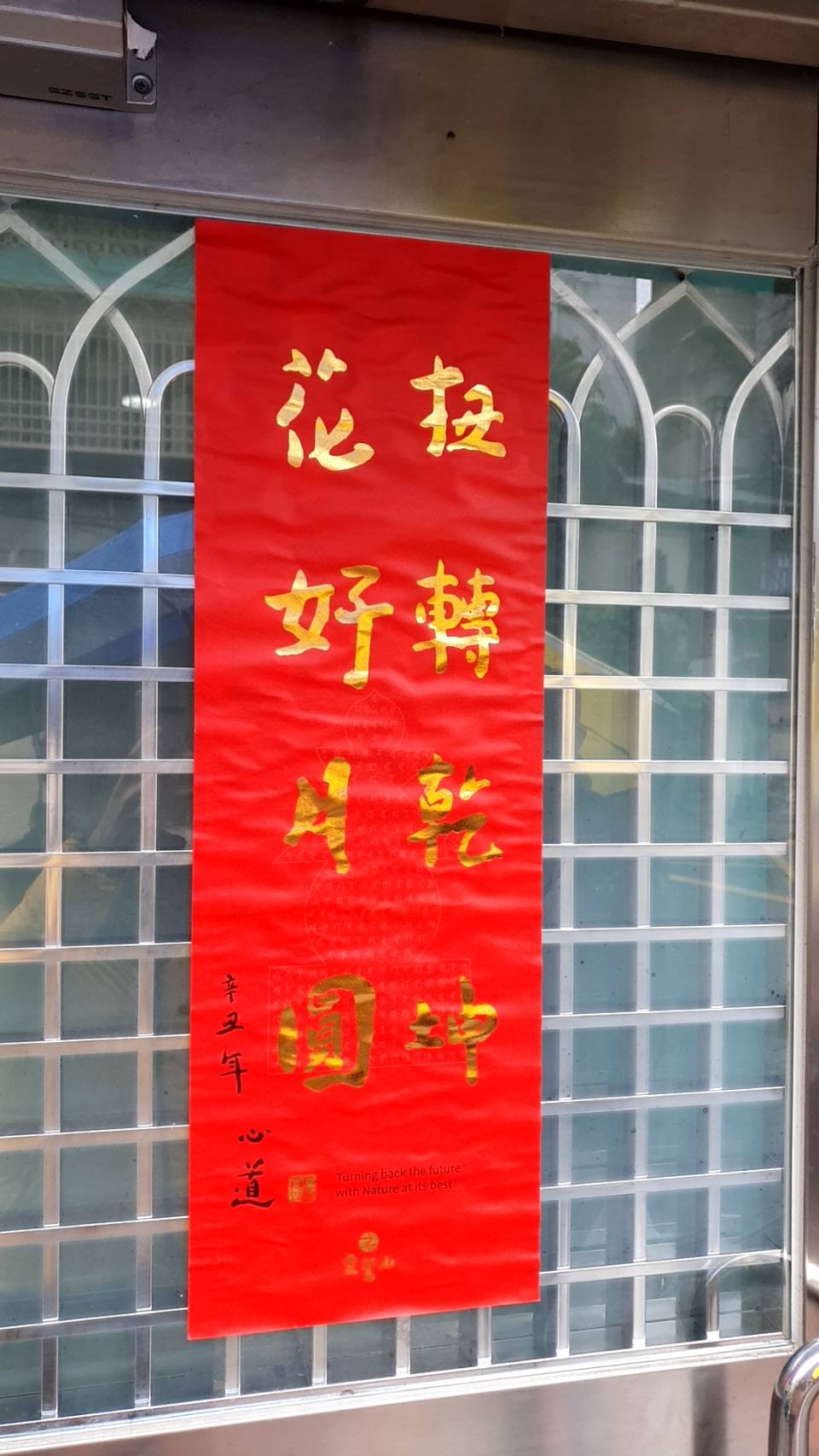
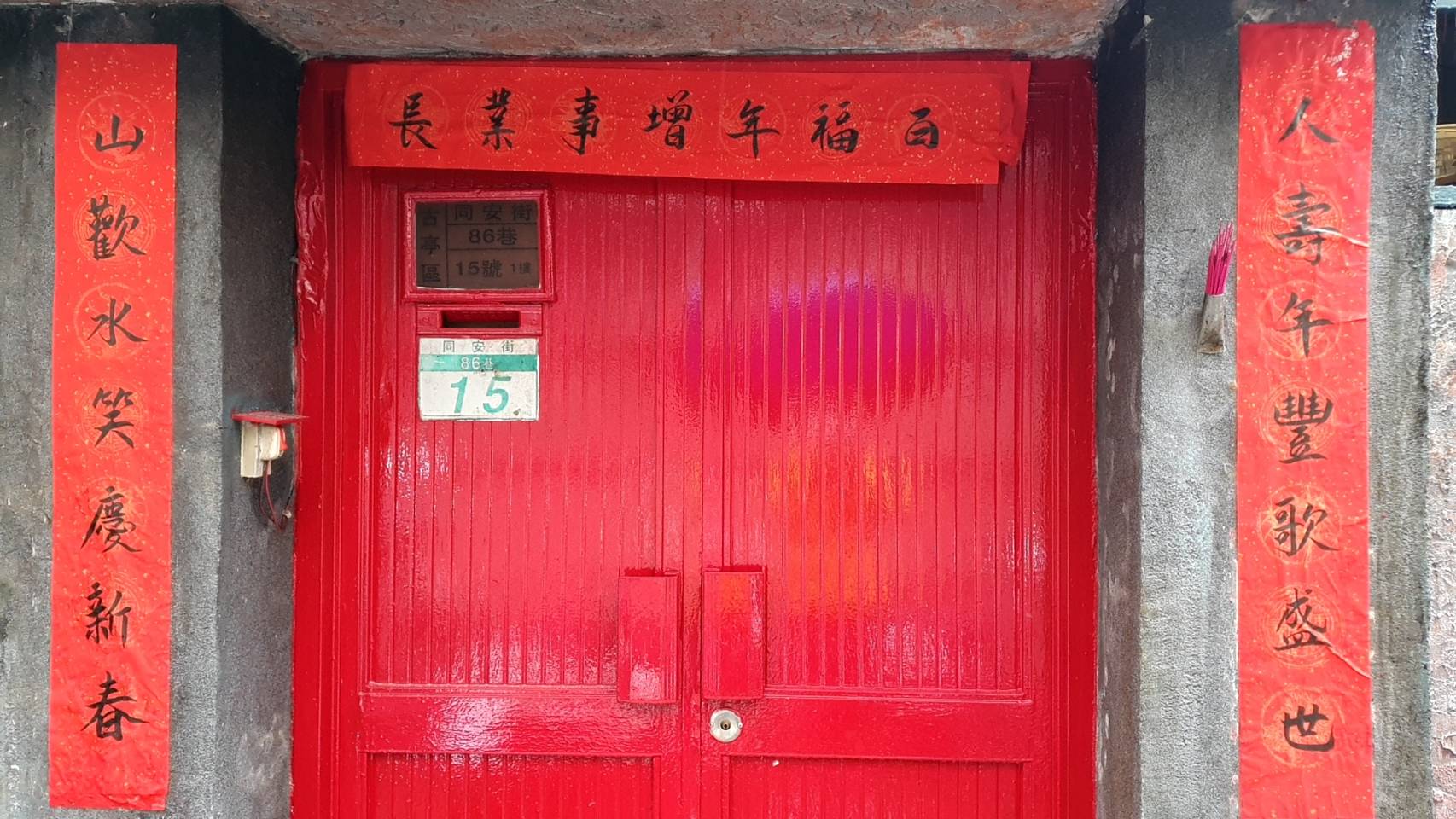
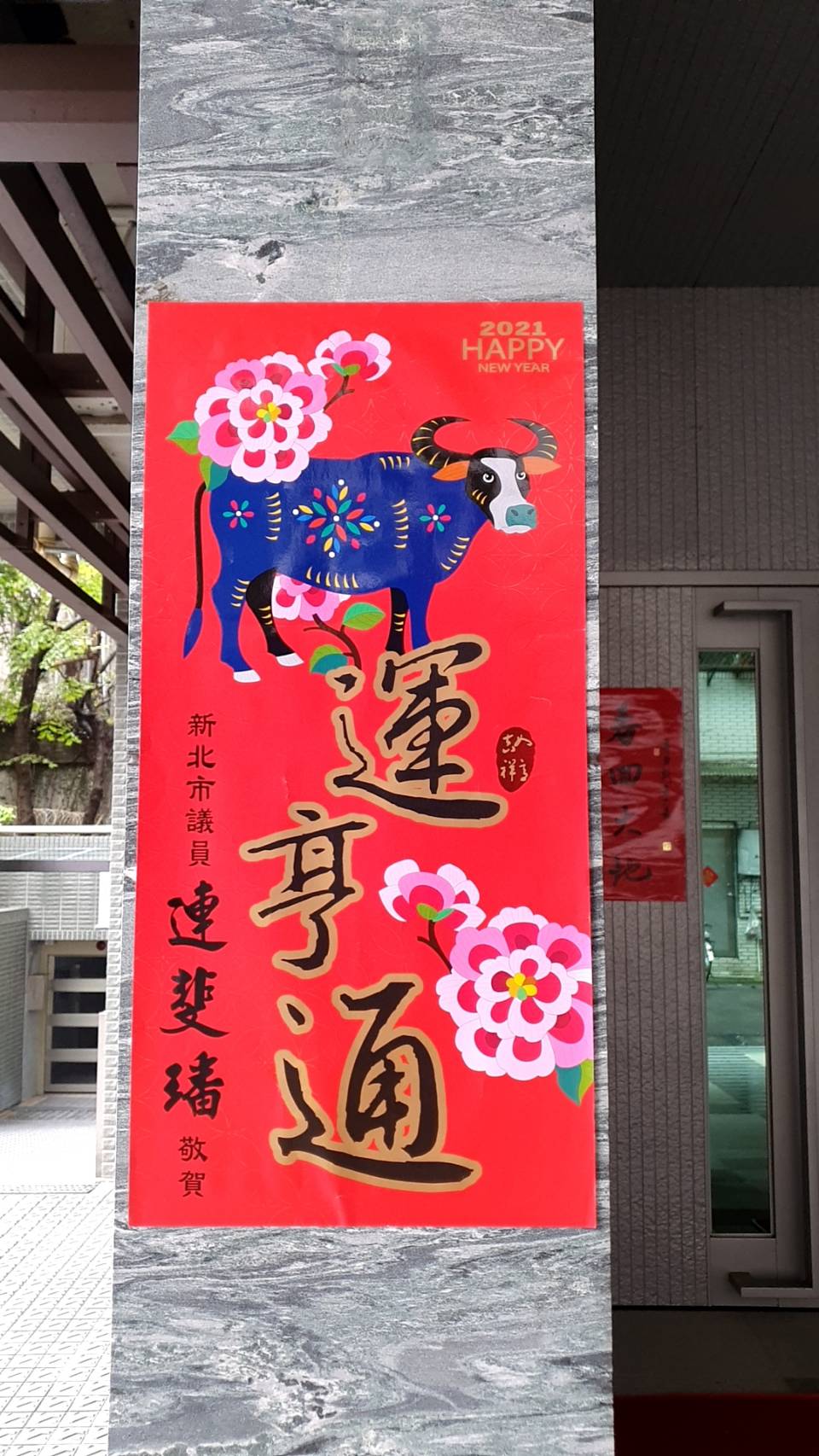
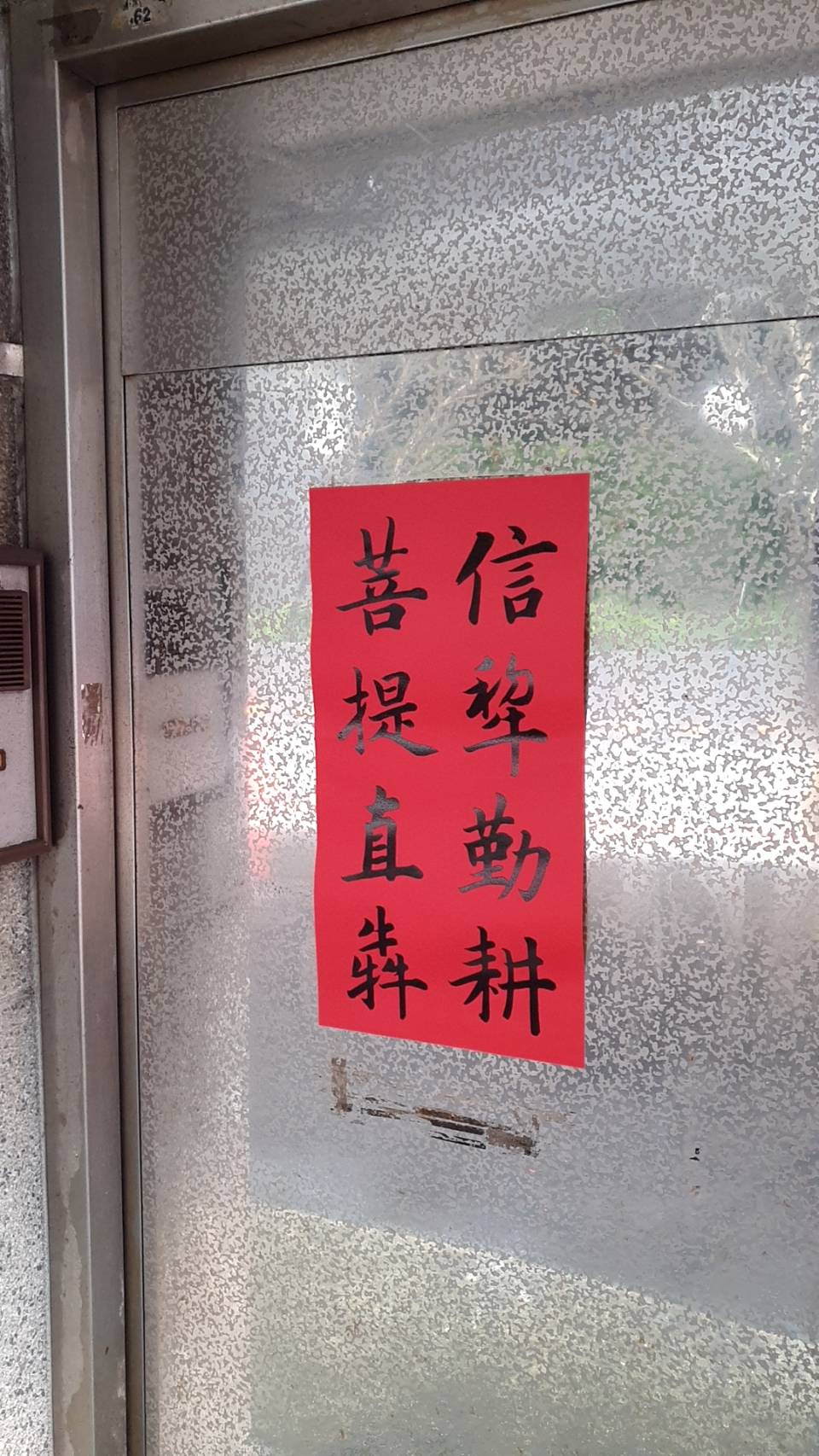
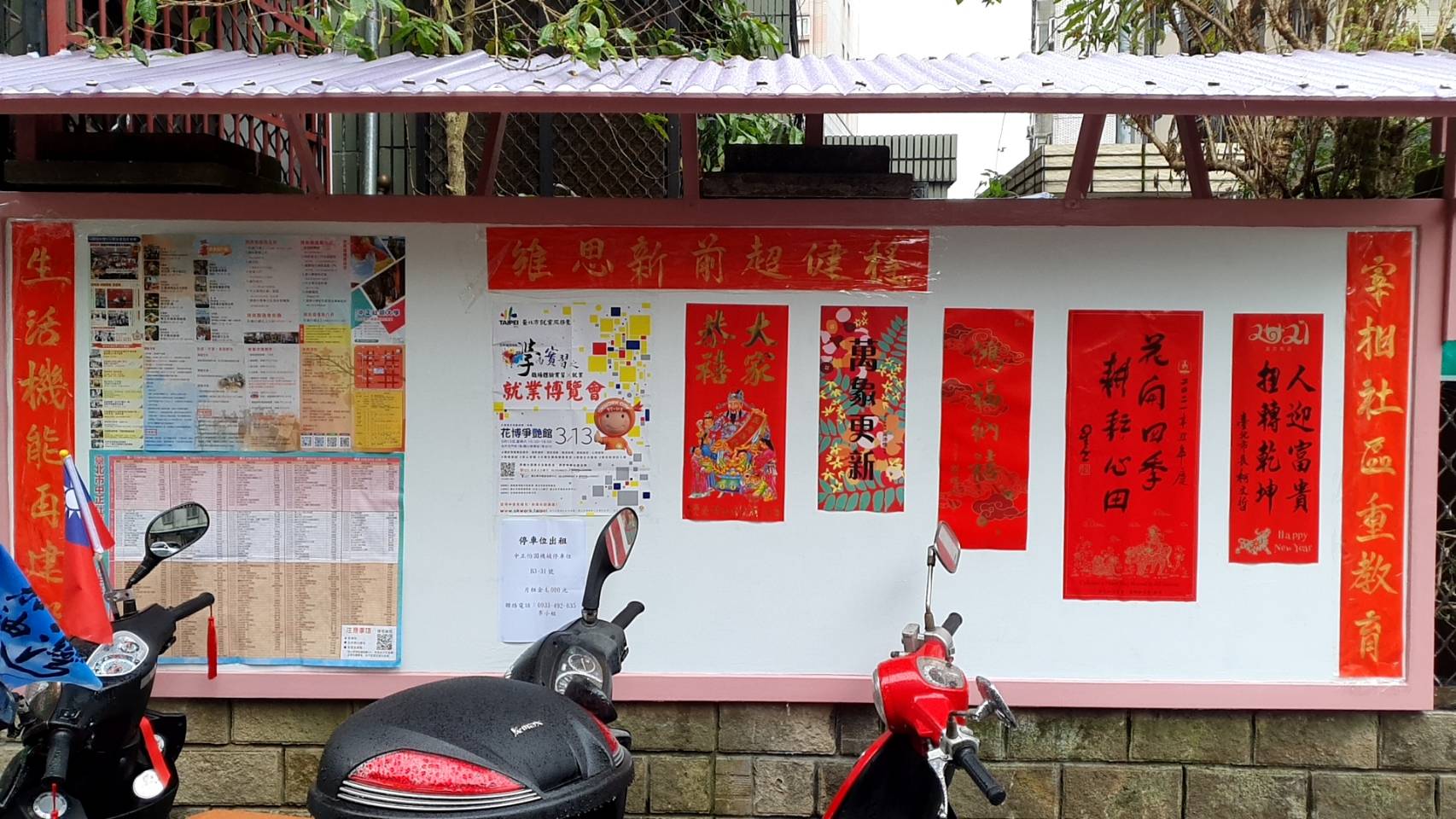
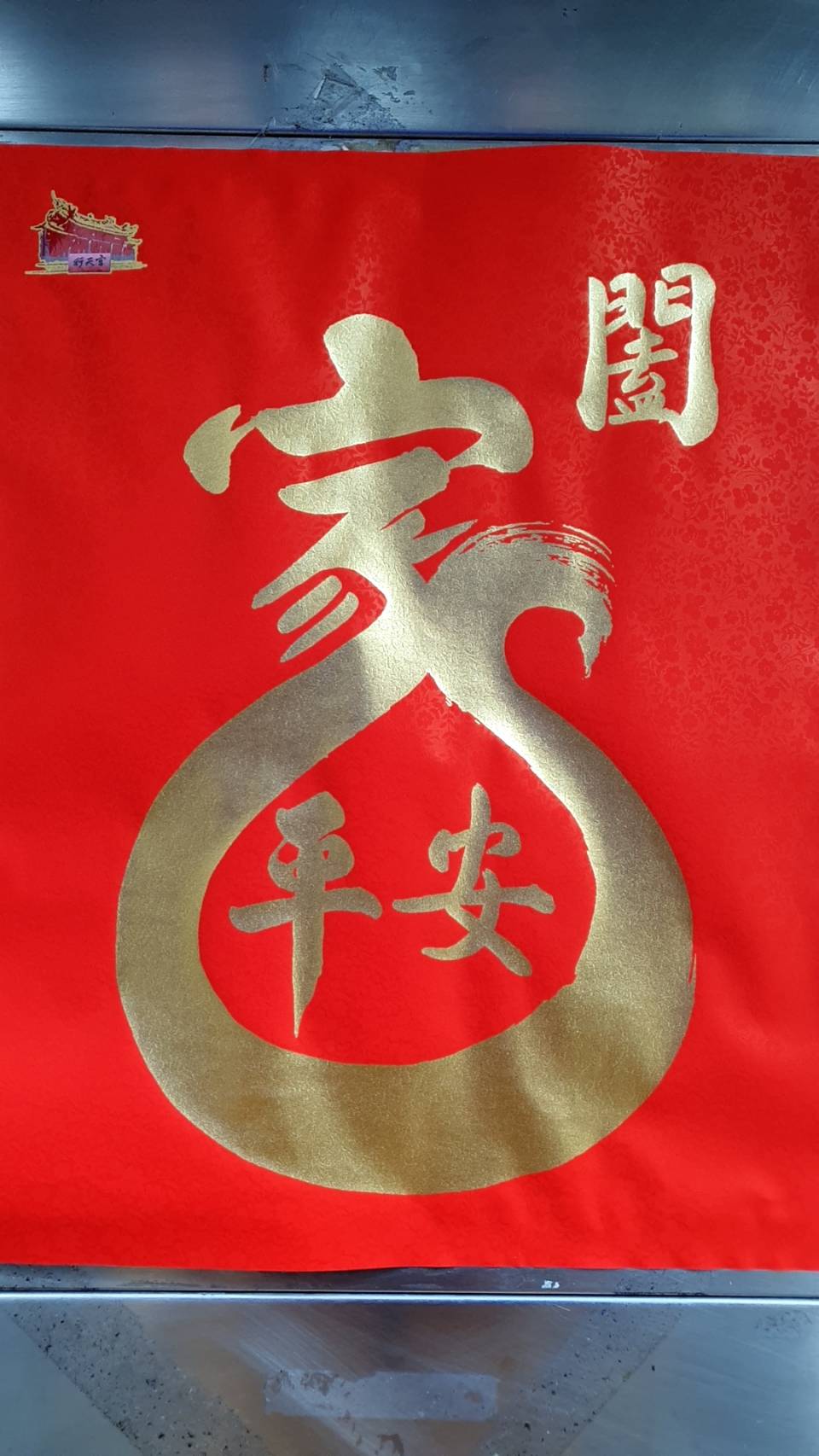
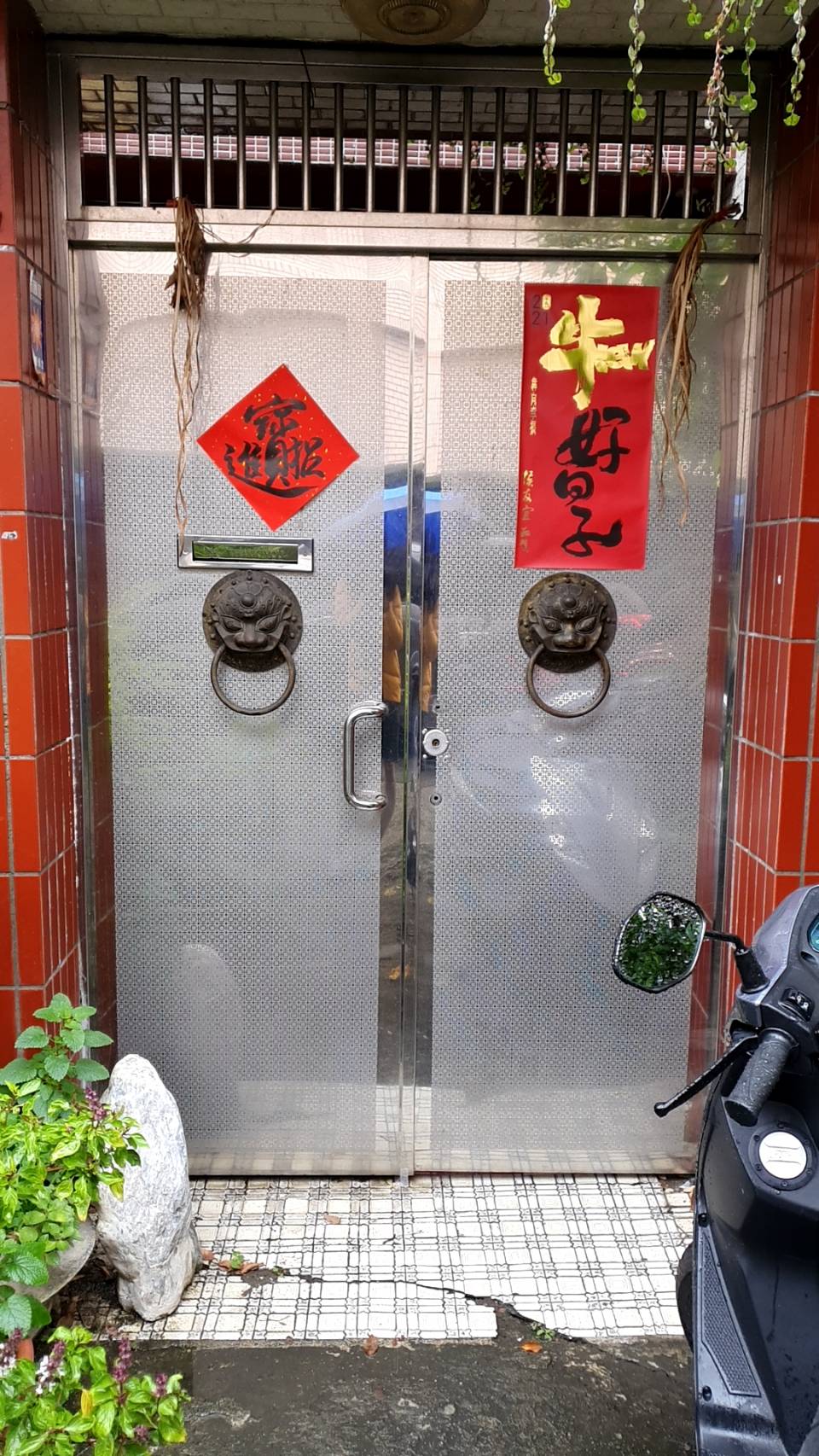
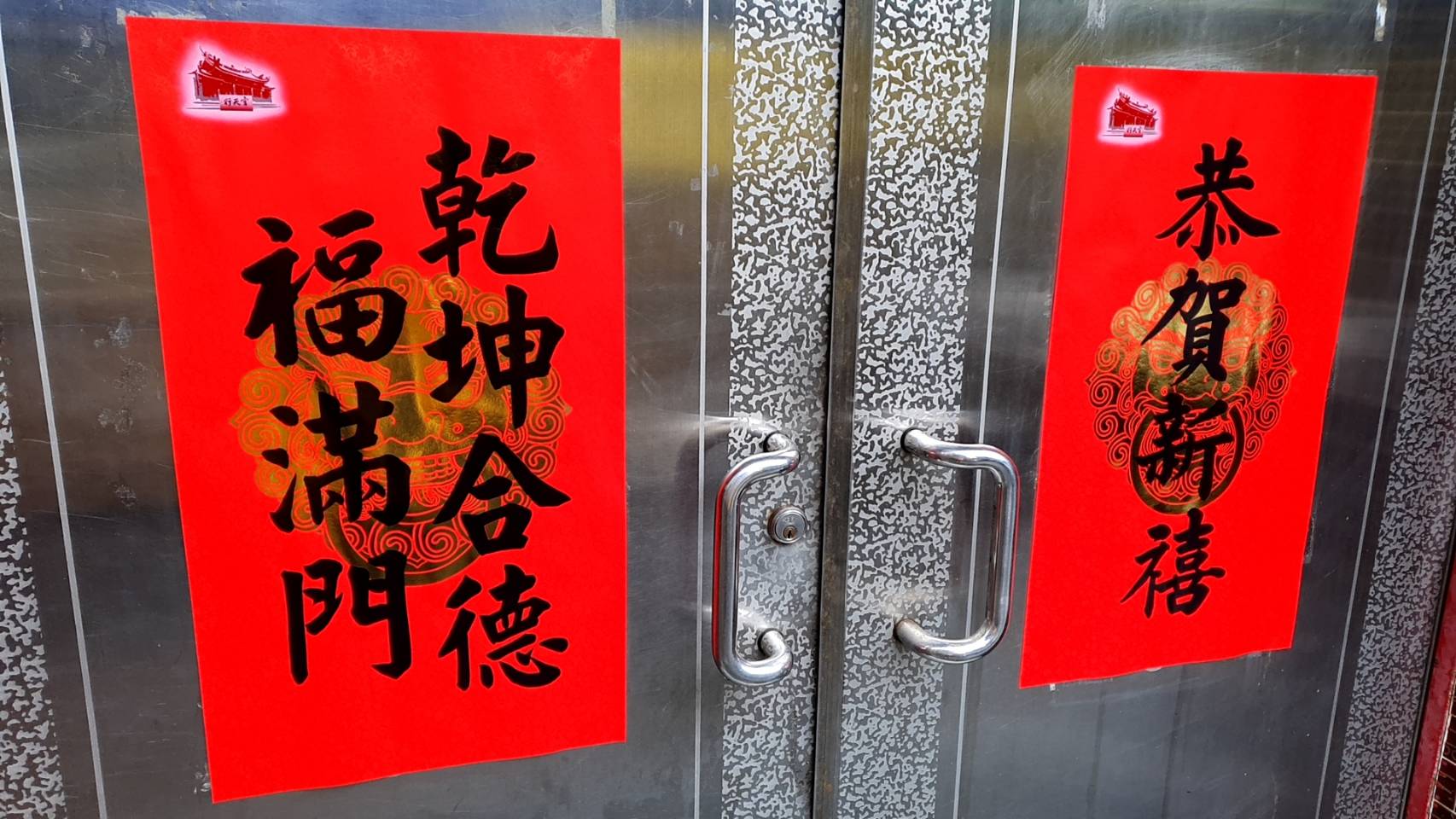
Walking around Guting, even though most buildings are apartment blocks, most were displaying couplets by their door. I’ve featured some of the more interesting ones below.

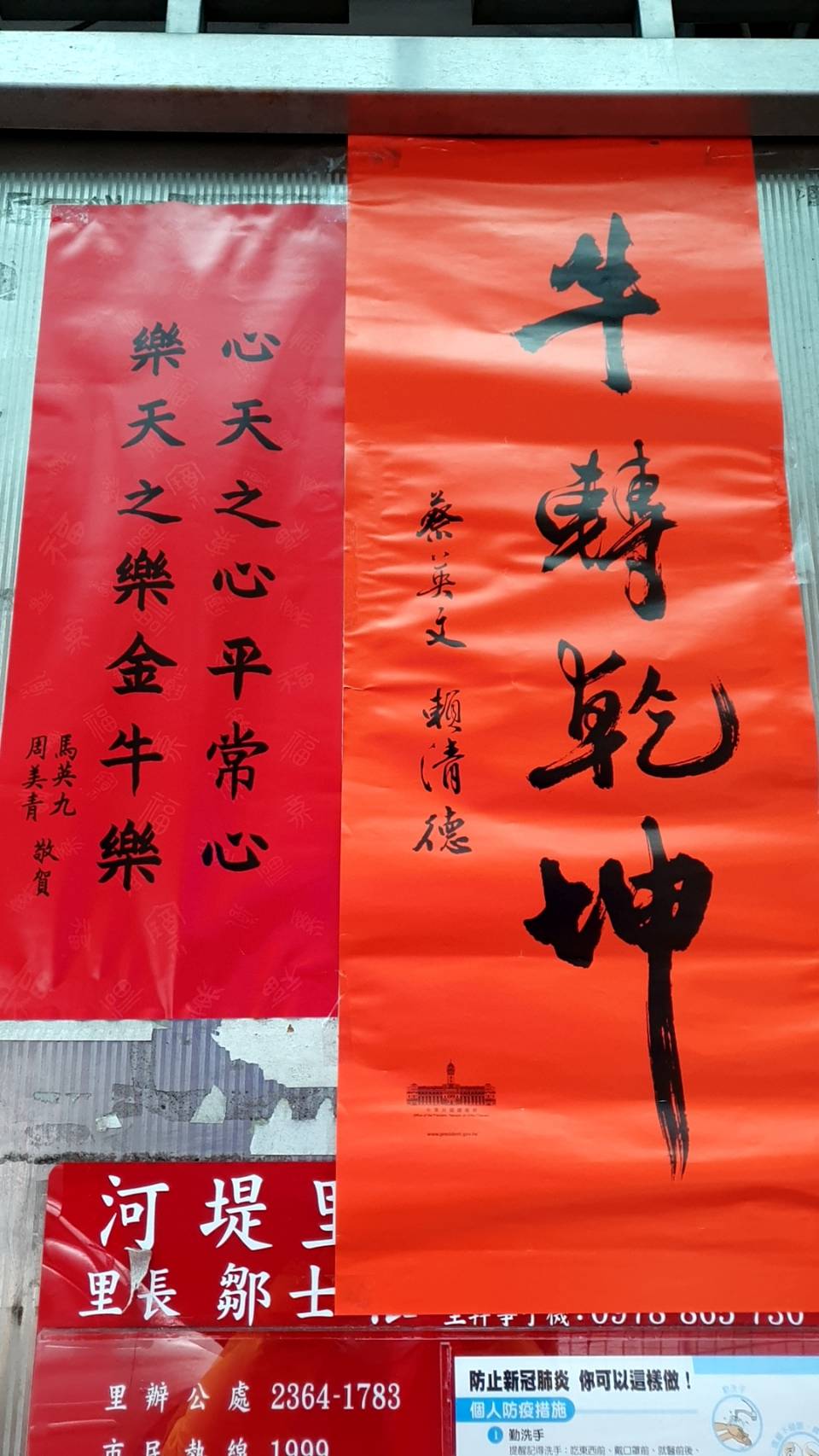
This doorway was funny because I imagined dueling households displaying couplets from President Tsai Ing-wen and Lai Ching-te vs. Ma Ying-jeou and his wife Chow Mei-ching respectively. President Tsai has gone with the classic idiom 「扭轉乾坤」(niǔzhuǎnqiánkūn) “to turn luck around” (literally, to upend heaven and earth). As 「扭」(niǔ to turn) and 「牛」(niú ox/cow) are near homonyms, the 「牛」 for the year of the ox stands in for it.

Former president Ma Ying-jeou and his wife, meanwhile, have called for equanimity and optimism in what was largely been interpreted as a dig at President Tsai‘s popularity with the words of the Hongwu Emperor 「心天之心平常心、樂天之樂金牛樂」. Ma’s explanation is that the son of heaven (read president) must respect the wishes of the people to rule properly, and that people need to be optimistic despite the pandemic and the ractopamine pork imports (video here).

I was (perhaps naively) surprised to see a Baptist church joining in on the fun:

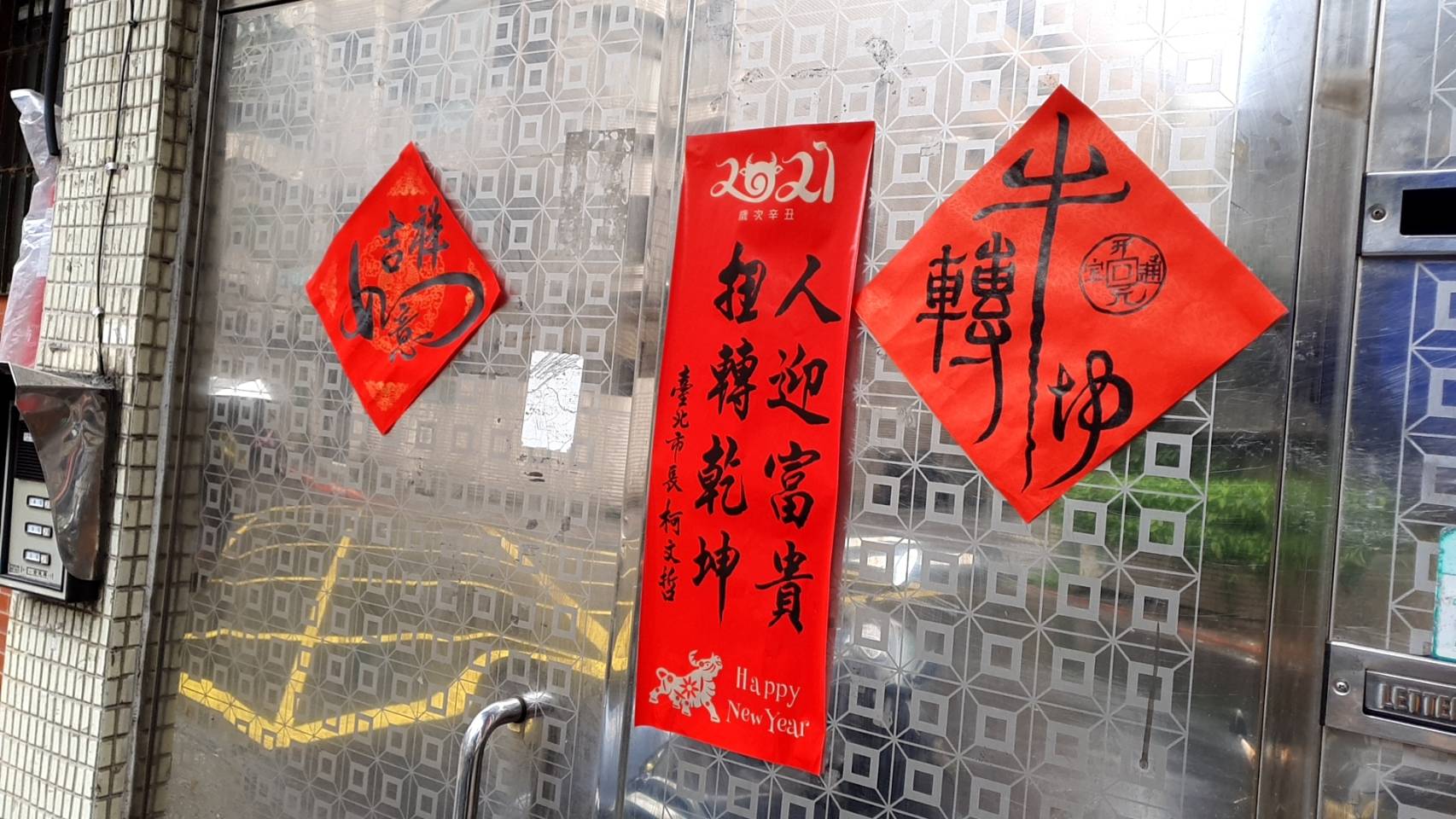
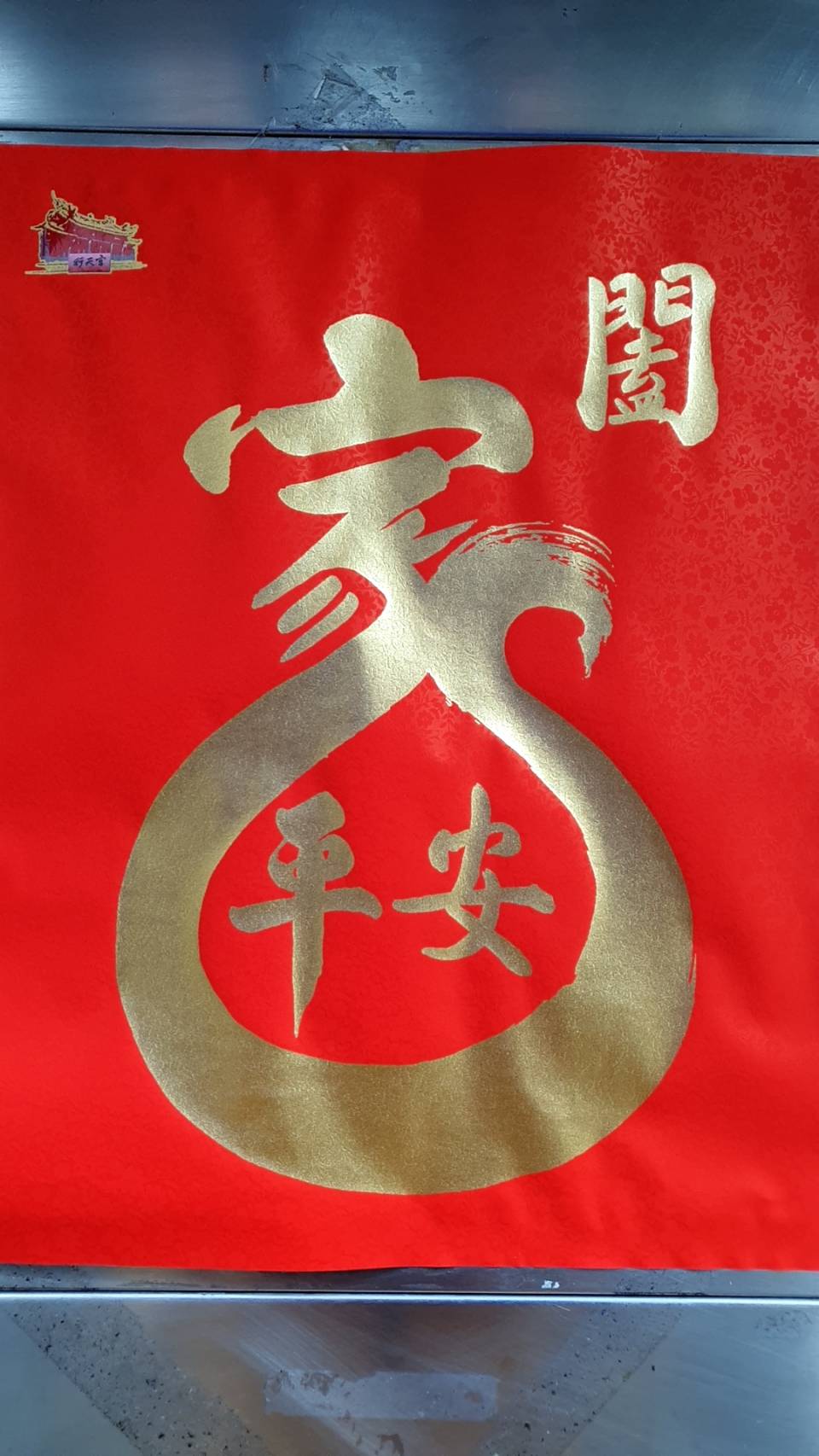
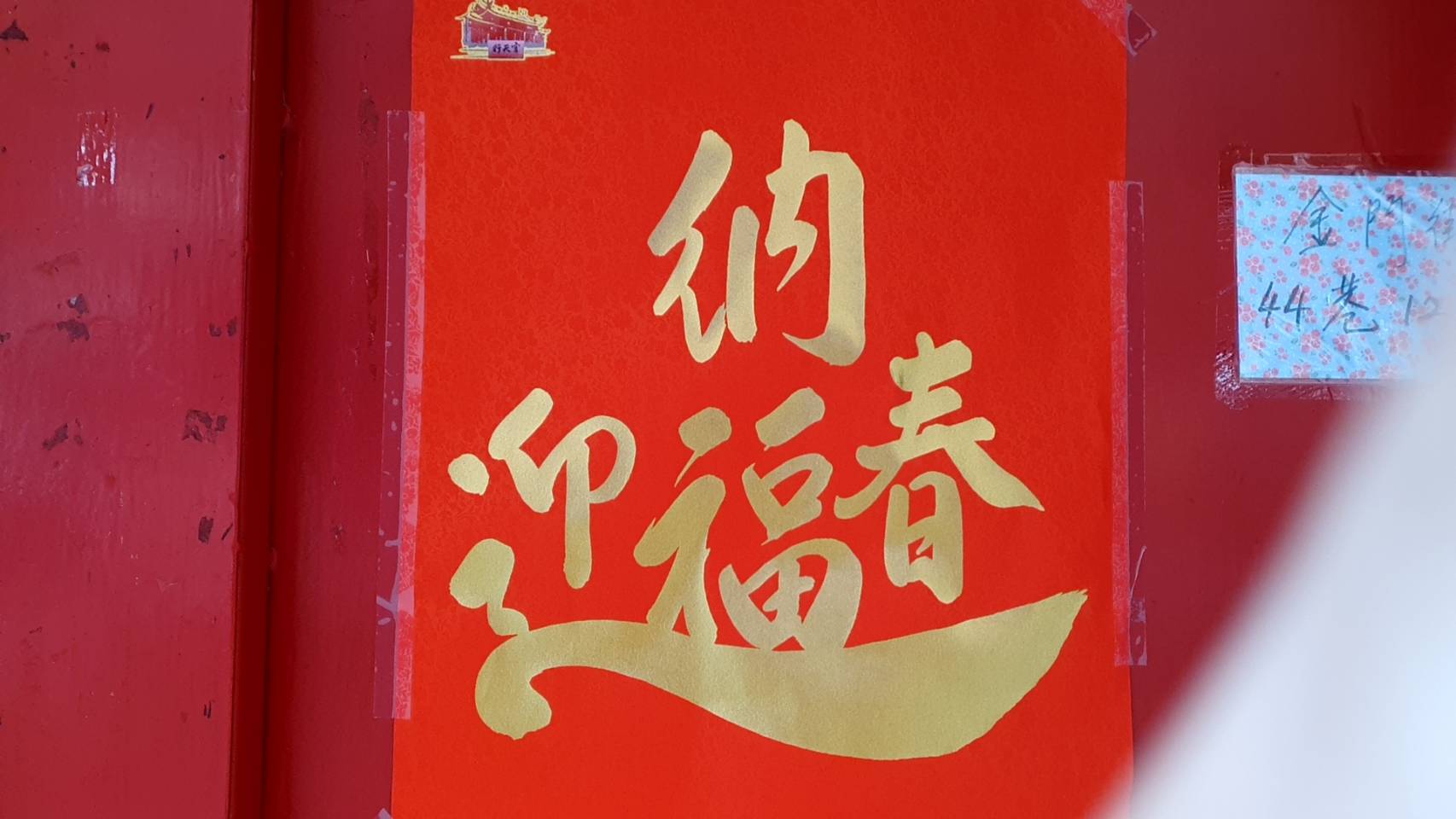
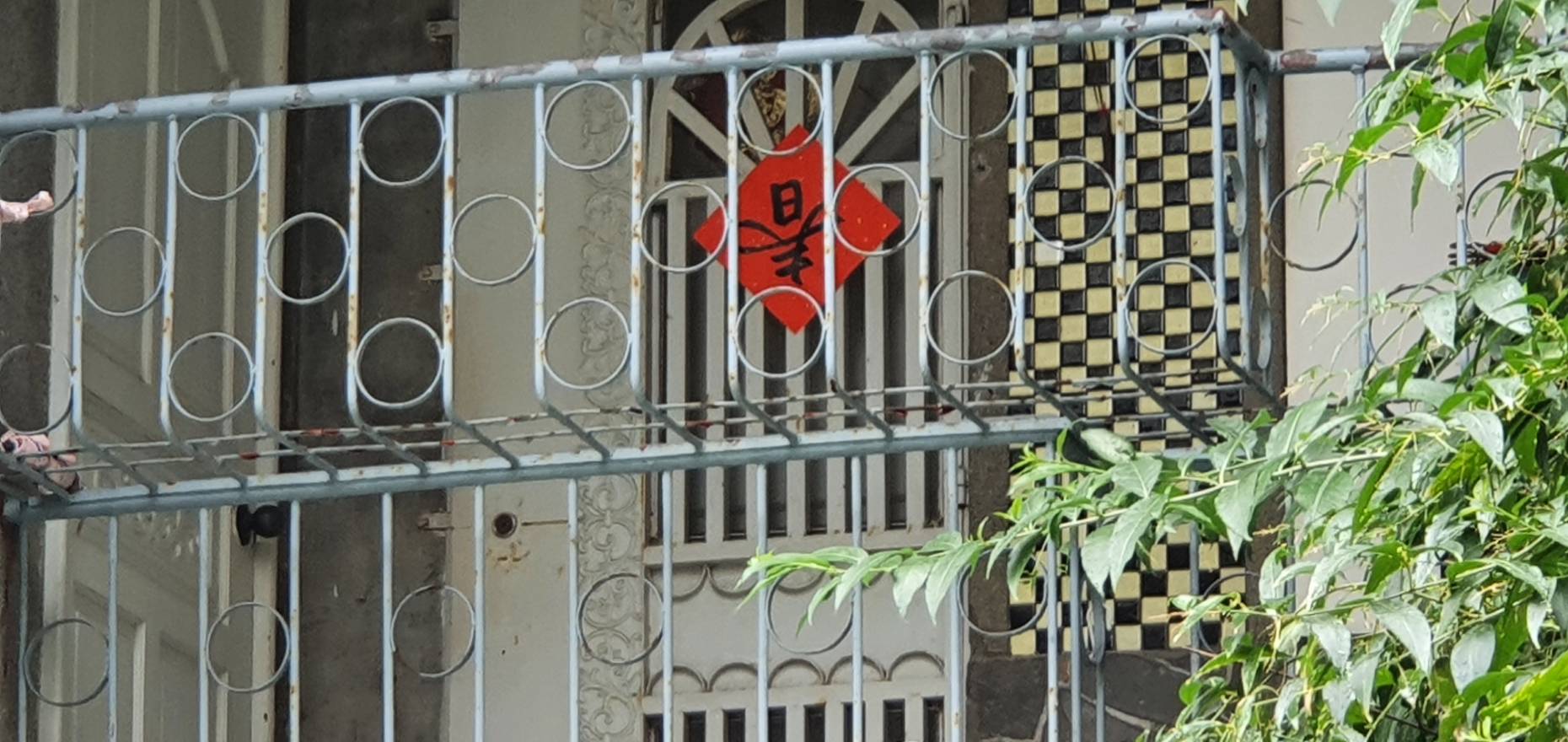
「合體字」 compound characters featured heavily in a lot of the door dressings. The one on the right below is the same as the Presidential one above: 「牛轉乾坤」 with a stylized 「牛」.

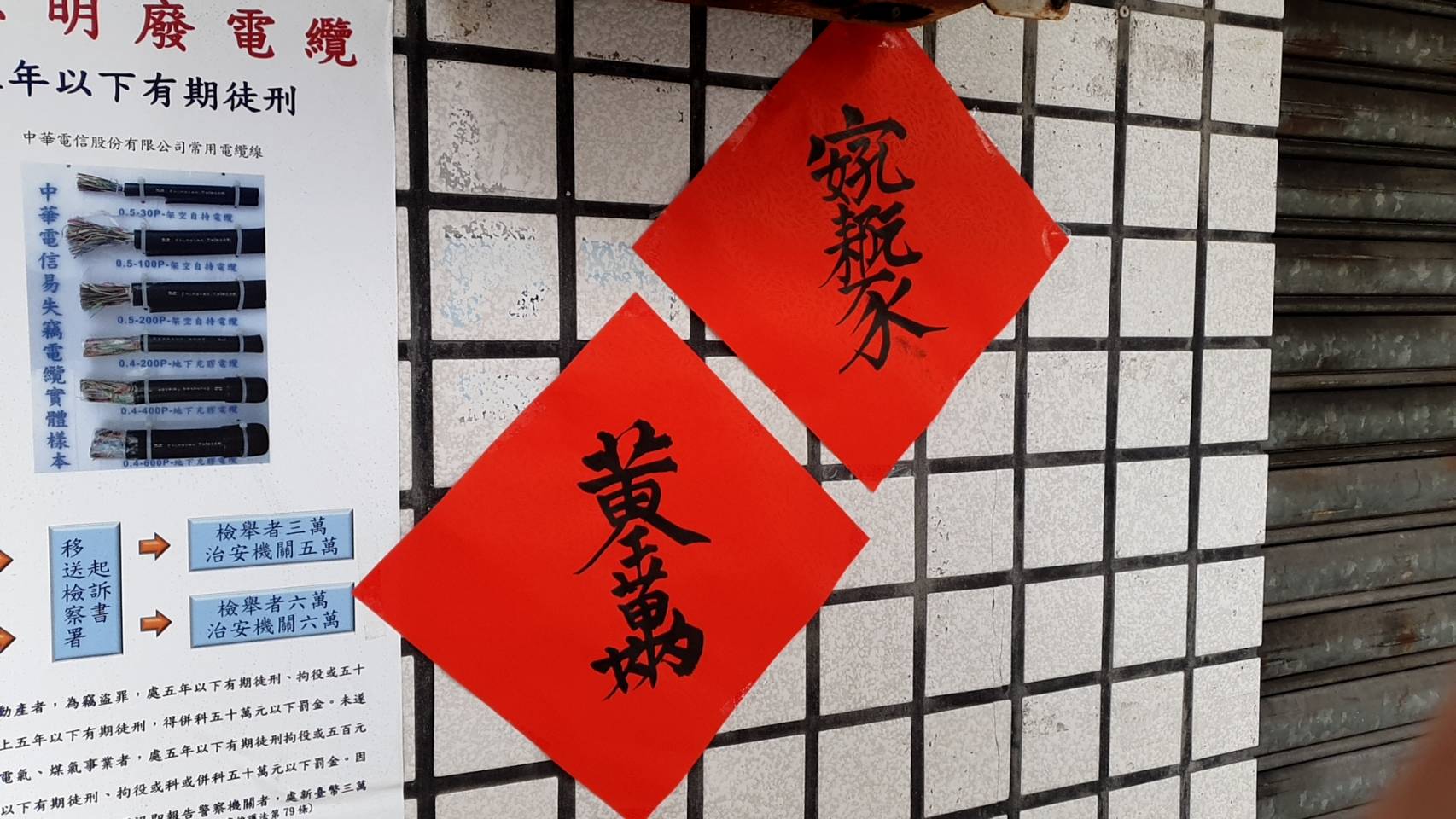
There were even some compound characters from phrases in Taiwanese, like the one below: 「好孔來阮家」 hó-khang lâi góan ka (good things come to our family). Right beside it is 「黃金萬兩」 (10,000 taels of gold).

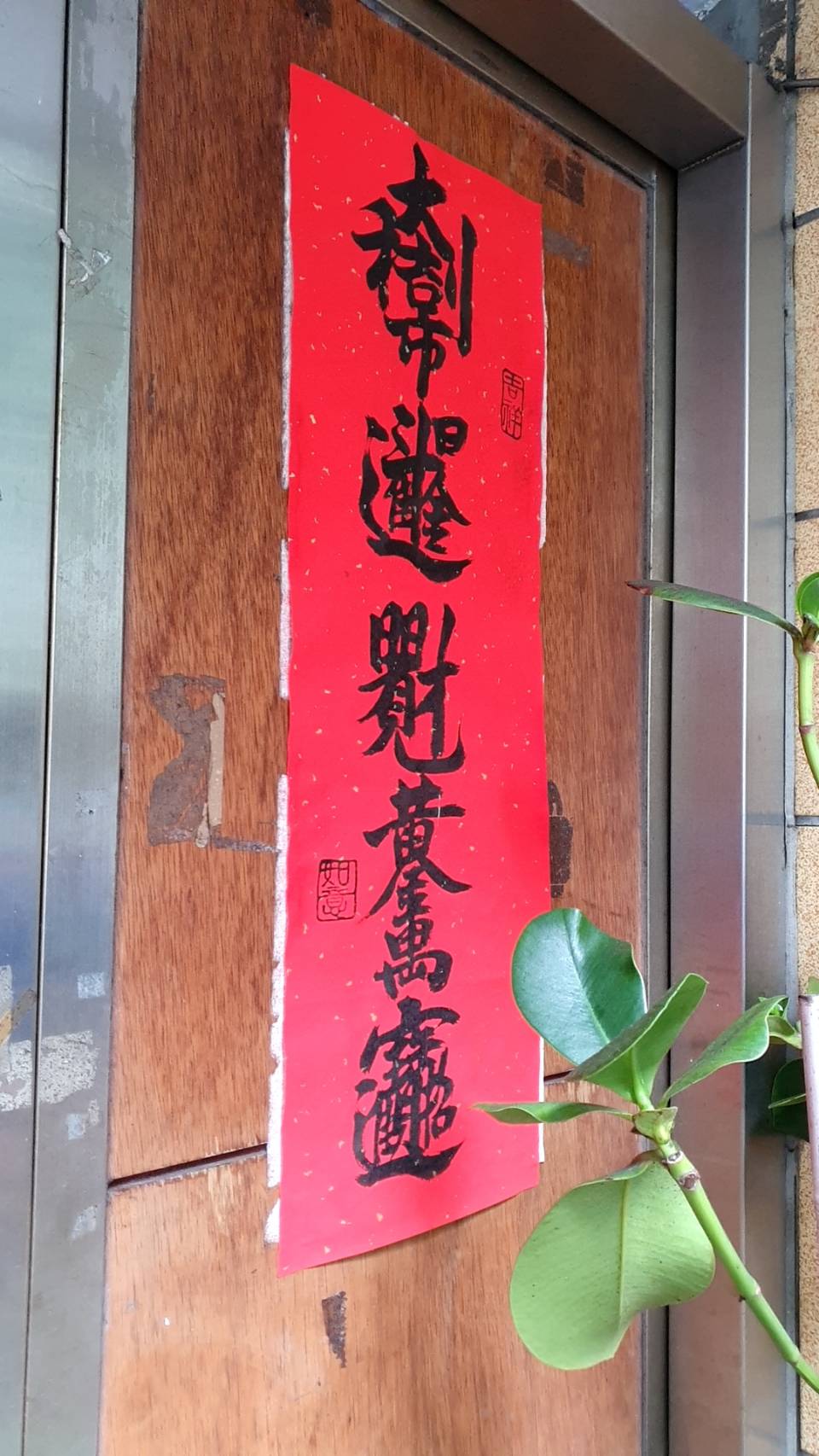
The banner below shows five different compound characters:
Looks like 「大利大吉」 (profit and fortune)
「日進斗金」 (a dou of gold enters every day)
「日日見財」 (every day meet with fortune)
「黃金萬兩」(10,000 taels of gold) (repeat of above)
「招財進寶」 (attract fortune and enter treasures)

The door below doesn’t seem to have been updated despite the fresh-looking colours, but the compound version of 「吉祥如意」 was cute enough:

There are a whole load more below!

The one above features 「犇」 bēn, made up of three 「牛」s.

Stuff you need to do after you get the new format UI ARC

After you update your ARC to the new UI format (one letter nine numbers) there are a certain number of other agencies you need to update information with, as cross-ministry communication does not seem to have been very broad:

  1. If you have a work permit (APRC holders/students with internships or part-time jobs) you NEED to apply to the Work Development Agency for a new one. You can apply online through this system, or use the form available at the office (or here), a photocopy of it, a one inch photo, a copy of both sides of your OLD and NEW ARC/APRC and a copy of your passport.

(NOTE/UPDATE: I previously posted that you needed to hand in NT$100 or a postal order of an equivalent amount, as this is what they told me over the phone, but when I received my new work permit, it had a letter attached saying that the NT$100 postal order that the person on the phone had insisted was necessary, was not required, along with a complex form on how to get this money refunded.)

If you want to go in person and are registered in Taipei, the address is:
10F, No. 39 Zhonghua Road Section 1, Zhongzheng District, Taipei City 10042
10042 台北市中正區中華路一段 39 號 10 樓

This is also where you post your material.

2. You or your employer should fill out the form here to ensure your labour insurance contributions are still registered to the same person, one copy should be sent to the Ministry of Labour (勞動部勞工保險局,臺北市中正區羅斯福路一段4號) and the other should be forwarded to the National Health Insurance Bureau in your region (see form for addresses). Despite the claims that you don’t have to update your NHI card, I don’t really see how this is going to be possible, given that on the bottom of the form it says that your original NHI card will be cancelled when the new data is received, hence:

3. NHI card renewal (purportedly optional): This is relatively pain-free, simply go to the Post Office and ask to renew your NHI card, with your ARC and a photocopy of both sides, one photograph (most machines have a special setting for NHI card photos) and NT$200. You should receive your new card in 5 working days. And after you receive it, you can switch your NHI app card to the new one.

4. Alien Digital Certificate: You can apply to update this at the same time as you apply for the new UI format, with the same material and you shouldn’t be charged.

5. If you have a post office account, you have to inform them of your change of ID.

Other issues: Despite assurances that banks would be automatically informed of changes, people on Facebook have been describing demands to close and reopen accounts at banks, issues with motorcycle licenses/test applications, property deeds, mortgages, car loans. With hospital appointments, many clinics and hospitals will still have your old number in their systems, even though with your new NHI card, doctors should still be able to access your previous publicly held records.

UPDATE (March 9, 2021): My ESun Wallet app stopped working today and displayed a message that I needed to re-register as my details had recently changed. I did this in the space of about 30 seconds and there was no problem. My account and cards were still registered on the app. My banking app on the phone and the internet also stopped working and I had to re-apply for internet and mobile banking.

The steps are easy enough, but you must apply again for internet banking:

You will be asked to enter your email, your new ARC number and your date of birth. Then you have the option of an audio OTP call (in Chinese) or some other options. Once you’ve confirmed, you have to set a new username and password and either confirm the changes or login. If you have a savings account and a credit card, you just need to use the savings account option and the credit card information will follow.

Once you’ve reapplied for internet banking and logged in, you MUST log out of internet banking before you can log in to your mobile app using the same details. You’ll have to agree to terms and conditions again, but it’s reasonably simple.

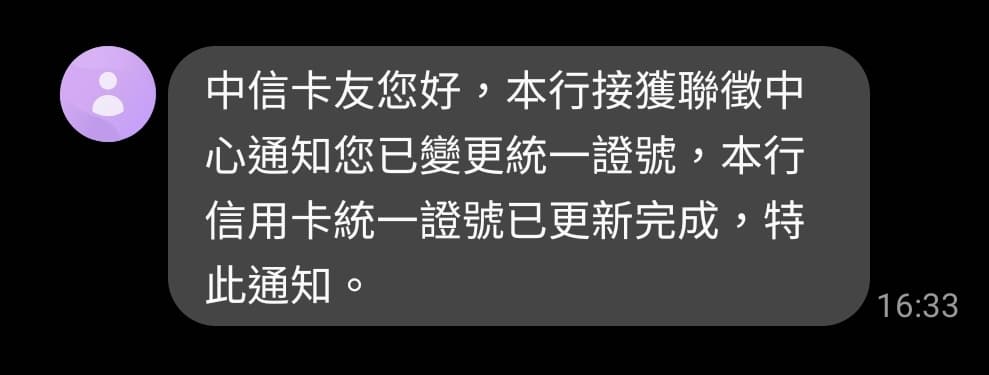
UPDATE (April 16, 2021): Today, one of my four other banks informed me via text that they had received the update to my ARC number:

As I’ve only got a credit card with them and no bank account, they didn’t use my ARC number as the identification number for my account, so the only thing I had to do was re-log into my mobile credit card app:

UPDATE (August 8, 2021): Megabank sent out a mailer to all its clients telling them to update their info with the bank. As opposed the easy methods provided by the banks above, they decided that you have to mail the form (with the information that they already have) to your branch (they say any branch, but I have my doubts) or go in person. After a long phone conversation, I ended up mailing the details, and without notice, they changed the login details on my phone without informing me. If you get a message a few days after informing them of your new ARC/APRC number, just try logging into the app with the new number and you’ll be able to get in. But there’s a problem with your 「行動安全碼」 mobile banking number and your mobile phone will still be associated with the old account number for some reason. To re-tie your account to your mobile device, you have to uninstall the app and then reinstall and log in again. Then you go to the main menu (選單) and hit settings (設定) and you should be able to apply for a new mobile banking safety number by filling in your ARC number (the new one) and your passport number. Bizarrely for me, even though I’d provided them with my new passport number when updating my details, I had to fill in my old passport number for it to work.

The remaining two banks are yet to notify me or make any changes, but will update when they do.

UPDATE (March 22, 2021): My doctor had pre-booked me in for an appointment before “the change”. I turned up for the appointment expecting for there to be a little confusion but for things to be sorted out quite quickly when they saw the old number on the back of my APRC. In fact, I needed to go back to reception and reregister my old details to the new card and then reapply for an appointment. There were no more free spots on the day in question, however. Luckily for me the pleasant and slightly frazzled lady at the counter decided to help me out and scribbled a hand written note to the doctor asking that I be added manually by the doctor to the list of patients. This was nice of them, but it’s unfortunate that there has been no effort by the government to inform staff at hospitals that this is going to be an ever more common scenario.
FURTHER UPDATE (August 2, 2021): I’m not sure if the lady I mentioned above was overly frazzled, as when I went to the hospital where this happened to get my vaccine, they printed out a form which had me listed as a woman and had my (male) friend’s phone number as the contact number.

UPDATE (April 9, 2021): A reader has outlined the requirements for Drivers’ license updates:
Just go to the local Department of motor vehicles and bring two photos and NT$200 for each license you hold.

I have to say I’m yet to find anything easier because of the new format. Please do let me know if there are any benefits to the new format.

Shout out to Slawa who made this call for names of websites where the new ID number does not work towards the end of last year and for driver license info.

If you have more specific queries about particular ministries, I suggest having a look at the Q &A on this page.

Remember to reregister for the EZ Way app with your new ARC (note, real name authorization is now available for foreign residents.

Bonus reading: This foreign resident doctor lists his own complaints, which extend to the cancellation of automated credit card bill payments, the requirement to replace his medical license and Examination Yuan license, amongst others.

‘Wavering on a Mountain Path’ Book Review 《山徑躊躇》書評

A woman travels to the east of Taiwan in the wake of her husband’s suicide in an attempt to discover the mystery behind a charitable donation he made before his death. Despite the charitable donation leading to somewhat of a dead end, she decides to stay on in the largely indigenous village. Her son, who suffers from autism, flourishes in this new environment, however her new romantic attachment, an indigenous man who helps her rebuild her house and teaches her son to hunt, may not be all he seems.

Screenshot of Unitas video (see link below)

Through most of the course of reading this book, I was expecting it to make a dramatic revelation, whether about autism, the dodgy dealings of the man she falls in love with in Taitung or the mystery behind her late husband’s charitable donation, but it never came. The book, as readable as it is, rejected my attempts to read it as a crime novel or psychological thriller. Nor does the author feel the need to resolve any of the questions thrown up by the narrative; instead of narrative resolution, the main character achieves a vague sort of spiritual resolution in the end, through the prism of her autistic son.

The book does pose some interesting questions itself, however, about autism, the experience of indigenous people and migrant workers in Taiwan and even about the healthiness of modern urban life.

I first became aware of this novel when the author asked me to translate an excerpt for a short video performance:

https://www.facebook.com/unitas1987/videos/302770697595364

The short excerpt he provided, however, was quite different in feel from the novel in its entirety, as it was a brief venture into the mind of the protagonist’s autistic son.

These brief sojourns into an autistic mind (the author uses the term Asperger’s) didn’t capture an autistic voice for me with the convincing style of Mark Haddon’s book, The Curious Incident of the Dog in the Night-Time, but rather endowed the child with some kind of spiritual mysticism, evoking for me the lasting controversy over the “idiot-savant” portrayal of autism in the film Rain Man.

We spend most of the time in the novel observing the child from the mother’s perspective. At first she resists the diagnosis and seeks out a “cure” or some way to access the “real child” hiding under the façade of the autistic child:

當兒子被診斷確定患有「亞斯伯格症」,男人和自己都深深地被震撼驚嚇了,先想著自己當初究竟有沒有犯了什麼有心或是無意的錯誤,才造成這樣的結果。譬如有人說孩子出生下來接種的某些疫苗,可能會造成嬰兒腦細胞的傷害,因此才造成這樣生來後的缺憾;傅憶平甚至因此對疫苗產生恐懼與懷疑後,聽從某個醫生的建議,採取了所謂「生醫療育」的方法,就是認為留在小麥和乳製品裡的蛋白質,小孩因為接種了某些疫苗的影響,不但無法好好的吸收這些蛋白質,有時還會反過來滲透腸壁,經由血管進入大腦進行破壞。

Whenever her son’s diagnosis with Asperger’s syndrome was confirmed, she and her husband were deeply shaken. First of all they thought of what mistakes they’d made, whether deliberate or accidental, that had resulted in this state of affairs. For example, some people say that when a child is first born and receives certain vaccinations, they can damage the infant’s brain cells, resulting in this regrettable situation after birth; Fu Yi-ping even started to fear vaccinations and on the suggestion of a doctor, she took up ‘biomedical therapy’. This consisted of the belief that after children are vaccinated they are unable to absorb the protein in wheat and milk products, and that sometimes this protein will seep through the wall of the intestine, and cause damage to the brain through the blood vessels.

This worrying anti-vax sentiment isn’t directly challenged throughout the novel, although her husband tries to get her to accept her child:

Continue reading