「#莮」 is all over Taiwan social media networks at the moment, but what does it mean? Well, it’s kinda complicated, but essentially it represents the popular imagination of the stereotypical male Taiwan People’s Party supporter, along with a few buckets of misogyny, pretension, pro-PRC sentiment, and being a mummy’s boy thrown in.

「莮」 itself is part of an archaic word, referring to a kind of grass, but it is now being borrowed to point to the supposedly “weedy” kind of men who support the TPP.
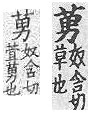
Some people are also conflating it with 「草食男」 from the Japanese 「 草食男子」 (そうしょくだんし), men who are not interested in adhering to traditional male stereotypes in terms of being ambitious at work or dating women, but I think this is maybe just because of the similarity in the visuals of the characters.
There are a selection of 「莮」 posts, but do your own exploring on Threads and Facebook too:
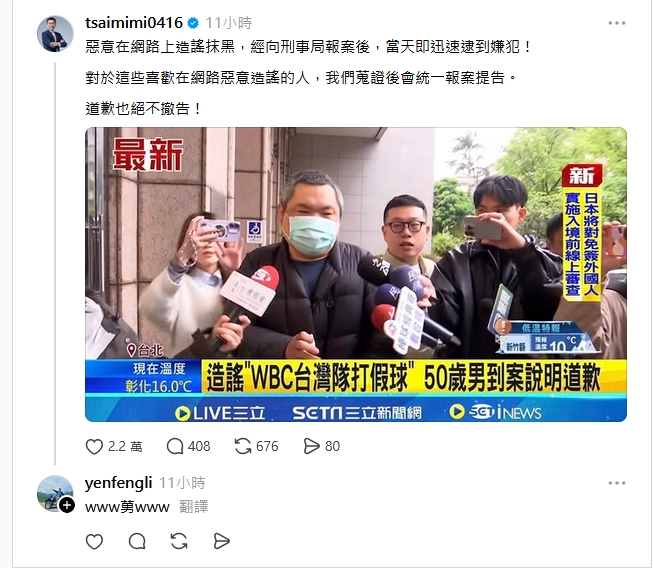
A post of a news segment on the public apology of a 50-year-old man questioned by police for spreading false information online, alleging that the World Baseball Classic was rigged. Someone has commented underneath www莮www
The majority of posts seem focused on supporters of the blue(KMT)-white(TPP) coalition, but there are also some posts that focus on personality:
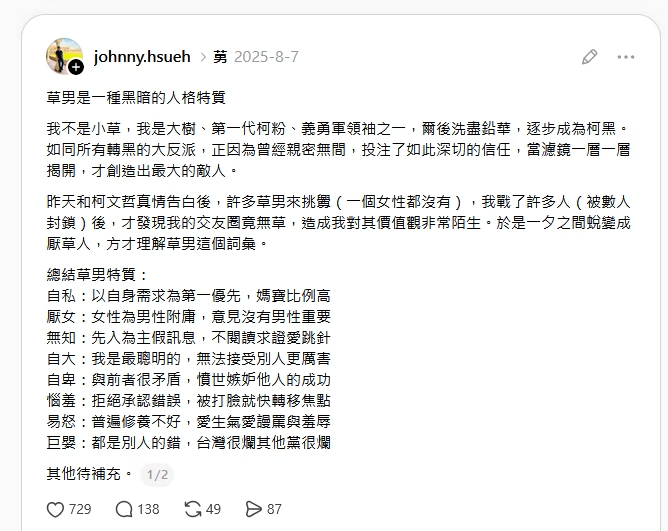
A recovering Ko P fan who has now seen the light describes 莮 or 草男 characteristics:
Selfish: Their own needs are their first priority and a large percentage are mummy’s boys
Misogyny: Women are an accessory for man, and their opinions are not worth as much as those of men
Ignorant: They will read the first bit of misinformation they don’t try to fact check anything and will go on like a broken record.
Self-important: They think they’re the smartest person in the room, and can’t admit that anyone might be better than them.
Insecure: A contradiction with the above, they get raging with envy at the success of others
Shamed into Anger: They refuse to admit mistakes, and will change the topic of conversation if you show them up.
Quick to anger: They’re generally not very well brought up, they’re quick to anger and will cuss people out and shame them.
Big babies: Everything is someone else’s fault, Taiwan sucks, and every other party sucks.


