I’m not sure quite what was going on with this angry red spoldge of red spray paint on the 「拍謝」 on the construction site sign below:
「拍謝」 is the informal way to write the Taiwanese term 「歹勢」 or “phái-sè”, which is the Taiwanese equivalent of the Mandarin term 「不好意思」 (sorry).
I’m curious about the motivations of the vandalizer. Are they against the use of Taiwanese on a formal sign? Are they against the borrowing of Mandarin sounds to represent Taiwanese, rather than the 「歹勢」 that is used more commonly? Or are they against the use of Chinese characters to represent Taiwanese at all? Or was it just a random stain that got on the sign somehow?
Given the history of its suppression, language tends to be a sensitive issue in Taiwan. Writer Huang Chun-ming (黃春明) even took off his shirt during a lecture back in 2011 due to a disagreement with Associate Professor Wi-vun Chiung (蔣為文) in the audience over the necessity for Taiwanese-language instruction for primary schools and Huang’s unwillingness to adopt Latin script to represent the Taiwanese language (as implied by the sign below).
Taiwanese writers don’t use Taiwanese language, but use Chinese language to create, oh the shame!
Ironically you’ll see Professor Chiung uses the Simplified version of the character 「國」 in his sign. Linguistic hardliners are not really my cup of tea, and I much prefer the hodge-podge of English, Mandarin and Taiwanese that the construction site sign portrays.
If you work in an Asian office, a biandang/lunchbox/bento warmer is a standard bit of kit. Lots of people have metallic lunchboxes which you can put inside to keep them warm until lunchtime.
There has been an escalating passive-aggressive argument lately in my office, as someone has been turning off the warmer as soon as they take their own lunch, leaving the remaining coworkers with lukewarm lunches, which is the eighth of the seven deadly sins (James 2:15-17).
I’m a microwave kind of guy, so haven’t been involved in the tussle, but the note was posted back in January without the highlighted text or scrawl down the side:
敬請最後一位使用者關掉即可,感謝!(想吃熱便當 heart emoji) 以上 2021.01.21 Please only turn off the machine if you are the final person to use it! (I want a hot lunch) Yours Jan 21, 2021
Since then, while innocently waiting for the microwave to finish, I’ve noticed the door ajar and the machine off a few times with quickly cooling biandangs still inside.
This led to the escalation down the side and the addition of dots and highlighted text:
*不要再關啦!2021.2.8 Stop turning it off! Feb. 8, 2021
I’m sure the culprit is someone with good intentions but over-wrought anxiety about the biandang warmer never being turned off and consuming the whole building in flames, however, it does seem like a bit of a dick move to continue to turn it off.
I’m always interested to see how variants of standard Chinese characters are still used in everyday life, whether it’s handwriting, signs or an author making a stylistic choice.
I spotted this beauty at a petrol station in Taitung. You can understand the reason for the simplification of the top of the character given the chunky font required by this kind of paint:
This character is 「嚴」(yán/strictly), but the top has been simplified along the same lines as the simplified version of the character 「严」. It retains the 「敢」 of the traditional character though:
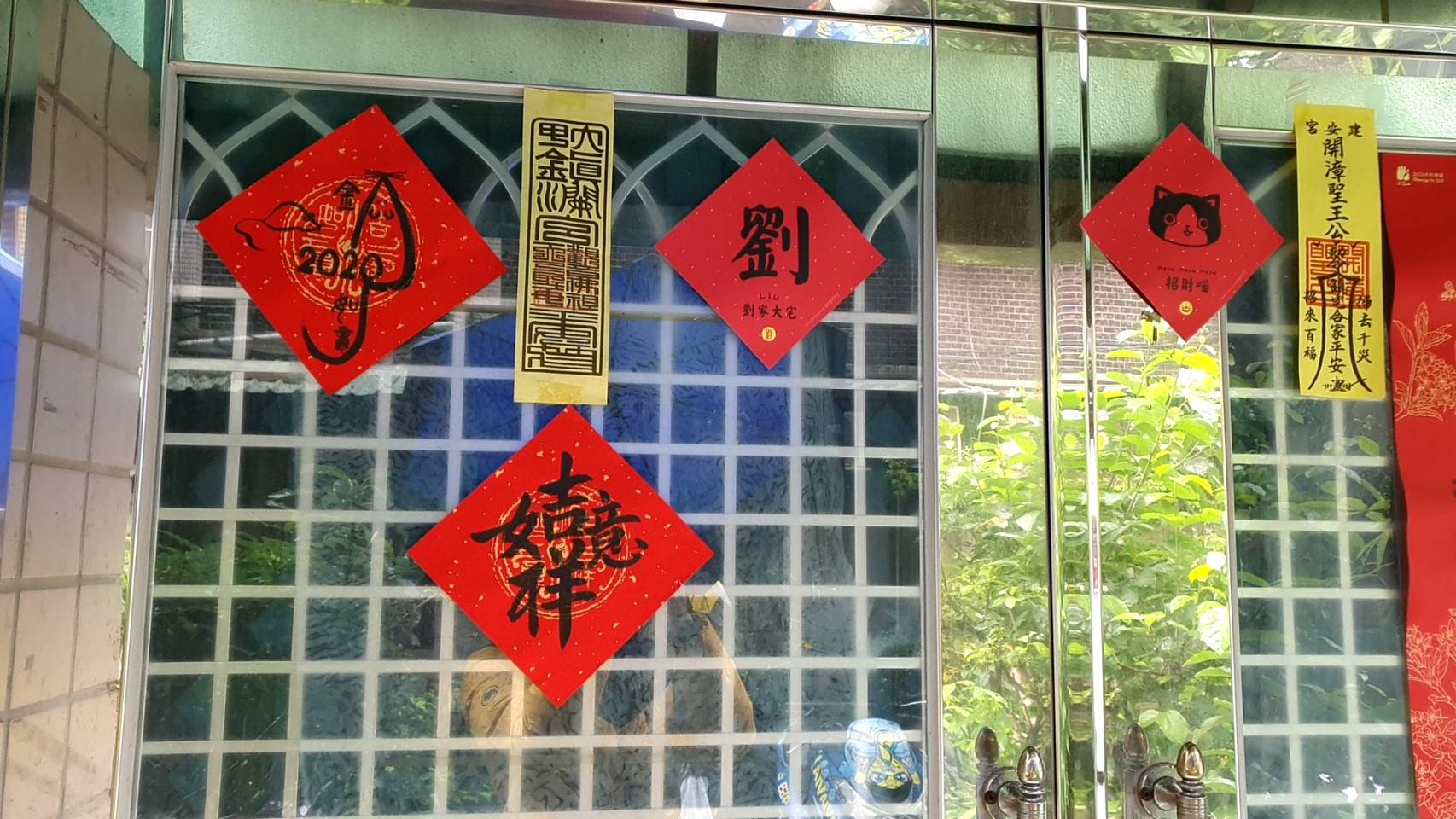
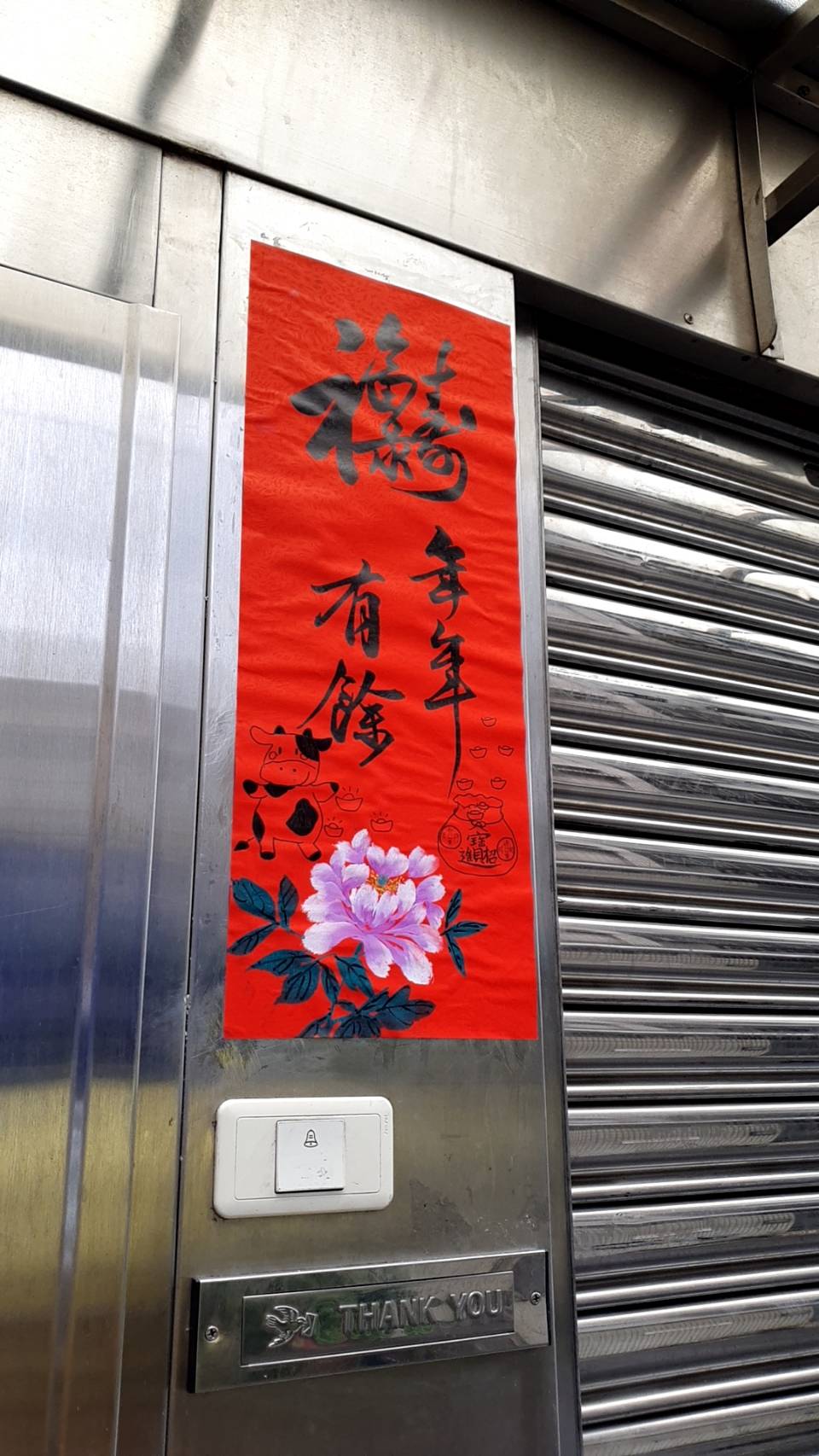
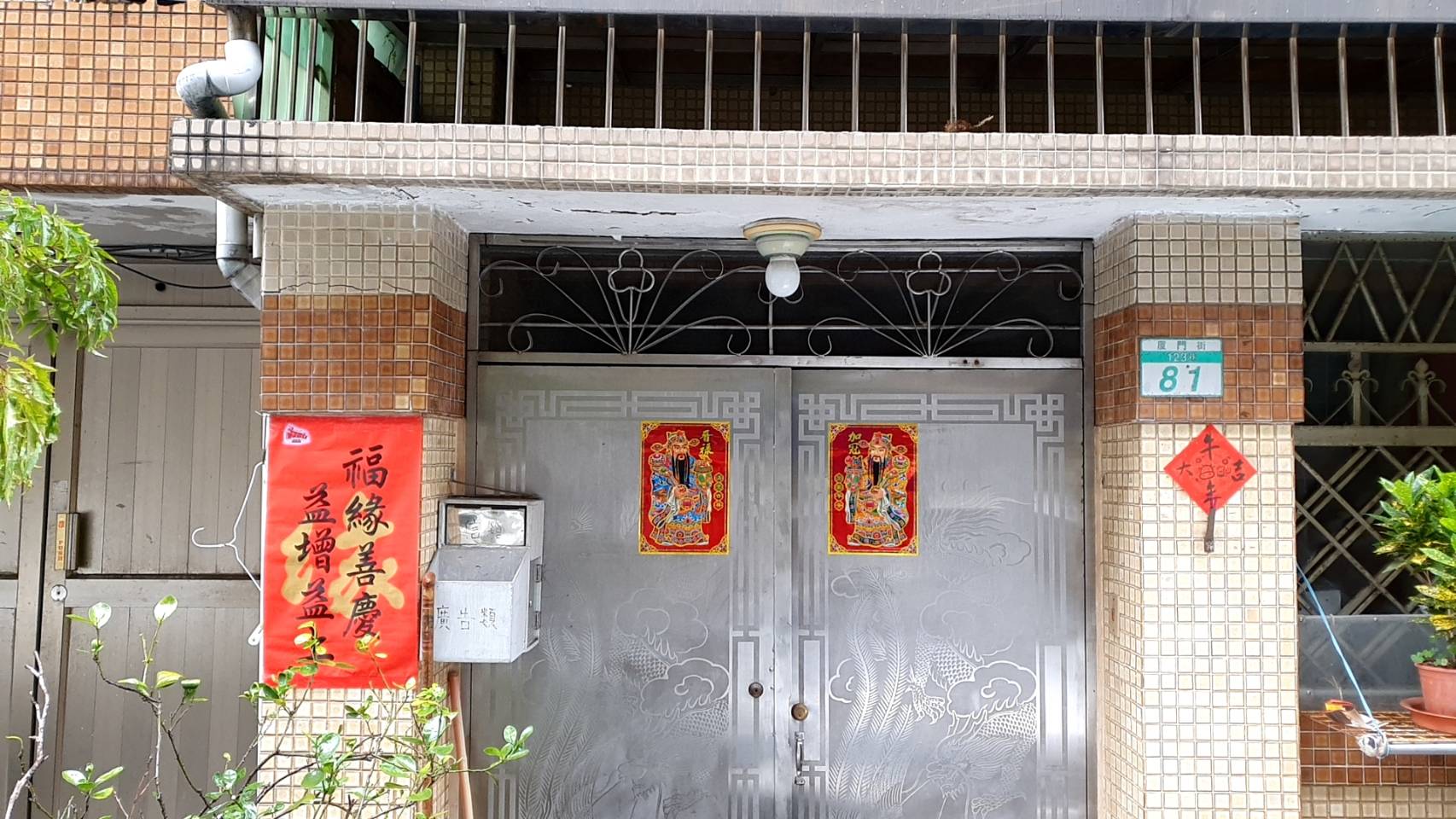
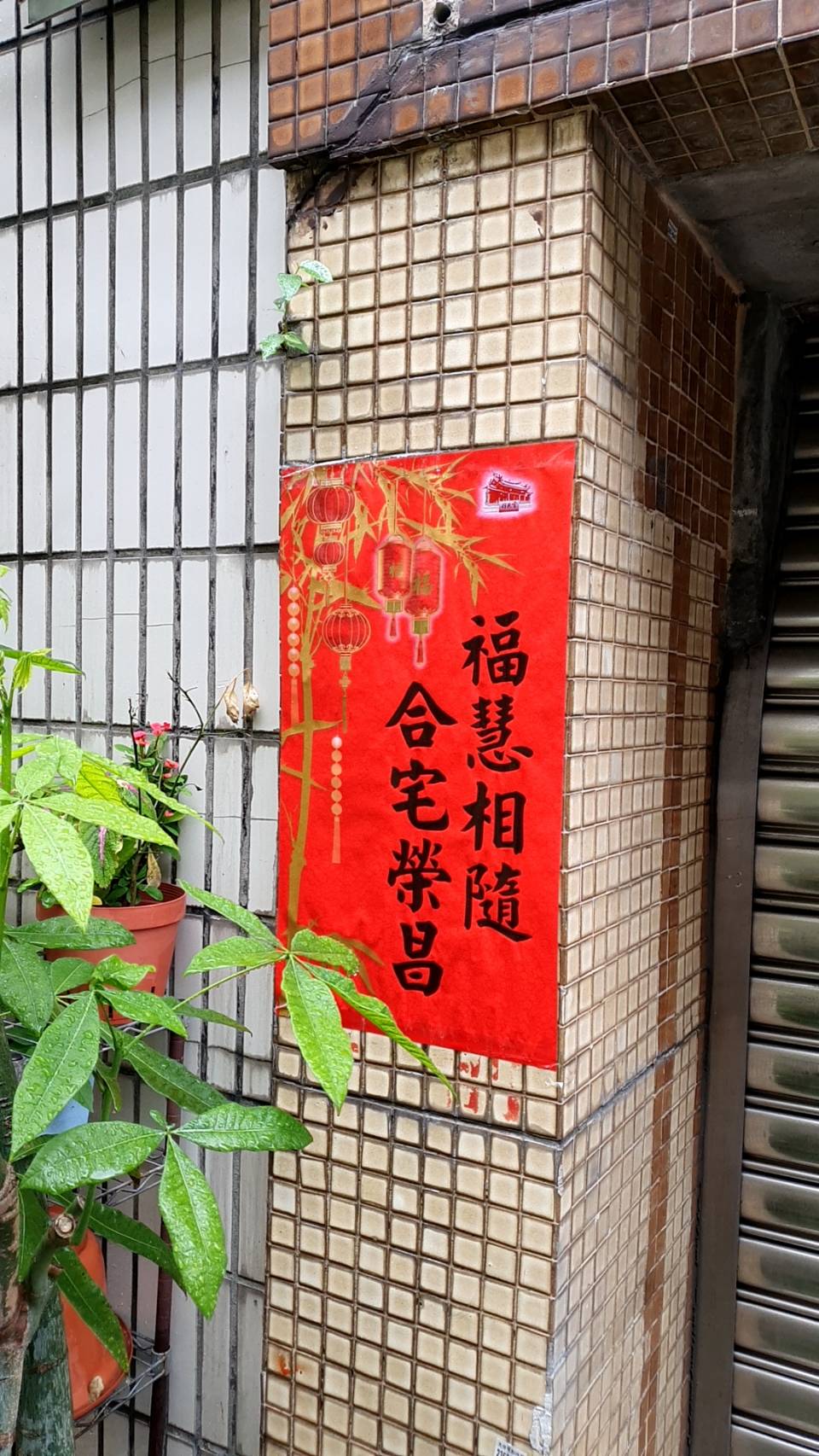
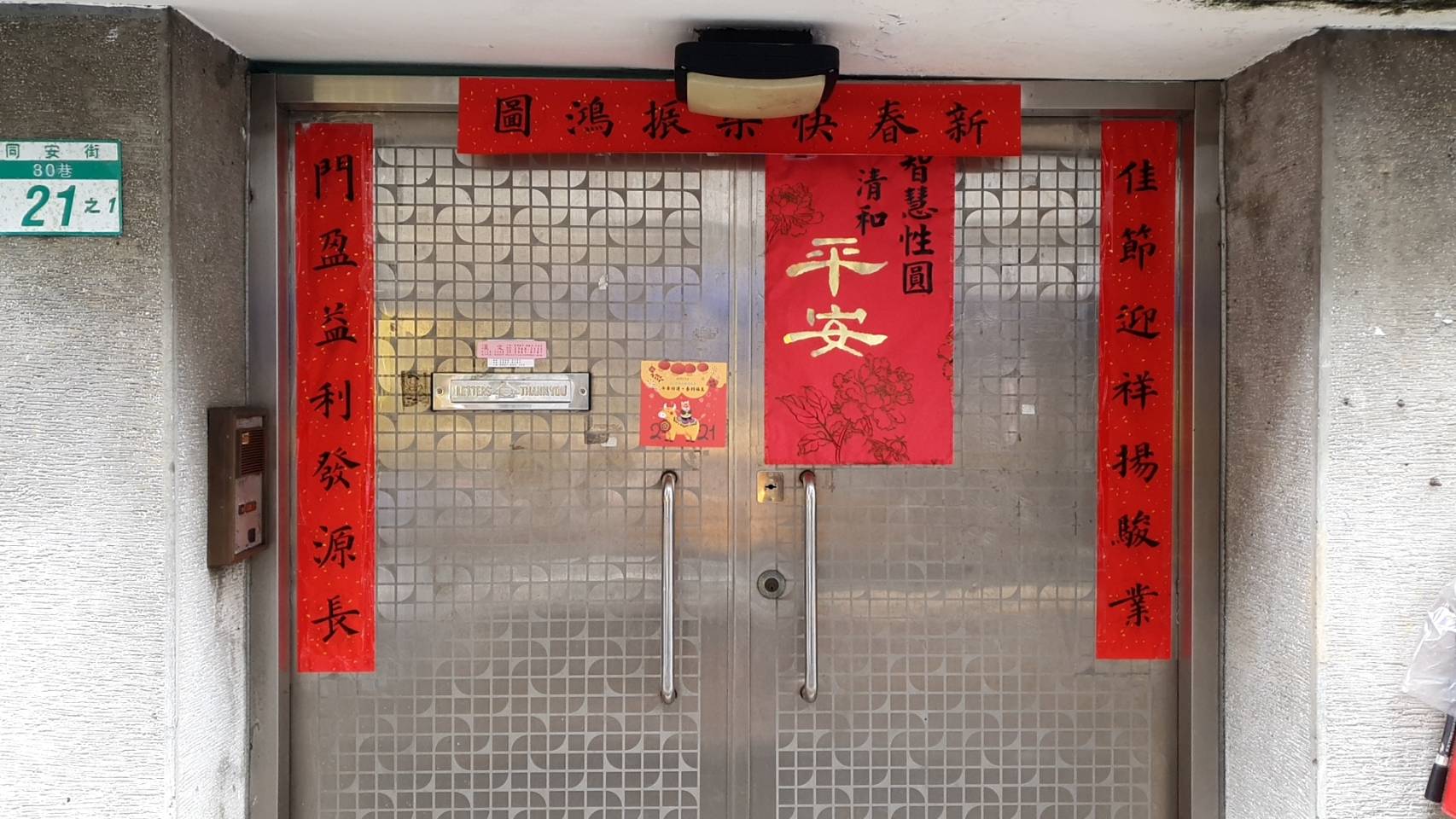
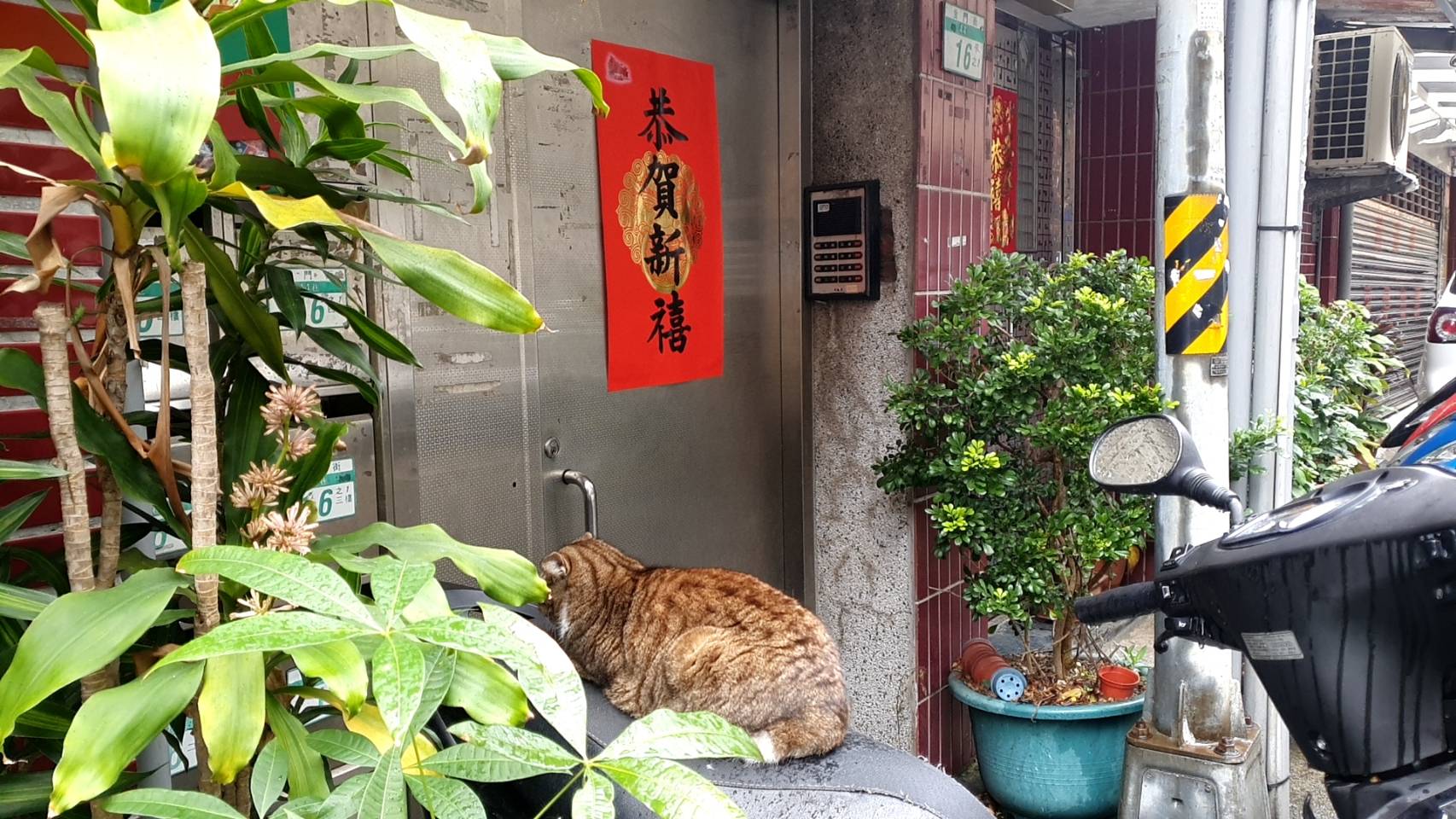
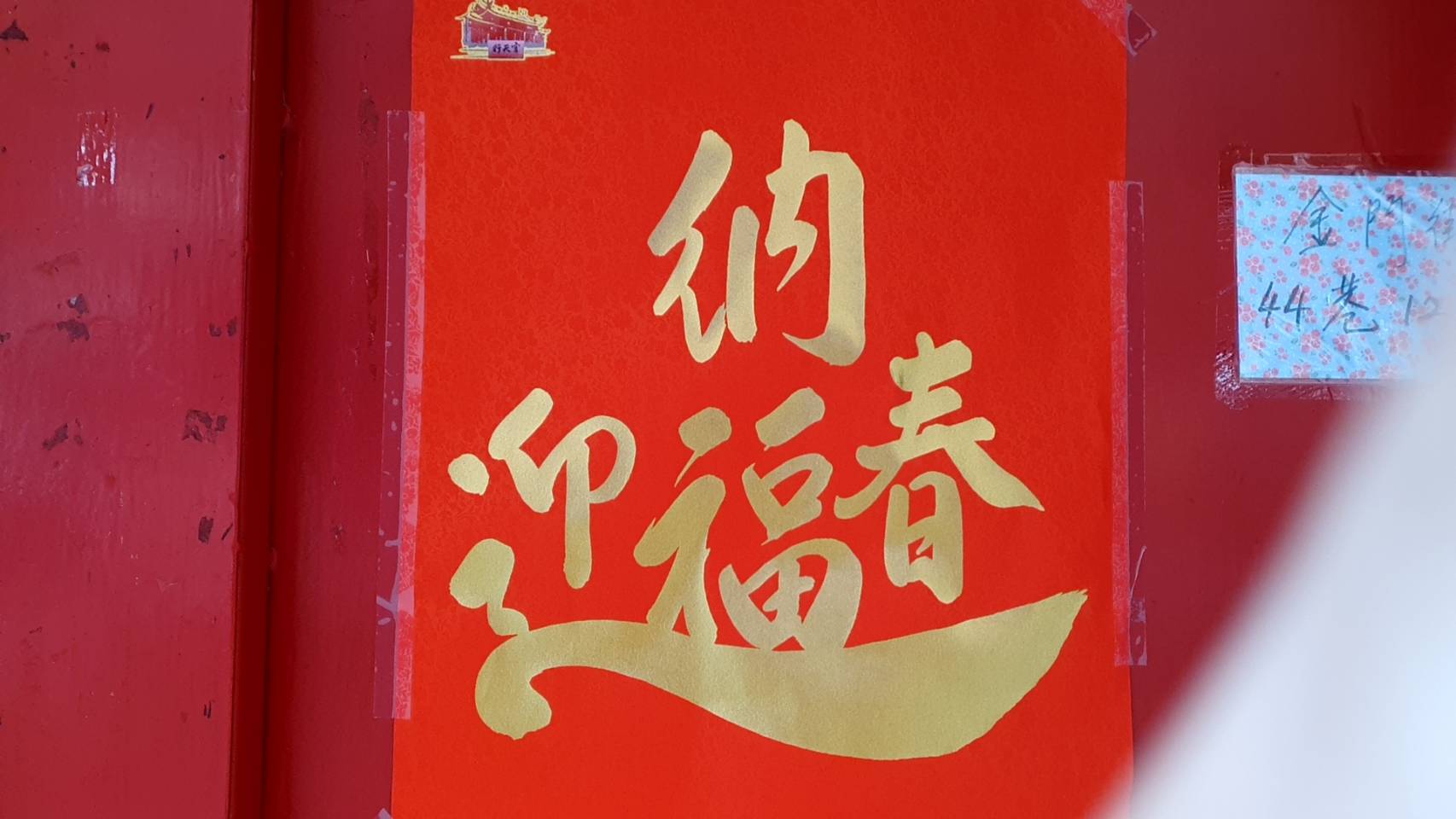
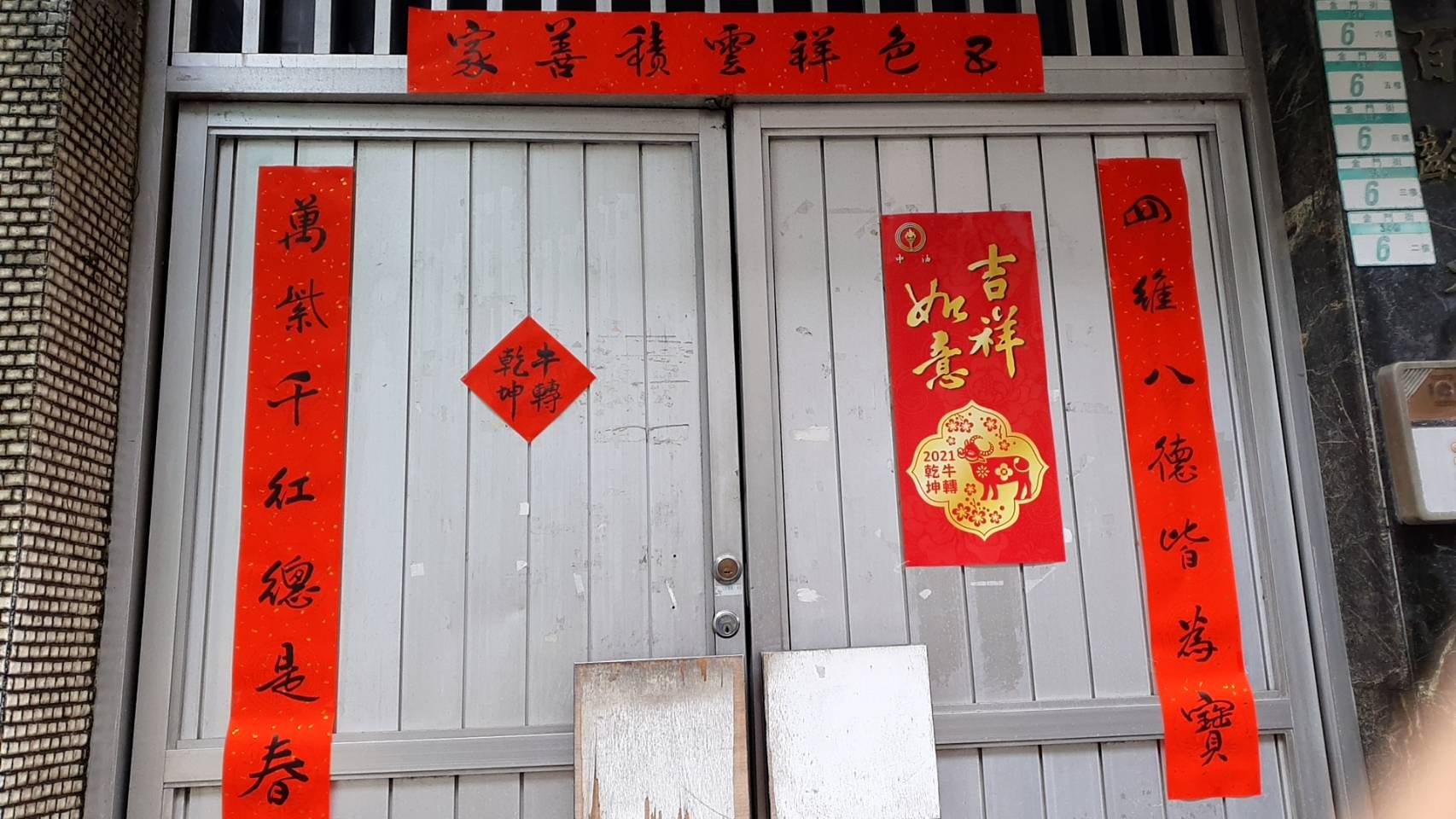
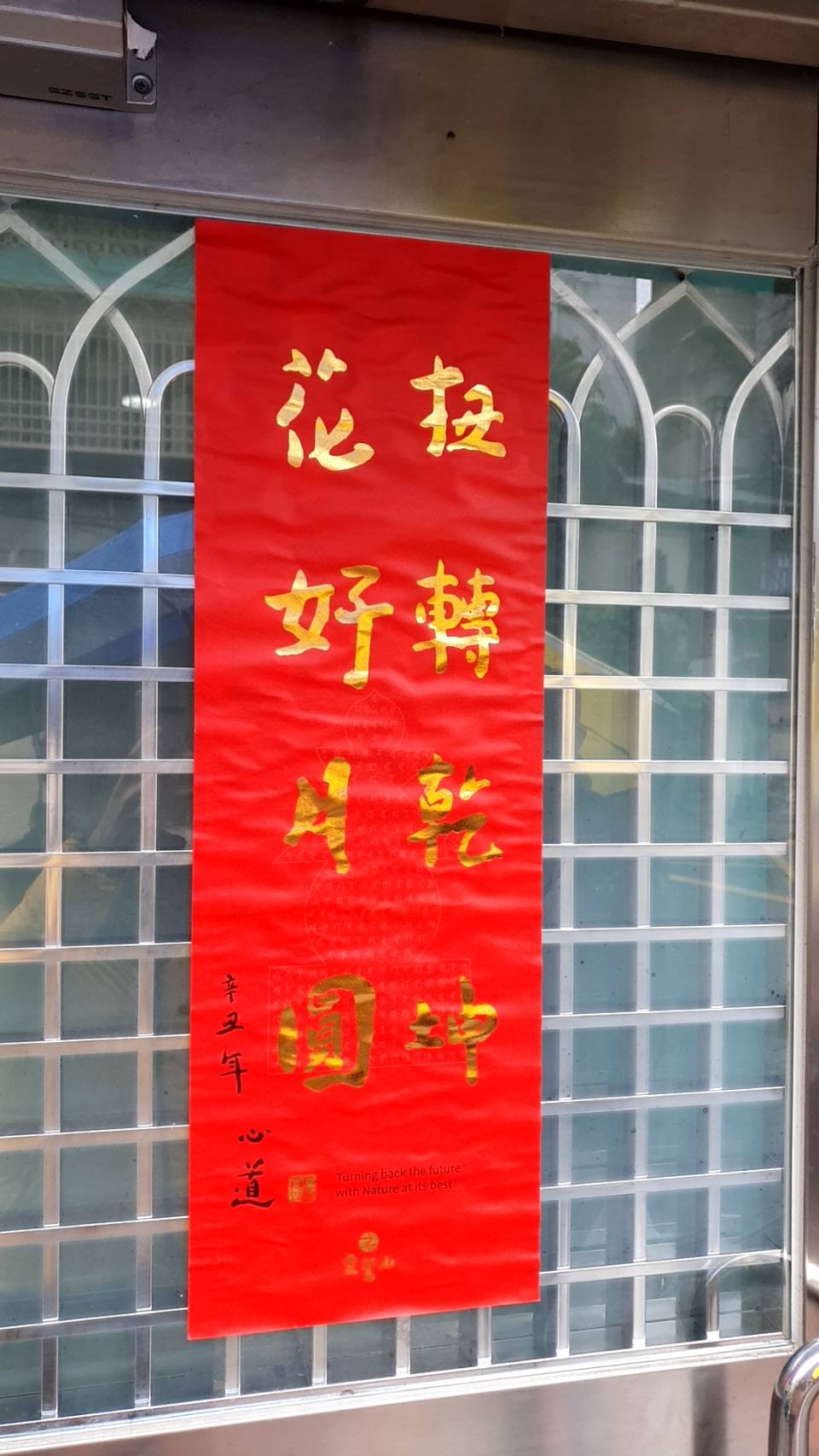
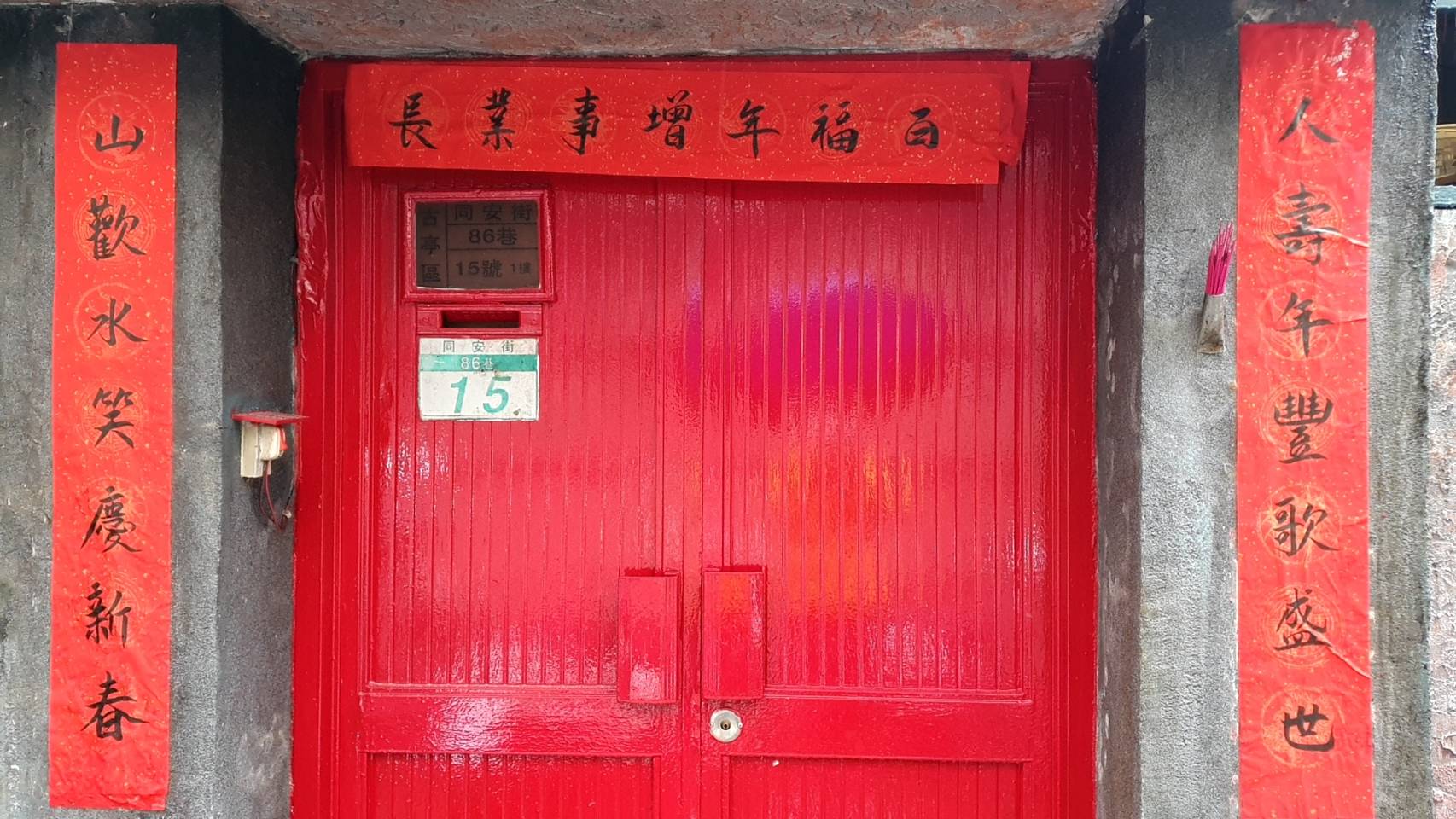
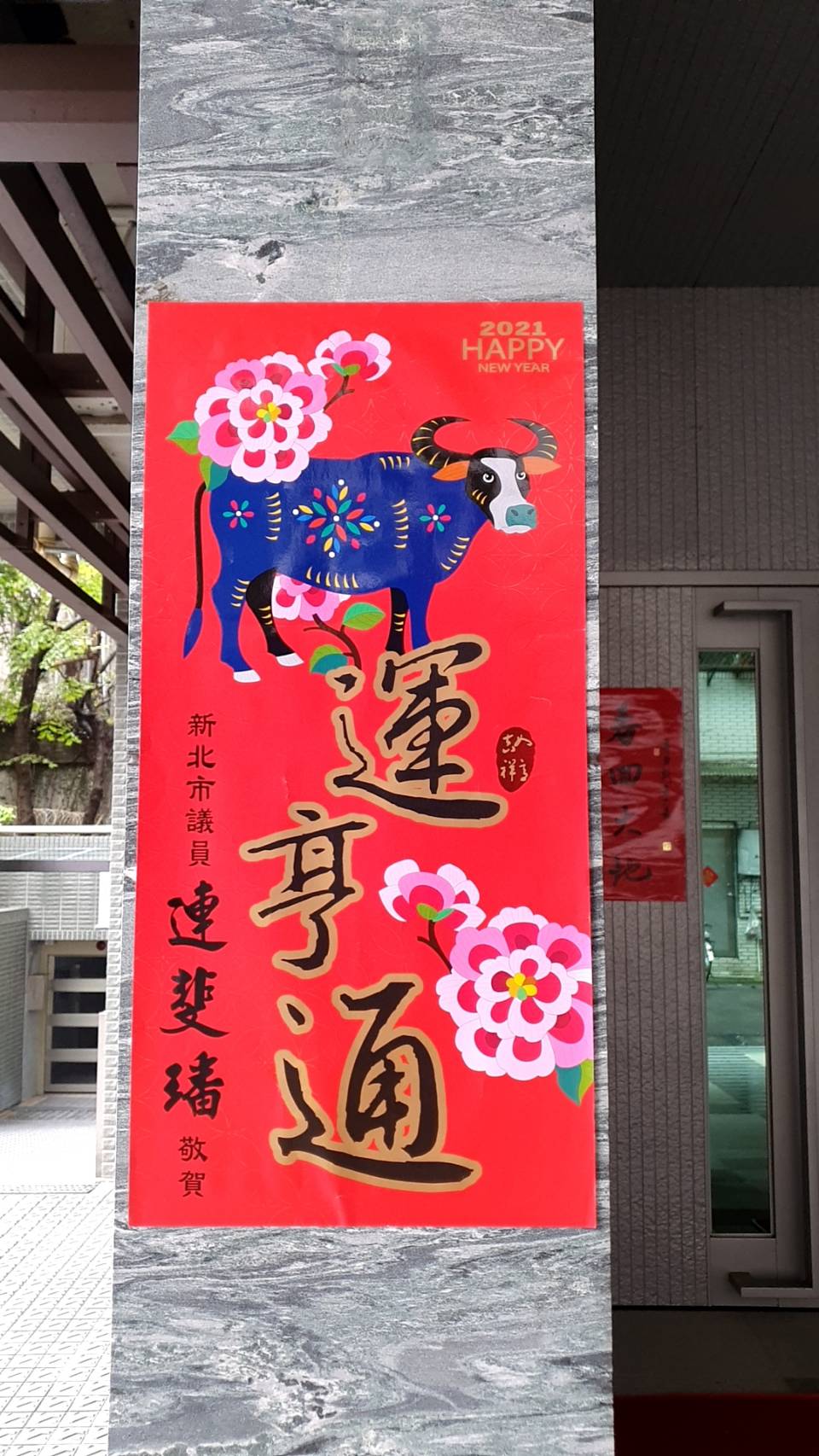
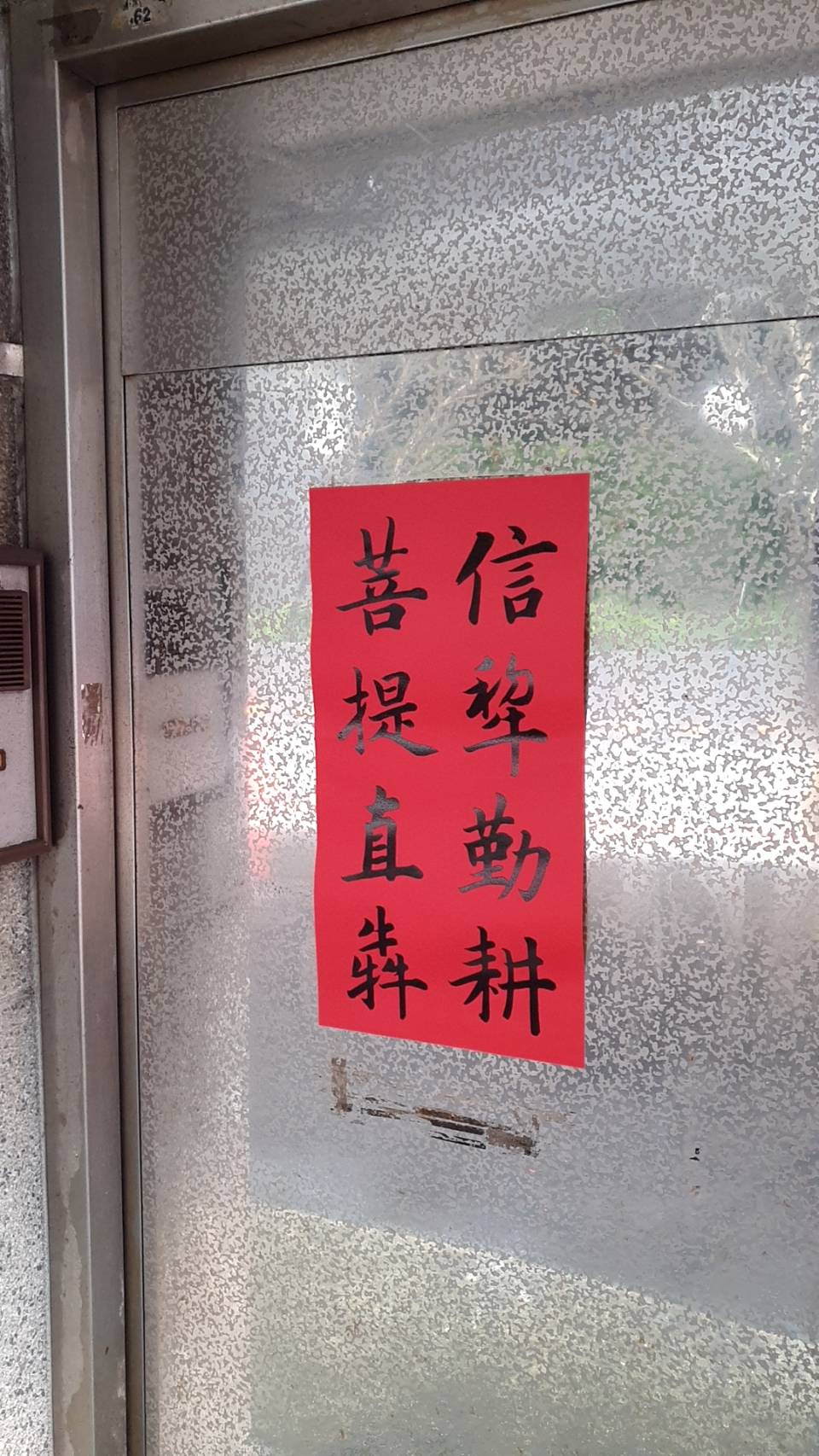
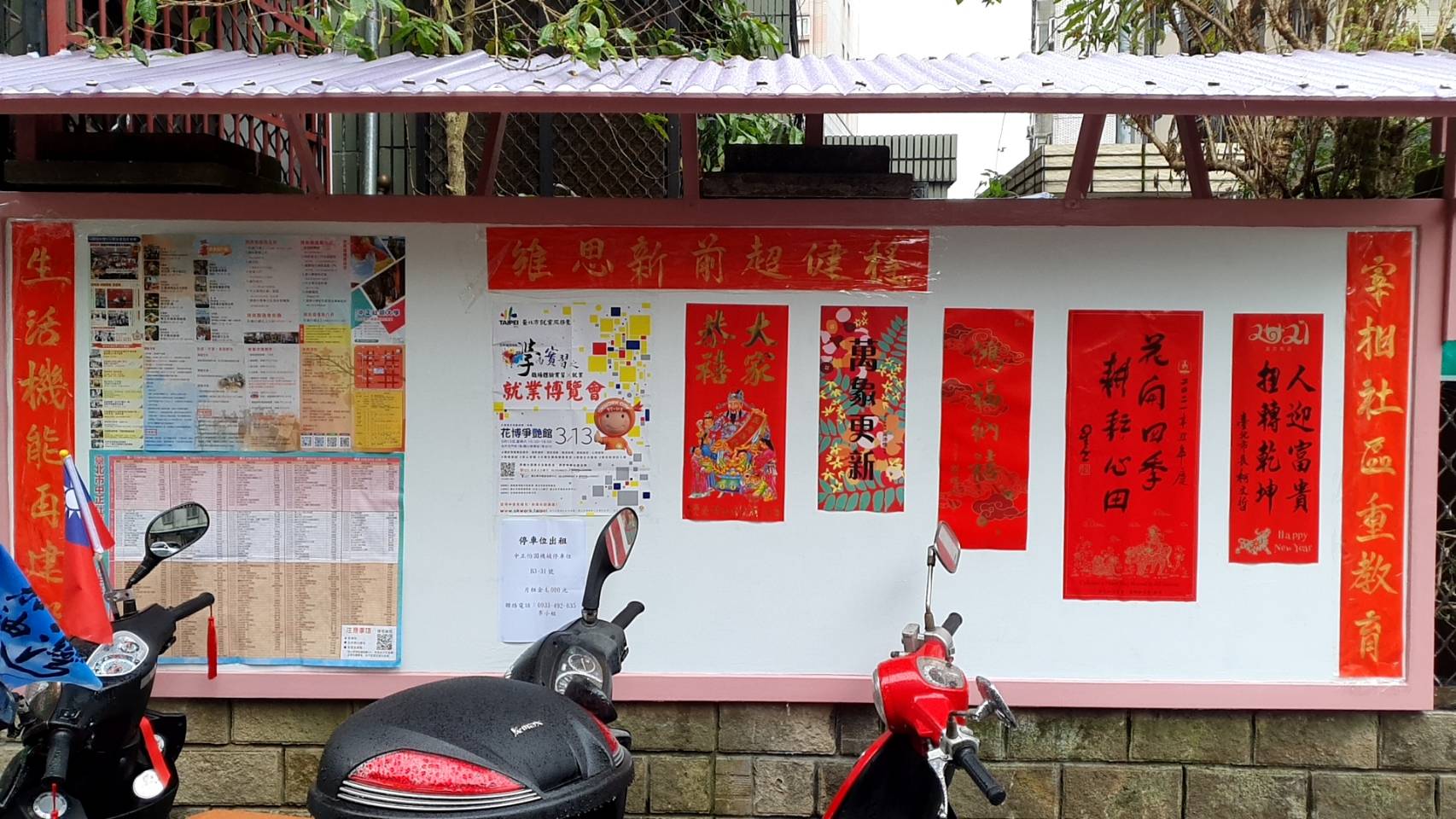
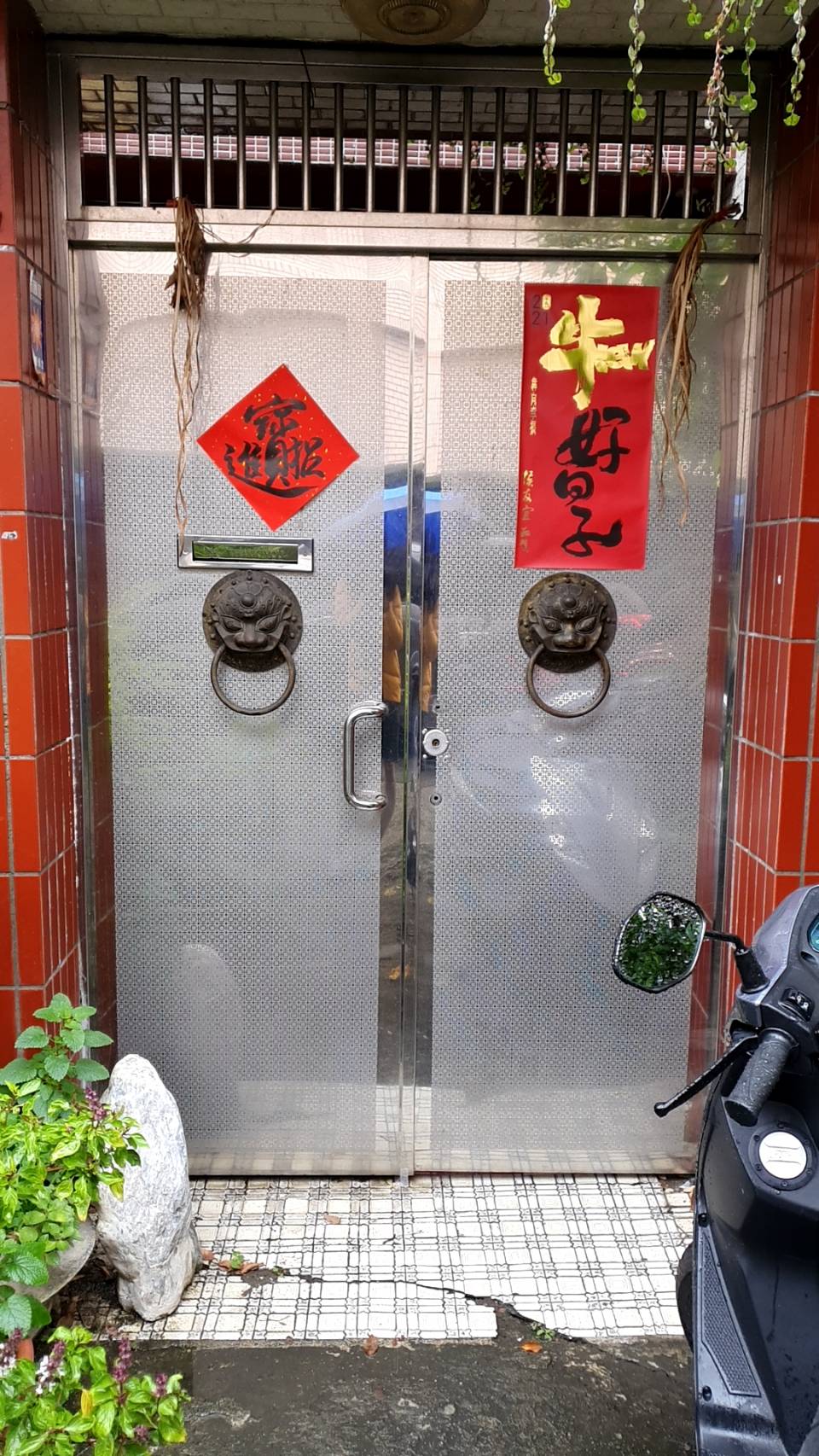
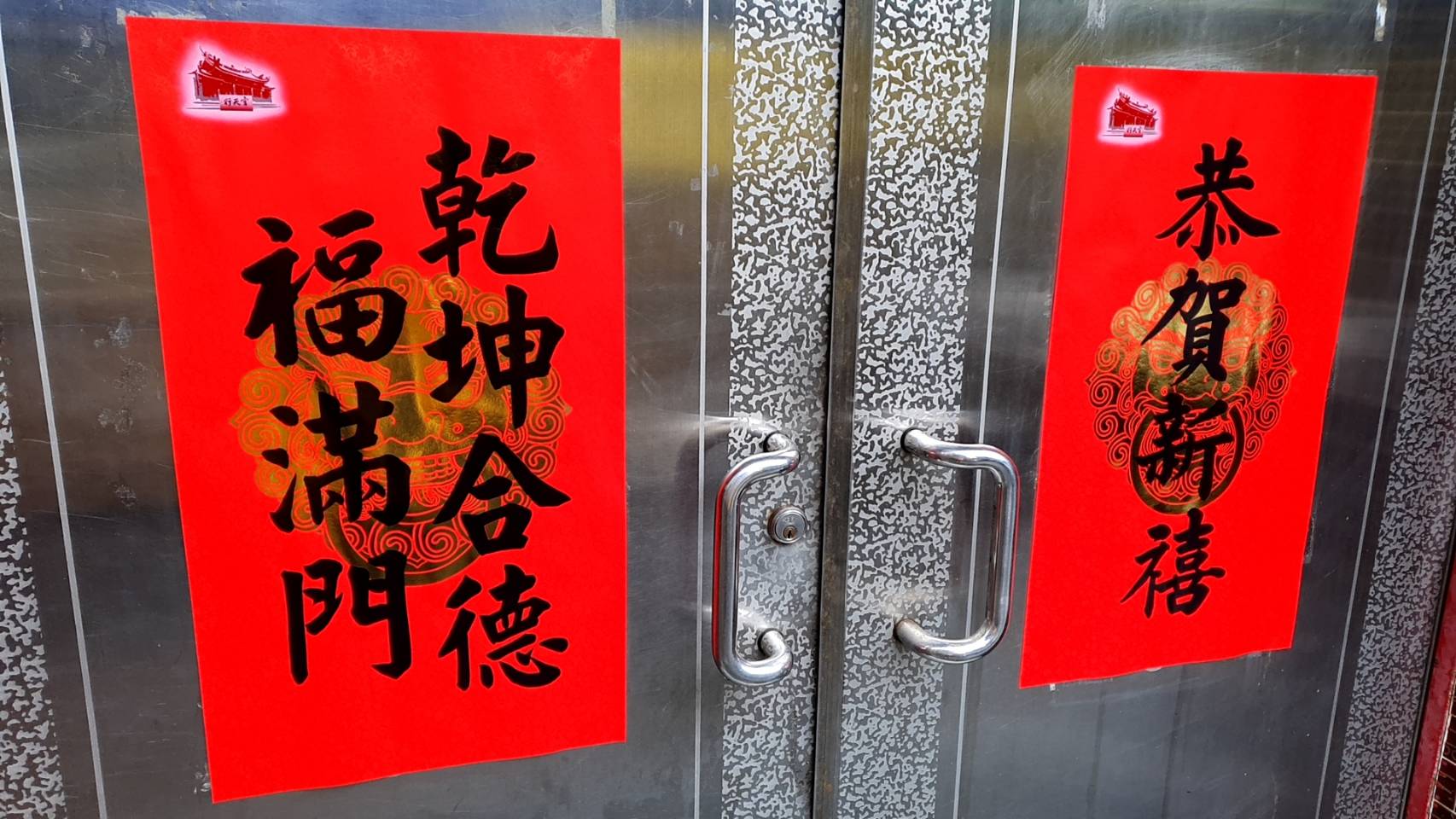
Walking around Guting, even though most buildings are apartment blocks, most were displaying couplets by their door. I’ve featured some of the more interesting ones below.
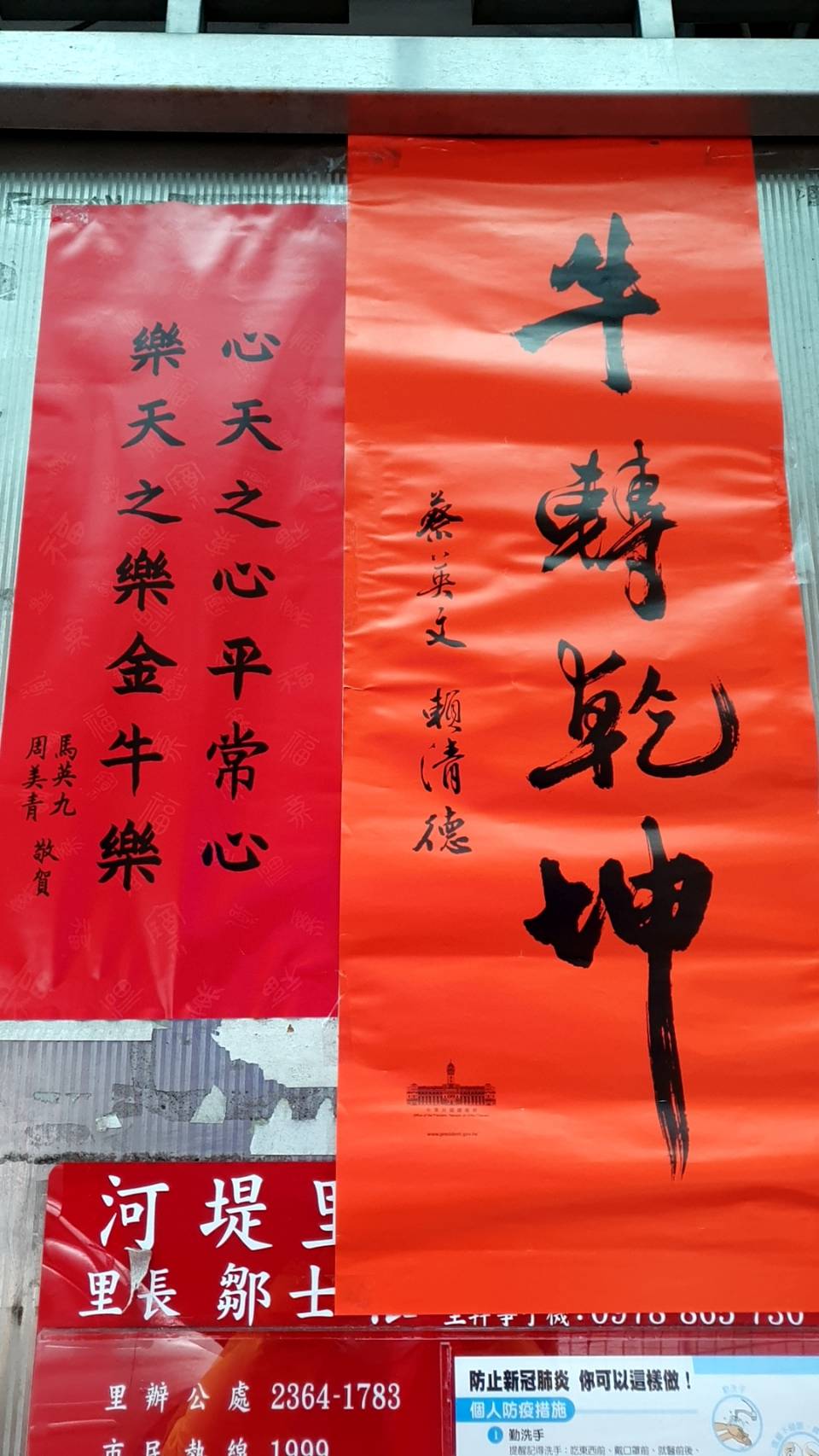
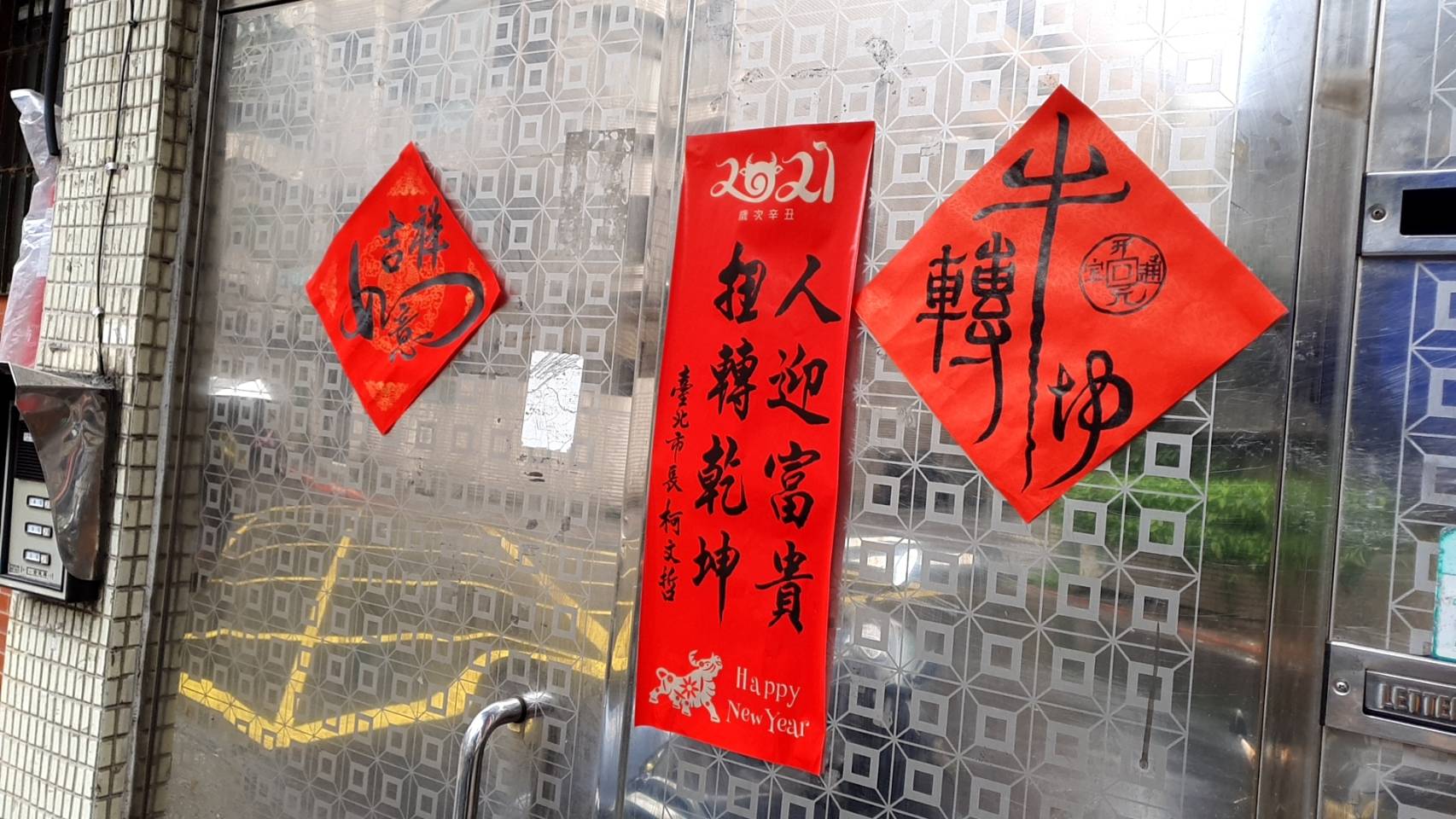
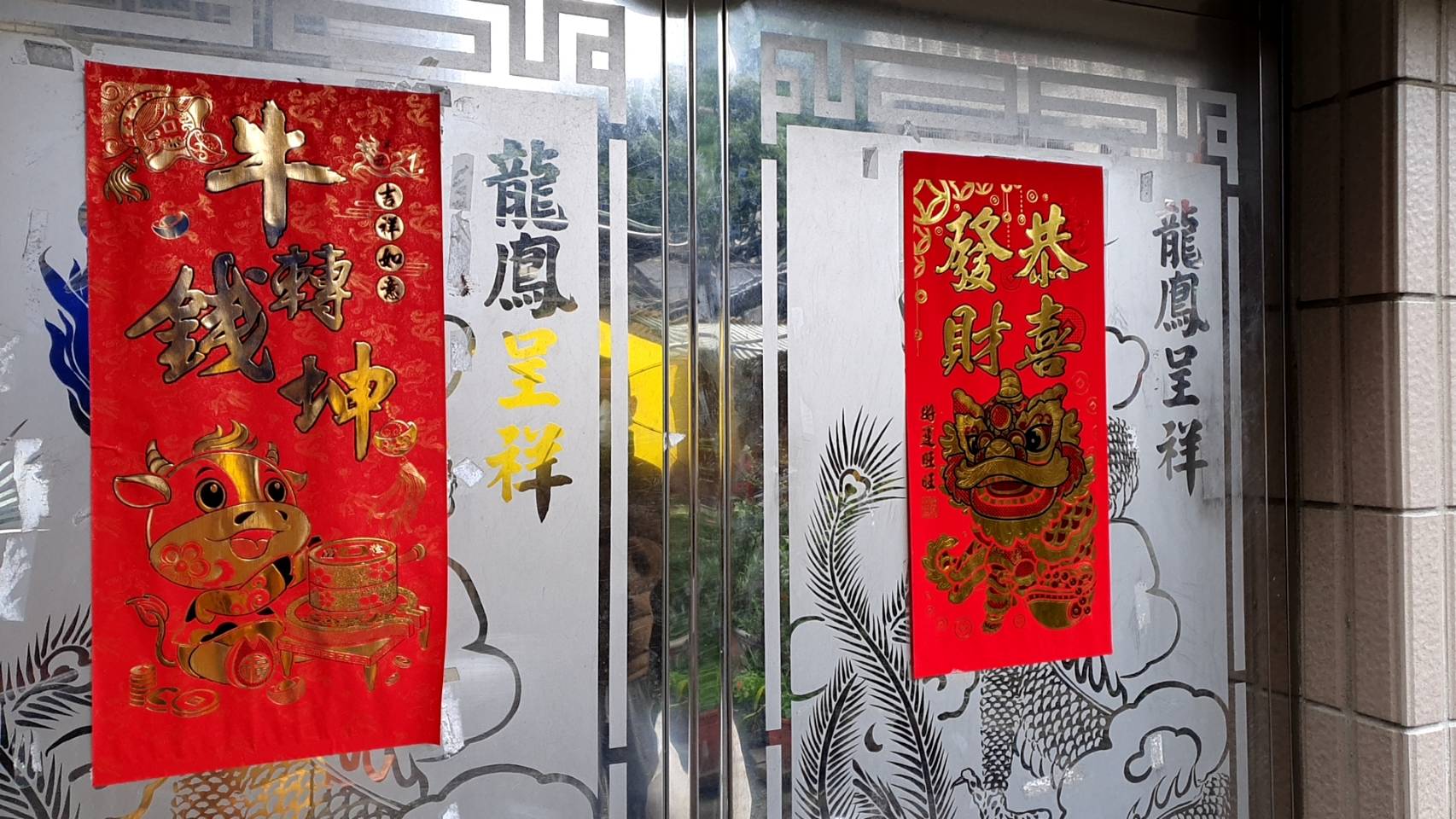
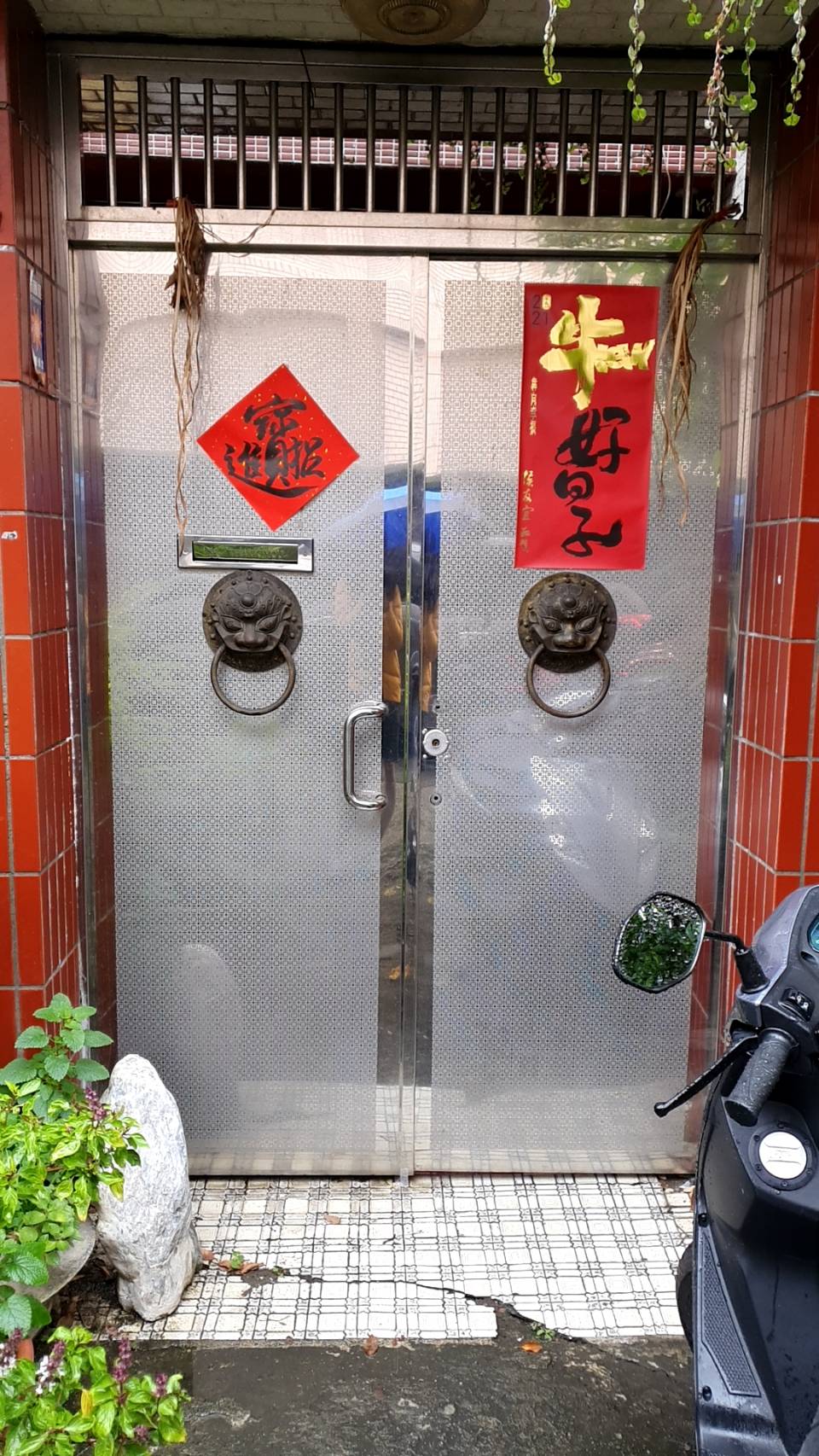
This doorway was funny because I imagined dueling households displaying couplets from President Tsai Ing-wen and Lai Ching-te vs. Ma Ying-jeou and his wife Chow Mei-ching respectively. President Tsai has gone with the classic idiom 「扭轉乾坤」(niǔzhuǎnqiánkūn) “to turn luck around” (literally, to upend heaven and earth). As 「扭」(niǔ to turn) and 「牛」(niú ox/cow) are near homonyms, the 「牛」 for the year of the ox stands in for it.
Former president Ma Ying-jeou and his wife, meanwhile, have called for equanimity and optimism in what was largely been interpreted as a dig at President Tsai‘s popularity with the words of the Hongwu Emperor 「心天之心平常心、樂天之樂金牛樂」. Ma’s explanation is that the son of heaven (read president) must respect the wishes of the people to rule properly, and that people need to be optimistic despite the pandemic and the ractopamine pork imports (video here).
I was (perhaps naively) surprised to see a Baptist church joining in on the fun:
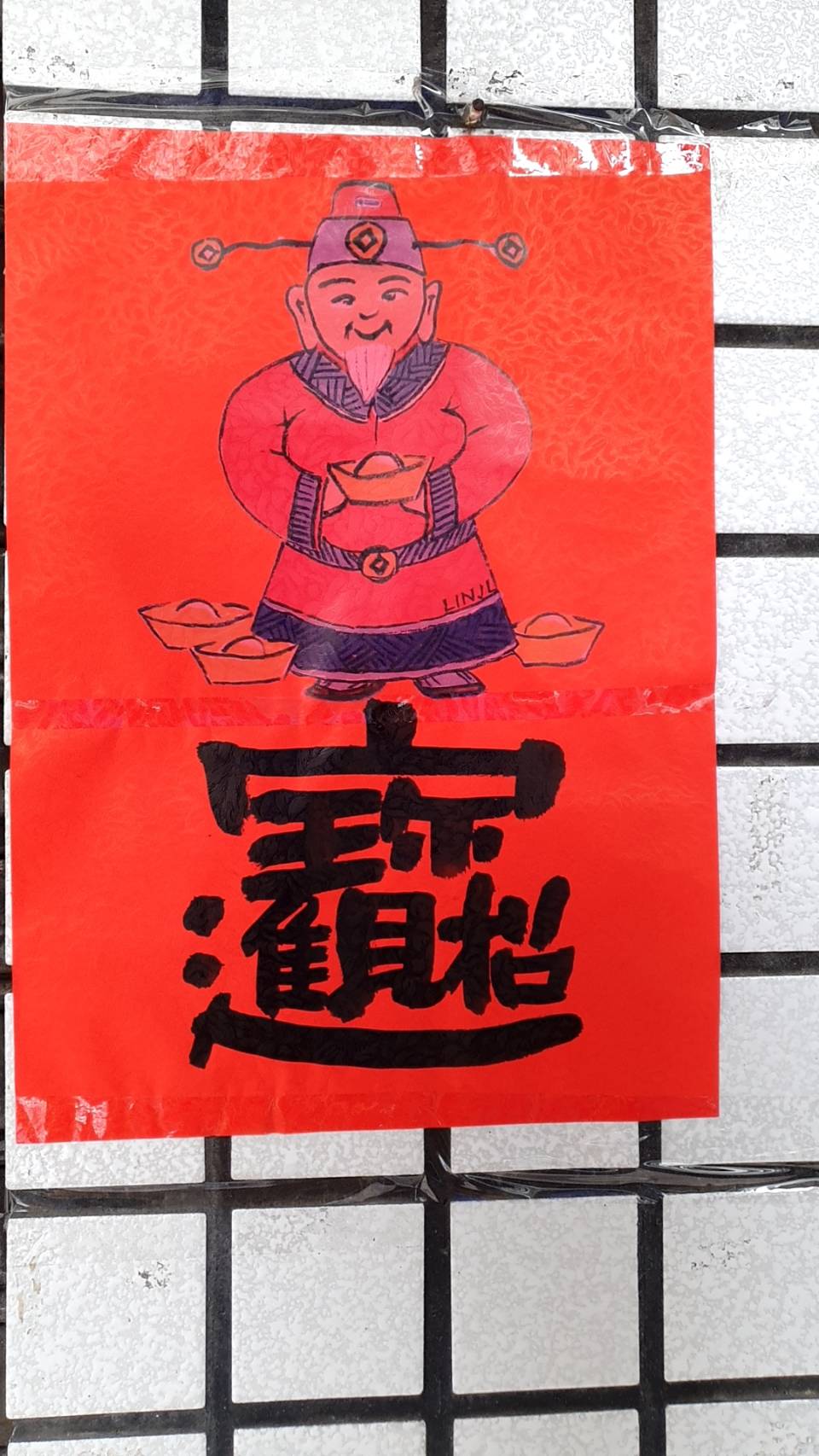
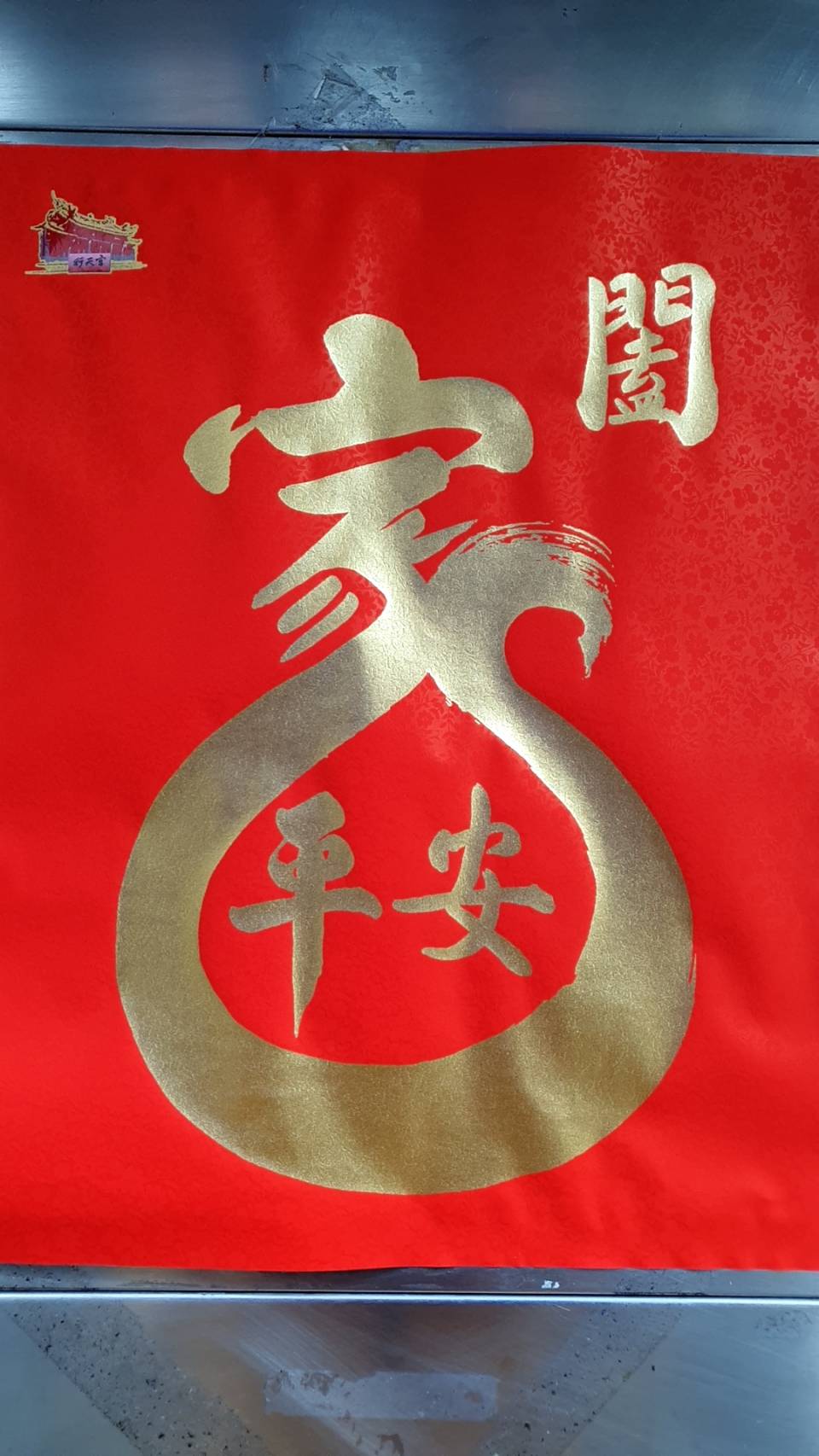
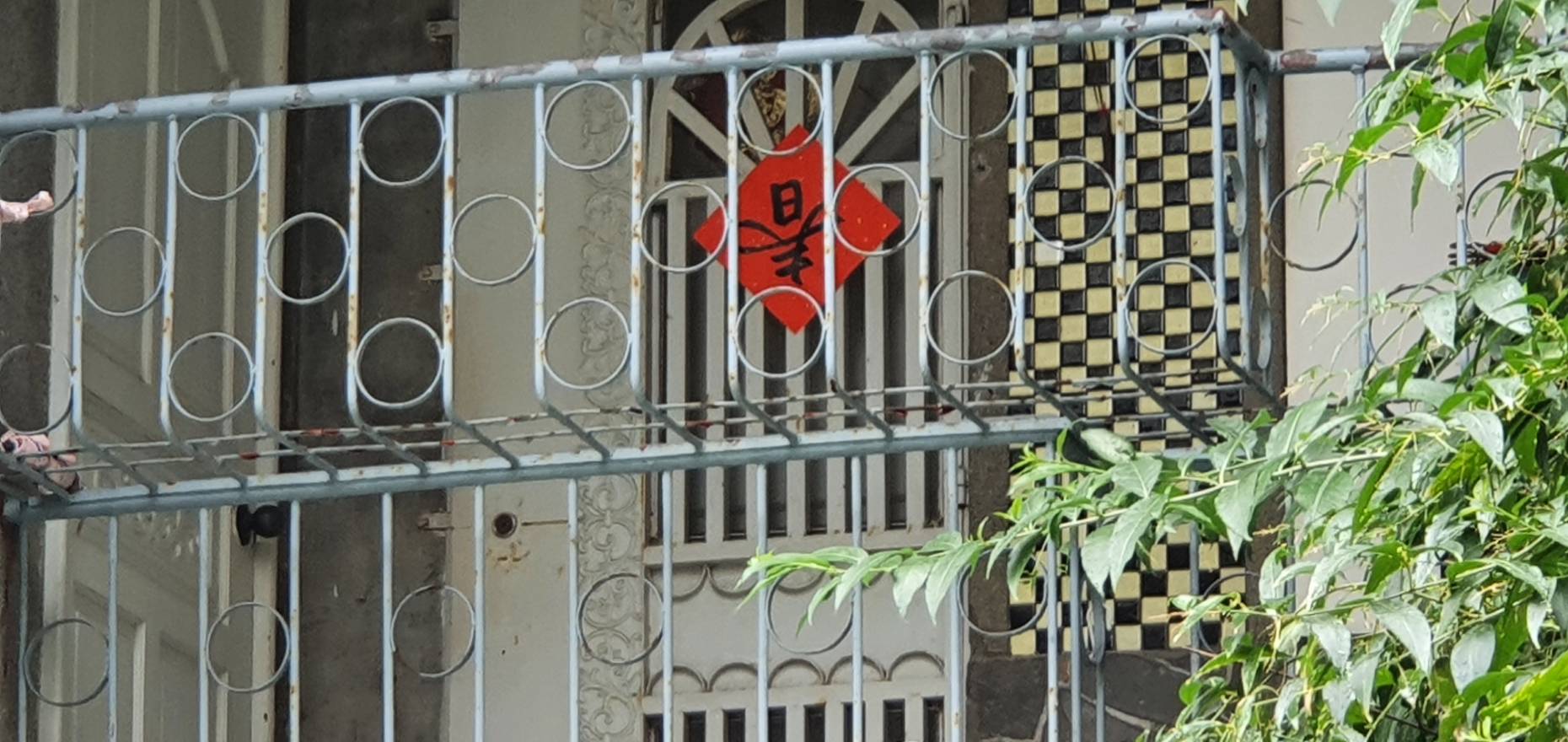
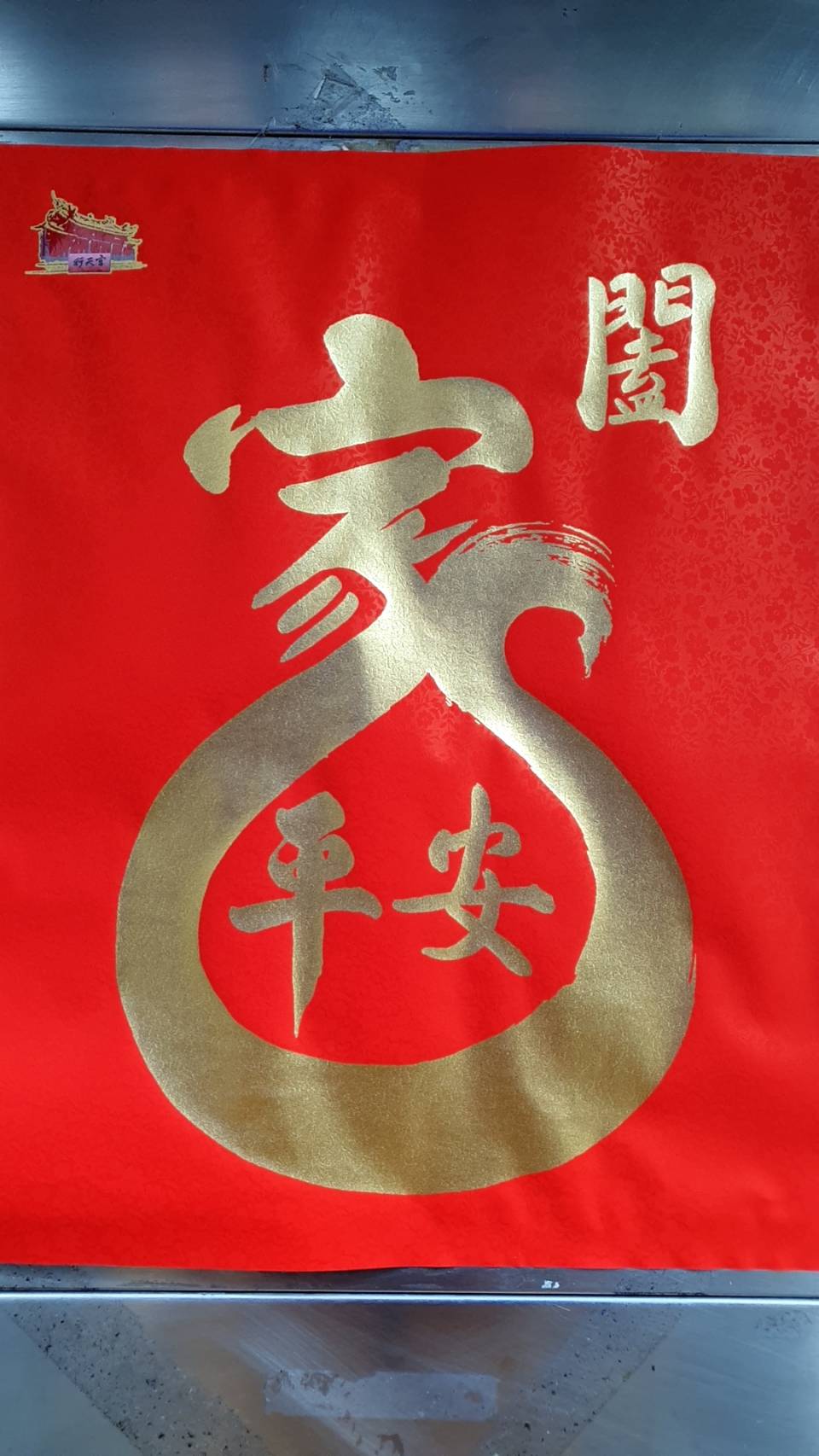
「合體字」 compound characters featured heavily in a lot of the door dressings. The one on the right below is the same as the Presidential one above: 「牛轉乾坤」 with a stylized 「牛」.
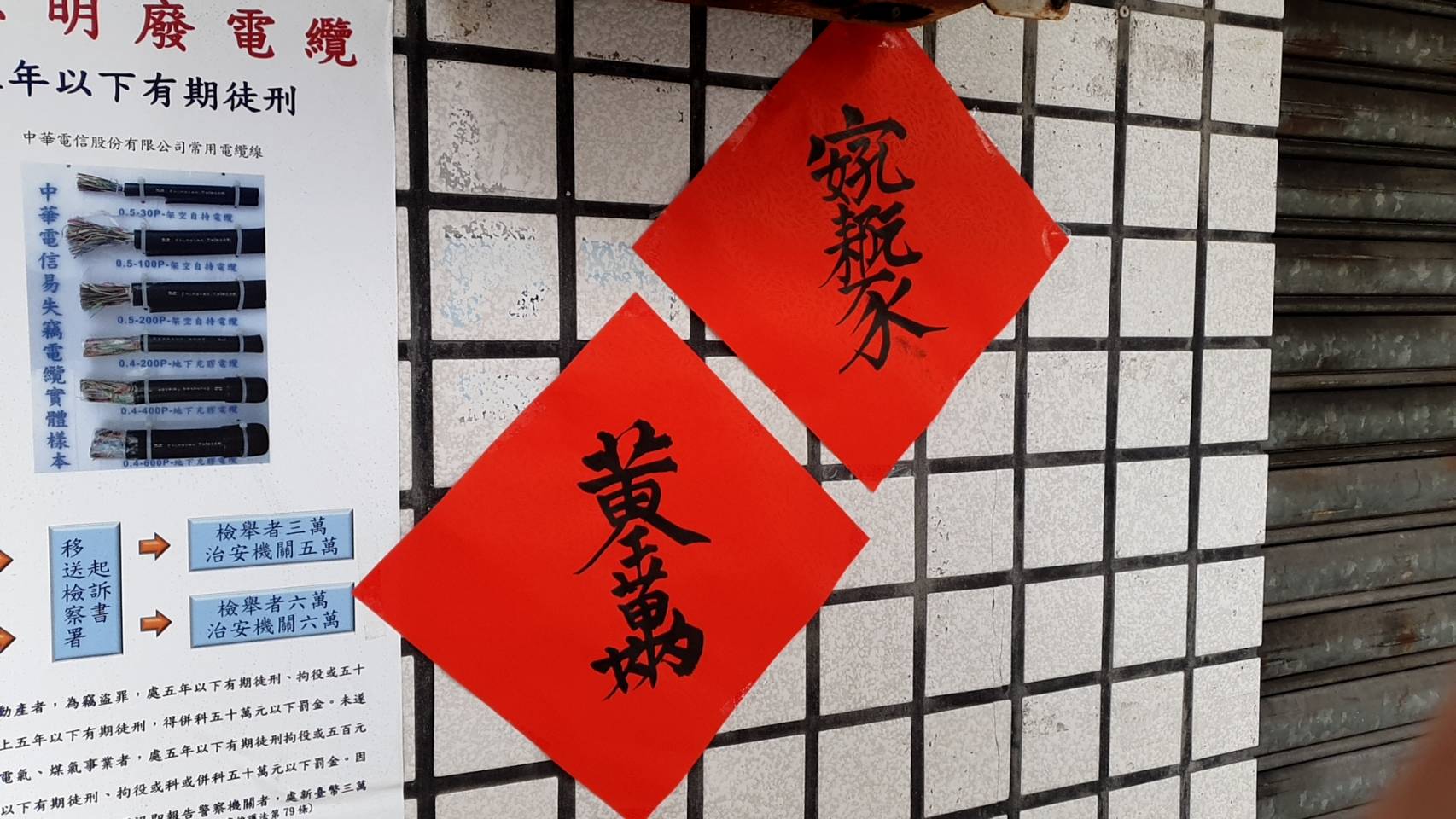
There were even some compound characters from phrases in Taiwanese, like the one below: 「好孔來阮家」 hó-khanglâigóanka (good things come to our family). Right beside it is 「黃金萬兩」 (10,000 taels of gold).
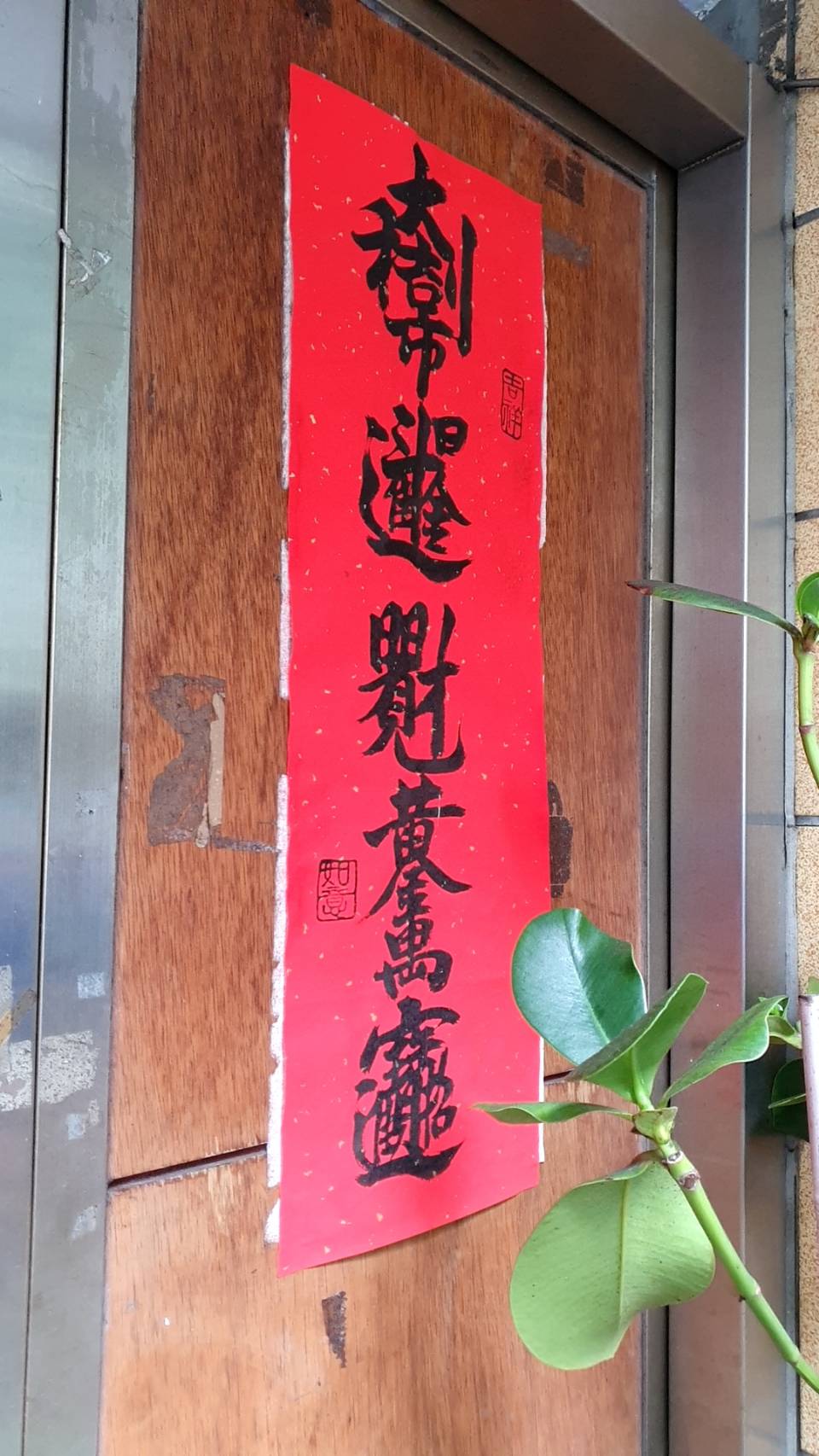
The banner below shows five different compound characters: Looks like 「大利大吉」 (profit and fortune) 「日進斗金」 (a dou of gold enters every day) 「日日見財」 (every day meet with fortune) 「黃金萬兩」(10,000 taels of gold) (repeat of above) 「招財進寶」 (attract fortune and enter treasures)
The door below doesn’t seem to have been updated despite the fresh-looking colours, but the compound version of 「吉祥如意」 was cute enough:
There are a whole load more below!
The one above features 「犇」 bēn, made up of three 「牛」s.
After you update your ARC to the new UI format (one letter nine numbers) there are a certain number of other agencies you need to update information with, as cross-ministry communication does not seem to have been very broad:
If you have a work permit (APRC holders/students with internships or part-time jobs) you NEED to apply to the Work Development Agency for a new one. You can apply online through this system, or use the form available at the office (or here), a photocopy of it, a one inch photo, a copy of both sides of your OLD and NEW ARC/APRC and a copy of your passport.
(NOTE/UPDATE: I previously posted that you needed to hand in NT$100 or a postal order of an equivalent amount, as this is what they told me over the phone, but when I received my new work permit, it had a letter attached saying that the NT$100 postal order that the person on the phone had insisted was necessary, was not required, along with a complex form on how to get this money refunded.)
If you want to go in person and are registered in Taipei, the address is: 10F, No. 39 Zhonghua Road Section 1, Zhongzheng District, Taipei City 10042 10042 台北市中正區中華路一段 39 號 10 樓
This is also where you post your material.
2. You or your employer should fill out the form here to ensure your labour insurance contributions are still registered to the same person, one copy should be sent to the Ministry of Labour (勞動部勞工保險局,臺北市中正區羅斯福路一段4號) and the other should be forwarded to the National Health Insurance Bureau in your region (see form for addresses). Despite the claims that you don’t have to update your NHI card, I don’t really see how this is going to be possible, given that on the bottom of the form it says that your original NHI card will be cancelled when the new data is received, hence:
3. NHI card renewal (purportedly optional): This is relatively pain-free, simply go to the Post Office and ask to renew your NHI card, with your ARC and a photocopy of both sides, one photograph (most machines have a special setting for NHI card photos) and NT$200. You should receive your new card in 5 working days. And after you receive it, you can switch your NHI app card to the new one.
4. Alien Digital Certificate: You can apply to update this at the same time as you apply for the new UI format, with the same material and you shouldn’t be charged.
5. If you have a post office account, you have to inform them of your change of ID.
Other issues: Despite assurances that banks would be automatically informed of changes, people on Facebook have been describing demands to close and reopen accounts at banks, issues with motorcycle licenses/test applications, property deeds, mortgages, car loans. With hospital appointments, many clinics and hospitals will still have your old number in their systems, even though with your new NHI card, doctors should still be able to access your previous publicly held records.
UPDATE (March 9, 2021): My ESun Wallet app stopped working today and displayed a message that I needed to re-register as my details had recently changed. I did this in the space of about 30 seconds and there was no problem. My account and cards were still registered on the app. My banking app on the phone and the internet also stopped working and I had to re-apply for internet and mobile banking.
The steps are easy enough, but you must apply again for internet banking:
You will be asked to enter your email, your new ARC number and your date of birth. Then you have the option of an audio OTP call (in Chinese) or some other options. Once you’ve confirmed, you have to set a new username and password and either confirm the changes or login. If you have a savings account and a credit card, you just need to use the savings account option and the credit card information will follow.
Once you’ve reapplied for internet banking and logged in, you MUST log out of internet banking before you can log in to your mobile app using the same details. You’ll have to agree to terms and conditions again, but it’s reasonably simple.
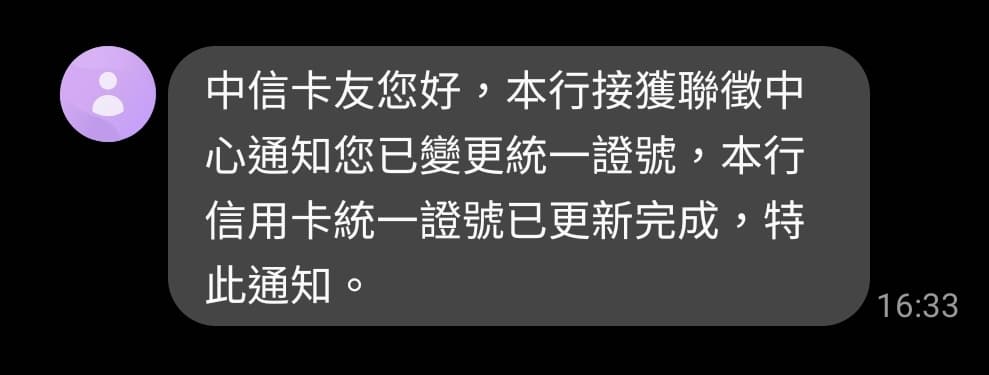
UPDATE (April 16, 2021): Today, one of my four other banks informed me via text that they had received the update to my ARC number:
As I’ve only got a credit card with them and no bank account, they didn’t use my ARC number as the identification number for my account, so the only thing I had to do was re-log into my mobile credit card app:
UPDATE (August 8, 2021): Megabank sent out a mailer to all its clients telling them to update their info with the bank. As opposed the easy methods provided by the banks above, they decided that you have to mail the form (with the information that they already have) to your branch (they say any branch, but I have my doubts) or go in person. After a long phone conversation, I ended up mailing the details, and without notice, they changed the login details on my phone without informing me. If you get a message a few days after informing them of your new ARC/APRC number, just try logging into the app with the new number and you’ll be able to get in. But there’s a problem with your 「行動安全碼」 mobile banking number and your mobile phone will still be associated with the old account number for some reason. To re-tie your account to your mobile device, you have to uninstall the app and then reinstall and log in again. Then you go to the main menu (選單) and hit settings (設定) and you should be able to apply for a new mobile banking safety number by filling in your ARC number (the new one) and your passport number. Bizarrely for me, even though I’d provided them with my new passport number when updating my details, I had to fill in my old passport number for it to work.
The remaining two banks are yet to notify me or make any changes, but will update when they do.
UPDATE (March 22, 2021): My doctor had pre-booked me in for an appointment before “the change”. I turned up for the appointment expecting for there to be a little confusion but for things to be sorted out quite quickly when they saw the old number on the back of my APRC. In fact, I needed to go back to reception and reregister my old details to the new card and then reapply for an appointment. There were no more free spots on the day in question, however. Luckily for me the pleasant and slightly frazzled lady at the counter decided to help me out and scribbled a hand written note to the doctor asking that I be added manually by the doctor to the list of patients. This was nice of them, but it’s unfortunate that there has been no effort by the government to inform staff at hospitals that this is going to be an ever more common scenario. FURTHER UPDATE (August 2, 2021): I’m not sure if the lady I mentioned above was overly frazzled, as when I went to the hospital where this happened to get my vaccine, they printed out a form which had me listed as a woman and had my (male) friend’s phone number as the contact number.
UPDATE (April 9, 2021): A reader has outlined the requirements for Drivers’ license updates: Just go to the local Department of motor vehicles and bring two photos and NT$200 for each license you hold.
I have to say I’m yet to find anything easier because of the new format. Please do let me know if there are any benefits to the new format.
Shout out to Slawa who made this call for names of websites where the new ID number does not work towards the end of last year and for driver license info.
If you have more specific queries about particular ministries, I suggest having a look at the Q &A on this page.
Remember to reregister for the EZ Way app with your new ARC (note, real name authorization is now available for foreign residents.
Bonus reading: This foreign resident doctor lists his own complaints, which extend to the cancellation of automated credit card bill payments, the requirement to replace his medical license and Examination Yuan license, amongst others.
A woman travels to the east of Taiwan in the wake of her husband’s suicide in an attempt to discover the mystery behind a charitable donation he made before his death. Despite the charitable donation leading to somewhat of a dead end, she decides to stay on in the largely indigenous village. Her son, who suffers from autism, flourishes in this new environment, however her new romantic attachment, an indigenous man who helps her rebuild her house and teaches her son to hunt, may not be all he seems.
Screenshot of Unitas video (see link below)
Through most of the course of reading this book, I was expecting it to make a dramatic revelation, whether about autism, the dodgy dealings of the man she falls in love with in Taitung or the mystery behind her late husband’s charitable donation, but it never came. The book, as readable as it is, rejected my attempts to read it as a crime novel or psychological thriller. Nor does the author feel the need to resolve any of the questions thrown up by the narrative; instead of narrative resolution, the main character achieves a vague sort of spiritual resolution in the end, through the prism of her autistic son.
The book does pose some interesting questions itself, however, about autism, the experience of indigenous people and migrant workers in Taiwan and even about the healthiness of modern urban life.
I first became aware of this novel when the author asked me to translate an excerpt for a short video performance:
The short excerpt he provided, however, was quite different in feel from the novel in its entirety, as it was a brief venture into the mind of the protagonist’s autistic son.
These brief sojourns into an autistic mind (the author uses the term Asperger’s) didn’t capture an autistic voice for me with the convincing style of Mark Haddon’s book, The Curious Incident of the Dog in the Night-Time, but rather endowed the child with some kind of spiritual mysticism, evoking for me the lasting controversy over the “idiot-savant” portrayal of autism in the film Rain Man.
We spend most of the time in the novel observing the child from the mother’s perspective. At first she resists the diagnosis and seeks out a “cure” or some way to access the “real child” hiding under the façade of the autistic child:
Whenever her son’s diagnosis with Asperger’s syndrome was confirmed, she and her husband were deeply shaken. First of all they thought of what mistakes they’d made, whether deliberate or accidental, that had resulted in this state of affairs. For example, some people say that when a child is first born and receives certain vaccinations, they can damage the infant’s brain cells, resulting in this regrettable situation after birth; Fu Yi-ping even started to fear vaccinations and on the suggestion of a doctor, she took up ‘biomedical therapy’. This consisted of the belief that after children are vaccinated they are unable to absorb the protein in wheat and milk products, and that sometimes this protein will seep through the wall of the intestine, and cause damage to the brain through the blood vessels.
This worrying anti-vax sentiment isn’t directly challenged throughout the novel, although her husband tries to get her to accept her child:

/cloudfront-ap-northeast-1.images.arcpublishing.com/appledaily/YXJXVSMQWKFHYYZEM4BM2DFTLI.jpg)
/cloudfront-ap-northeast-1.images.arcpublishing.com/appledaily/AXWSCVMYMQD3OTBZM323XO26RA.jpg)