
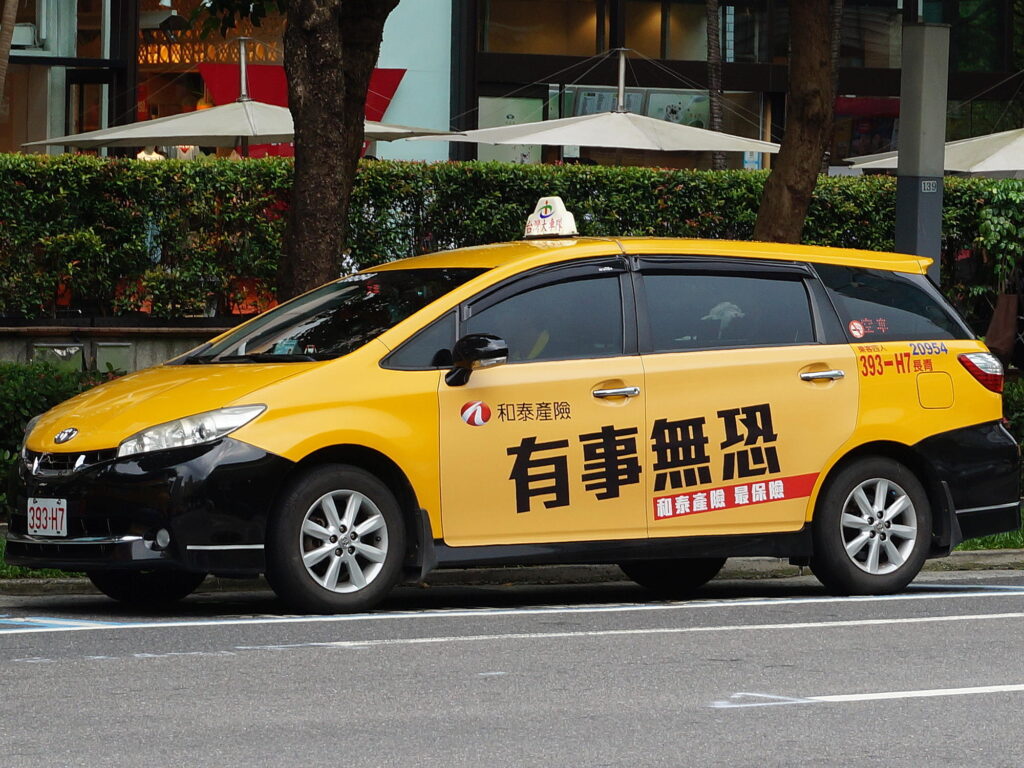
The general sense of security you feel in Taiwan can lead to you being a little careless with your possessions, expecting them to miraculously reappear before your eyes with little to no effort on your behalf. While this sometimes does happen, what do you do if it doesn’t?
Given that I’m no stranger to misplacing things, I’ve created a short guide below.
Losing stuff in taxi cabs
Do you know the registration/license plate number of the cab?
→ No.
Walk into your local police station (or one in the area near where you got into or out of the taxi) and tell them what you’ve lost and give them an approximate time frame for when you got into or out of the taxi and where (“Yes, officer, it was between 11pm and 5am somewhere in the Greater Taipei area.”)
– TOP TIP: if you were too drunk to remember clearly, use Google maps to track your movements and check whether you paid by EasyCard (learn how to use your phone as your Easycard here) and there should be a time stamp by the transaction.
They have a CCTV system that can access footage from most cameras across the city, so you can scroll through the footage (the bits highlighted in red indicate movement detected) quickly until you spot yourself embarking or disembarking from the taxi, and you should be able to spot the license number. With the license number in hand, you can safely change your answer to yes.
TOP TIP
If you’re visiting a police station near where you got out of the taxi, it’s quite likely that the driver of the cab has already handed it in by the time you reach the police station (presumably rather hungover and disheveled). So be sure to ask the police officer at reception to check if it’s already been handed in (they might not have been on shift at that point).
→ Yes.
Depending on where you are in the country, call one of the numbers below to get in touch with the either the city government police team or the governing authority for taxis and give them the registration/license plate number and they should get in touch with the driver on your behalf:
Taipei City
臺北市政府警察局交通警察大隊:02-2311-6409、02-2375-2100
臺北市政府交通局:02-2725-6888
臺北市公共運輸處:02-2759-2677
Taoyuan Airport
桃園機場計程車:03-398-5558
Taichung City
臺中市政府交通局:04-2228-9111
交通部公路總局臺中區監理所:04-2691-3464
Tainan City
臺南市政府交通局:06-295-3221
Kaohsiung City
高雄市政府交通局:07-222-6816
If you’re unsuccessful in the above endeavors, you can also contact the police broadcasting station, which will broadcast what you’ve lost to all taxi drivers. The lost and found number in Taipei is 02-2388-0066 and you can find the numbers for other regions of Taiwan here. The Taipei branch also has a website and office, where taxi drivers will sometimes drop off items.